Why Kuwait's Zero Crude Export Month Should Worry the World
When a major OPEC producer exports nothing for an entire month, markets notice. What the silence from Kuwait reveals about the fragility of global energy supply—and what it portends for oil-dependent economies—is worth taking seriously.
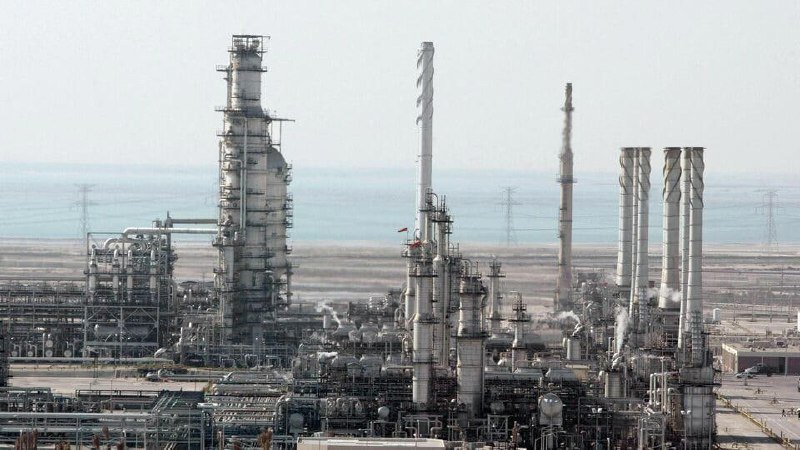
Something is very wrong with global oil supply, and Kuwait just told us so in the only way a major producer can: by going silent.
On 2 May 2026, monitoring accounts tracking Gulf energy flows reported that Kuwait exported no crude oil throughout the entire month of April. Zero barrels. Not a partial shipment, not a trickle — a complete cessation of the flow that has defined the country as one of the world's most reliable energy exporters since the 1991 ceasefire that ended the Gulf War. The sources do not specify why. They do not name the mechanism — whether this reflects a deliberate policy decision, a production outage, a diplomatic signal, or a domestic restructuring of how Kuwait manages its hydrocarbon wealth. What the sources agree on is the fact itself, and the fact is extraordinary.
That silence matters far beyond the barrels it represents. It is a signal — whether intentional or structural — that the world's energy architecture is under more strain than official channels admit. This publication has been tracking that strain for months. Kuwait's zero-export month is not an anomaly. It is a symptom.
A Signal, Not Just a Statistic
Let us be precise about what we know. The Telegram accounts tracking Kuwaiti export flows — myLordBebo and GeoPWatch, both operating in the Gulf energy monitoring space — reported on 2 May 2026 that Kuwait had exported zero crude barrels in April. GeoPWatch added the historical framing: this is the first such cessation since the Gulf War ended. That is not a small detail. Kuwait was a battleground in 1990-91. Its oil infrastructure was damaged, its exports disrupted for years. The fact that the country has not experienced a comparable export blackout in the three and a half decades since makes the April 2026 figure exceptional by any measure.
The sources do not speculate on cause, and neither will this publication — not without evidence. What we can say is that production outages at the scale required to halt exports entirely do not happen accidentally. Either Kuwait chose to stop exporting, or something inside its production complex made exporting impossible. Either way, the world's oil market absorbed this news with very little noise. That restraint is itself informative.
The OPEC+ Architecture Is Stressed
The obvious question is whether this fits a pattern. OPEC+ has maintained production discipline through the last two years of price volatility, with Saudi Arabia and its Gulf allies consistently arguing that supply certainty matters more than market share. Yet the alliance is not as solid as its public statements suggest. Iraq has pushed against quotas. Kazakhstan has cheated. The UAE has negotiated exceptions. Each instance has weakened the informal architecture of coordinated restraint.
A zero-export month from Kuwait does not look like coordination — it looks like a unilateral decision, or an emergency. The sources do not indicate whether OPEC+ sanctioned this move, whether the group was consulted, or whether Kuwait notified its partners in advance. If this was unilateral, it is a significant fracture. If it was coordinated and kept quiet, it is a significant signal about how OPEC+ communicates with markets. Neither interpretation is reassuring for those who assume the oil market functions on predictable assumptions.
The Dollar Angle Nobody Is Talking About
Here is the structural reality that the wire services largely ignore: oil export disruptions have currency implications that compound their economic impact. Kuwait's dinar is pegged to the US dollar. Its sovereign wealth operates in dollar-denominated instruments. Its energy trade has historically reinforced dollar liquidity in Gulf banking systems. When a dollar-peg producer halts exports entirely, the interaction between energy supply, currency stability, and reserve management becomes unpredictable in ways that matter beyond the spot price of Brent.
This does not mean Kuwait is abandoning the dollar. The sources provide no evidence of that. But it does mean the assumption that Gulf energy exports automatically translate into dollar demand — an assumption baked into much of Western financial analysis — requires scrutiny. Kuwait stopping exports for a month is not de-dollarisation. It is, however, a reminder that the plumbing connecting oil to dollars is a policy choice, not a law of nature. And policy choices can be changed.
What Remains Unknown — and Why That Matters
The sources do not specify the cause of the export halt, do not indicate whether it is ongoing, do not confirm whether Kuwait's domestic refineries are operating normally, and do not tell us whether the country's sovereign reserves are drawing down to compensate for lost export revenue. This publication has no interest in inventing answers where evidence does not exist.
What we can say is this: a major OPEC producer — one whose stability has been a cornerstone of Gulf energy markets since 1991 — going dark on exports for an entire month should provoke serious analysis from energy ministries and central banks, not just commodity traders adjusting their hedges. The fact that the story has registered as a Telegram item rather than a front-page financial headline tells us something about how the market is processing this information. Whether that processing is adequate is a separate question.
The Stakes Are Concrete
If this is a production problem, it means Kuwait's energy infrastructure is under greater stress than its public filings suggest, and the repair timeline will determine when global supply returns to normal. If this is a policy decision, it means Kuwait is willing to absorb short-term revenue loss — and the political cost of alarming its OPEC+ partners — to serve some other priority. Either interpretation has consequences for oil-dependent economies across Asia and Africa that have priced Kuwaiti crude into their import forecasts.
The broader pattern is harder to miss. Major producers are acting, explicitly or implicitly, on the recognition that the next decade's energy transition is not abstract — it is here, and it is already reshaping decisions about when to pump, how much to hold in reserve, and what domestic capacity to protect against future disruption. That recognition does not disappear when a producer goes quiet for a month. If anything, the silence makes it louder.
Monexus will continue monitoring Gulf energy flows as this situation develops.
Wire provenance
This editorial synthesis draws on the following public wire/social posts:
- https://t.me/myLordBebo
- https://t.me/myLordBebo
- https://t.me/GeoPWatch