Lebanon Conflict Casualties Near 10,700 Dead and Wounded as Health Ministry Revises Toll
The Lebanese Ministry of Health reported revised casualty figures on 2 May 2026, bringing the total killed since the current round of fighting began to 2,659, with 8,183 wounded — a combined toll approaching 10,700.
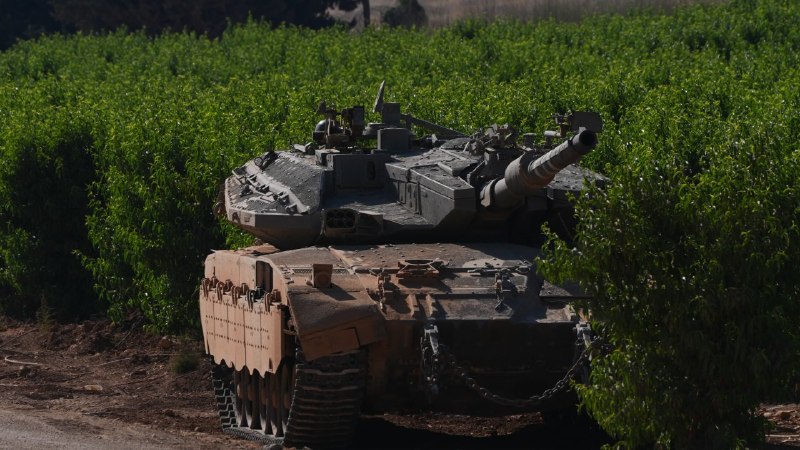
The Lebanese Ministry of Health revised its cumulative casualty count on 2 May 2026, reporting 2,659 killed and 8,183 wounded since the start of the current round of fighting. The revised figures represent an increase of 41 dead and 89 wounded from the ministry's prior bulletin issued earlier the same day, which had recorded 2,618 killed and 8,094 wounded. The combined toll now stands at 10,842 casualties — a figure that, while staggering in scale, continues to reflect only the deaths and injuries medical facilities have been able to document and verify.
What the data cannot convey is the pace at which those numbers accumulated. The ministry's bulletins are snapshots taken at intervals — not real-time tallies — meaning the true human cost of the conflict is likely running ahead of whatever figure appears in a given morning's official release. The distinction between the two bulletins, separated by roughly 90 minutes on 2 May, illustrates this dynamic plainly: a single news cycle's worth of additional reporting added 41 names to the dead list.
The Documented Toll and Its Limits
Lebanese health authorities have been tracking casualties from across the country since fighting resumed, drawing on reports from hospitals, emergency services, and municipal health directorates. The methodology, while consistent with how such figures are compiled in conflict zones worldwide, carries known gaps. Casualties in areas where access is restricted — whether by active combat, infrastructure collapse, or the simple inability of families to reach functioning medical facilities — go uncounted until circumstances allow verification.
International humanitarian organizations tracking the crisis have consistently urged caution in treating any single toll as complete. The Lebanese Ministry of Health itself has prefaced its releases with standard caveats about the provisional nature of battlefield casualty accounting. What the figures represent, then, is a floor — a verified minimum that the actual human cost sits somewhere above.
The Casualty Accounting Problem in Modern Conflict
The difficulty of tracking deaths in an active war zone is not unique to Lebanon. Across multiple concurrent conflicts, journalists and analysts have wrestled with the gap between official tallies and estimated real-world losses. The difference between "documented" and "actual" casualties can be substantial — particularly in densely populated urban environments where air campaigns and artillery exchanges produce mass casualties in short periods.
The revision pattern visible in the 2 May bulletins is characteristic of how casualty accounting works under these conditions. Initial reports from the field are cross-checked against hospital intake records, mortuary registrations, and municipal death certificates. As corroboration arrives, figures tick upward. The revision is not evidence of a changed reality on the ground — it is evidence of a reporting system gradually catching up with one.
What the Numbers Cannot Tell Us
Raw casualty totals, however grim, obscure as much as they reveal. They do not distinguish between combatants and civilians — a distinction that carries significant legal and moral weight, and whose absence complicates any assessment of whether international humanitarian law is being observed. They do not indicate the age, gender, or health status of those killed, information that would illuminate the disproportionate impact on vulnerable populations. They do not account for the wounded who survive but are left with permanent disabilities, or for the psychological toll on a population that has endured repeated cycles of conflict.
The sources do not break down the casualty figures by location, by the type of incident that produced the casualties, or by the factional affiliation of those killed. Without that granularity, the data supports few strong conclusions beyond the straightforward one: the human cost continues to accumulate.
The Stakes Ahead
The 2 May revision arrives as diplomatic efforts to broker a ceasefire continue. The gap between the warring parties on core issues — territorial arrangements, security guarantees, reconstruction timelines — remains wide. Casualty figures of this magnitude apply pressure in both directions: they sharpen the humanitarian argument for an immediate halt to fighting, while simultaneously hardening positions on questions of accountability and postwar arrangements.
The Lebanese health system's capacity to continue documenting the toll is itself under strain. Infrastructure damage, fuel shortages, and the displacement of medical personnel have degraded the institutional apparatus responsible for producing these bulletins. If that degradation continues, the gap between the reported figure and the actual toll will widen — and with it, the difficulty of making the human cost legible to policymakers and publics outside the region.
The 2 May figures will be revised again. The only question is how much higher the next revision goes.
This publication's coverage of the Lebanon conflict draws on Lebanese Ministry of Health bulletins as the primary source for casualty data. Wire reporting from regional and international outlets has been consistent with the ministry's figures, though independent verification of individual incidents remains constrained by access limitations.
Wire provenance
This editorial synthesis draws on the following public wire/social posts:
- https://t.me/englishabuali
- https://t.me/abualiexpress