The Lebanon Raids and the Limits of Air Power
Israeli airstrikes on southern Lebanese towns on 2 May 2026 signal a tactical offensive, but officers' own warnings about Hezbollah's guerrilla posture suggest the strategy may be running into familiar constraints.
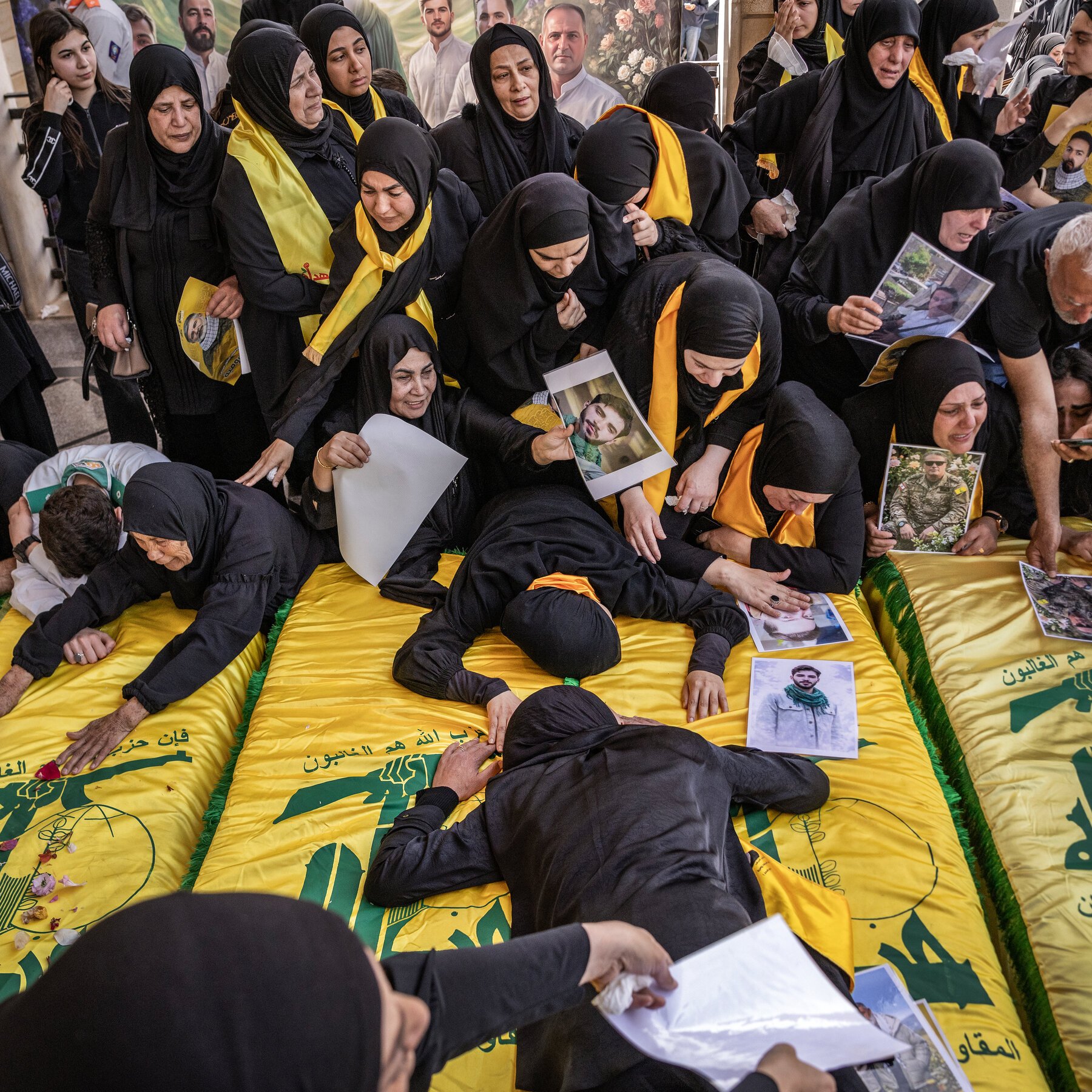
On the morning of 2 May 2026, Israeli aircraft conducted a series of airstrikes against the town of Maifadoun in the Nabatieh District of southern Lebanon, according to initial reports from wire services and open-source monitoring feeds. A fourth consecutive raid struck the nearby town of Aba, while Hebrew-language media carried early reports of a security incident involving Israeli soldiers operating in the southern Lebanese sector. Within hours, a separate disclosure — carried by outlets including the Arabic-language service of Al Alam — surfaced: Israeli military officers had privately briefed their own chain of command with a warning that Hezbollah was making extensive use of guerrilla tactics, and that the situation on the ground was not developing as anticipated.
The sequencing matters. The strikes project military force; the briefing suggests that force has limits. That tension — between what the air campaign is designed to accomplish and what officers at the working level are actually observing — is where this story lives. It is also, historically, where most Israeli campaigns in southern Lebanon have run into trouble.
Immediate Context: What the Strikes Were Meant to Signal
The strikes on Maifadoun and Aba landed in the Nabatieh District, a Hezbollah stronghold that has sat in the crosshairs of Israeli contingency planning for years. Nabatieh is not peripheral territory. It sits at the intersection of multiple road networks connecting the Bekaa Valley to the southern coast, and it has served as a logistical node for Hezbollah's force disposition along the Litani River corridor. Targeting it signals intent: Israel is not merely conducting reprisal strikes in response to specific provocations. It is working through a target set.
The fourth raid on Aba compounds the picture. Repeated strikes on the same town within hours suggest either a target that failed to respond as expected on the first pass, or a grid that is being deliberately cleared in sequence. Neither interpretation is reassuring in the context of an open-ended ground-incursion dynamic.
Israeli military spokespersons have not yet released a full statement on the operation as of this publication, and casualty figures from the strikes have not been independently confirmed. That uncertainty is worth noting upfront — the wire record on 2 May reflects initial reports, not final assessments. The gap between what is reported and what is confirmed is itself a feature of this kind of fast-moving strikes cycle.
The Counter-Narrative: Why the Guerrilla Warning Should Not Be Dismissed
Here is the part of the story that will not fit neatly into a "Israel strikes Hezbollah positions" headline: Israeli officers are, by their own account, worried about what they are finding on the ground.
The framing — that Hezbollah's "extensive use of guerrilla warfare" has created an environment that military commanders did not fully anticipate — should be taken seriously on its own terms, not just as spin. Guerrilla warfare is not a fallback position or a sign of weakness. It is a deliberate strategy designed to exploit the specific vulnerabilities of conventional forces: their dependence on road networks, their sensitivity to casualty publicity, and their need for clear lines of demarcation that guerrilla formations deliberately refuse to respect.
Hezbollah has had since 2006 to study the lessons of that conflict. The organization's military doctrine has been extensively documented in open-source defense analysis, and its investment in tunnel networks, short-range rockets, anti-tank weapons, and intelligence infrastructure in southern Lebanon reflects years of institutional preparation. The officers' warning that the situation is "not developing" as expected does not suggest incompetence on the Israeli side — it suggests that the adversary has been preparing for this scenario with a discipline that deserves respect.
There is a further wrinkle. Hebrew-language media reports on 2 May also flagged a "security event" involving Israeli soldiers in southern Lebanon. The phrasing is deliberately vague because details remain unconfirmed, but the association of that language with simultaneous guerrilla-warfare warnings from officers suggests the two data points may be connected. If Israeli ground forces are encountering ambushes, improvised explosive devices, or hit-and-run attacks at a rate higher than planned for, the operational picture changes quickly.
Structural Frame: Air Power, Ground Truth, and the Historical Pattern
The limits of air power against dispersed, tunnel-hardened, locally networked militant formations are not a new discovery. They have been demonstrated in every major application of air-centric military doctrine over the past three decades — from the Balkans to Iraq to Libya. The pattern is consistent: air campaigns can degrade infrastructure, destroy fixed positions, and impose costs on adversary logistics. They cannot, by themselves, secure terrain. Securing terrain requires ground presence; ground presence in guerrilla territory requires forces to operate in an environment designed to neutralize conventional advantages.
Israel has confronted this pattern before in southern Lebanon. The 2006 Lebanon War — a 34-day conflict — ended without a decisive military outcome precisely because Israeli air and artillery bombardment could not dislodge Hezbollah from its prepared fighting positions, while the ground incursion that followed encountered the same guerrilla resistance that officers are now reportedly flagging. The political outcome of that war was ultimately managed through diplomatic channels, not military decision.
Hezbollah's current posture reflects that institutional memory. The organization does not need to win in the conventional sense. It needs to impose costs on Israel sufficient to make the political sustainability of the campaign fragile. Israel's challenge is the same one it has faced before: the cost structure of an open-ended ground operation in southern Lebanon, against an adversary that controls the terrain and has prepared for exactly this fight, is very high.
That does not mean the strikes on Maifadoun and Aba are without effect. Targets of military value may have been destroyed. Command nodes, weapons caches, and tunnel access points can be degraded through repeated strikes. The question is whether the degradation is occurring faster than the adversary can reconstitute, and whether the cumulative pressure is sufficient to alter Hezbollah's calculus — or whether it is instead reinforcing the organization's narrative that Israel cannot be deterred except through sustained attrition.
Stakes: Who Wins If the Pattern Holds
If the officer warnings reflect an accurate operational picture, the strategic trajectory points in a direction that will disappoint those who anticipated a short, focused campaign. A sustained Israeli ground presence in southern Lebanon — or a prolonged cycle of strikes without a political endpoint — creates a specific distribution of winners and losers.
Hezbollah wins if the operation becomes prolonged enough to generate international pressure on Israel to withdraw without a decisive outcome. The organization's political wing also wins if civilian casualties from strikes accumulate in ways that damage Israel's international standing, regardless of the military picture on the ground.
Israel's allies in Washington and European capitals face a secondary cost: the political fallout from a conflict that generates refugee flows, cross-border displacement, and humanitarian deterioration in a context where diplomatic channels for de-escalation are already strained.
Lebanese civilians in the south face the most immediate and direct costs. Whatever the strategic calculus of either side, the towns of Nabatieh District are inhabited by people who have lived through multiple cycles of conflict and have no agency over the decisions that determine whether this cycle ends differently.
The officer warnings from 2 May are a signal — not a conclusion. Military assessments change as new information surfaces, and a single day's briefing does not define an operational reality. But the signal is consistent with a pattern that has played out before in exactly this geography. The question is whether this time, the political and military leadership will read it differently.
This publication's coverage of Israel-Lebanon incidents prioritizes Western and Israeli wire framing; Iranian state-adjacent Telegram sources (alalamarabic) are cited as counter-claim material with explicit caveats and do not serve as primary factual basis.
Wire provenance
This editorial synthesis draws on the following public wire/social posts:
- https://t.me/wfwitness
- https://t.me/alalamarabic
- https://t.me/alalamarabic
- https://t.me/alalamarabic