The Pirate Economy: Trump's Confession and the End of the Maritime Order
When the President of the United States frames attacks on civilian shipping as a profitable business, he is not misspoken. He is describing the logic of a dollar hegemony that has run out of diplomatic cover.
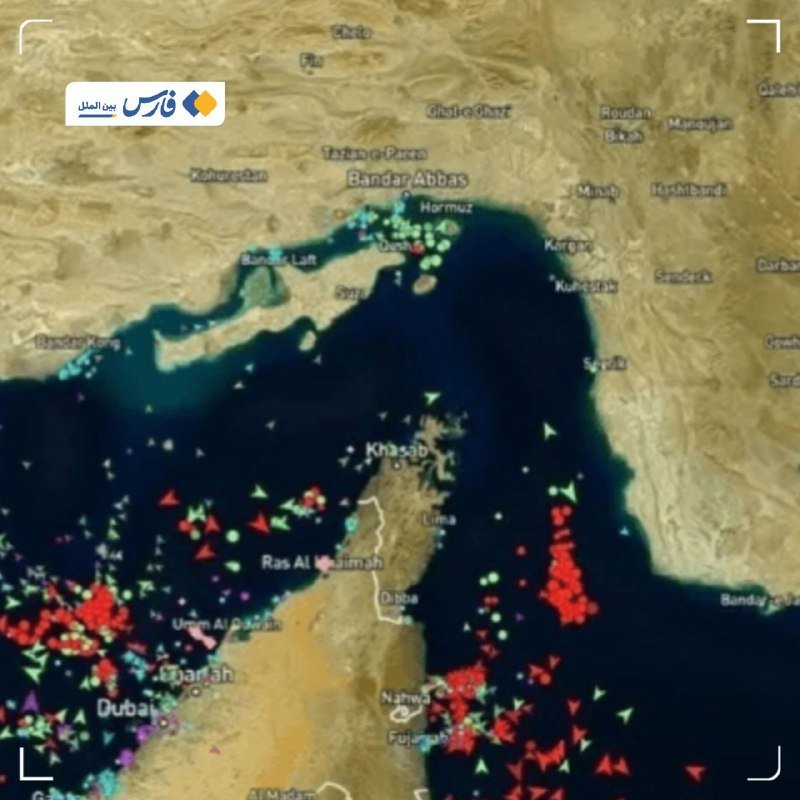
There is a category of statement that is not quite a gaffe but reveals more than a prepared address ever could. On 2 May 2026, according to reporting carried by Iranian state Arabic-language outlet Al-Alam, the President of the United States addressed commercial ships transiting waters near Iran and described the dynamic in terms that would be familiar to any Barbary Coast privateer: he said the United States "acts like pirates" and called the arrangement a "profitable business." The comment landed in the middle of a week already marked by escalating tensions with Tehran, and it did not arrive without context.
What Trump appears to have done, if the Al-Alam account is accurate, is drop the diplomatic grammar that typically insulates American naval policy from scrutiny. For decades, the United States has framed its maritime posture as the maintenance of a global commons — freedom of navigation, the unencumbered movement of trade, the rules-based order of the seas. That framing served a purpose: it generalized American naval power as a public good, available to all, beneficial to many. What the President's reported comments suggest is that the administration has begun reclassifying that public good as a private service — one that comes with a bill attached.
The Geography of a Profitable War
The Iran–US maritime confrontation did not begin this week. American destroyers have operated in the Persian Gulf, the Gulf of Oman, and the Arabian Sea under the banner of freedom of navigation for years, sometimes engaging in confrontational close passes against Iranian vessels in what Pentagon spokespeople describe as routine operations in international waters. The distinction between a freedom-of-navigation operation and an act of interdiction against a flagged commercial vessel is, in the legal and operational literature, a significant one. The former is assertion of right; the latter is a violation of the law of the sea.
Trump's framing collapses that distinction. Where a State Department brief would speak of deterrence, of maintaining stability in a critical choke point, of the broader strategic interest in Gulf energy flows, the language attributed to the President speaks a simpler dialect: you pay for protection, or you do not pass. This is not the lexicon of a hegemon defending a shared order. It is the lexicon of a protection racket in which the enforcer and the beneficiary are, by his own account, the same entity.
When the Rules Become Optional
The Iran file is not the only terrain where the current administration has treated international norms as negotiable instruments rather than binding commitments. Tariff escalation has proceeded without the customary WTO consultation period. NATO spending demands have arrived in the language of transactional arrears rather than collective defence obligations. Arms control agreements have been set aside on the declared grounds that they constrained American freedom of action disproportionately. Each step has been individually rational from the perspective of raw leverage; together they form a pattern that the President's reported comments make explicit. The rules-based order, in this framing, is not a structure the United States co-authored and upholds because it shares the values embedded in it. It is a menu from which the United States selects the items it finds useful at any given moment.
That framing has always been present beneath the surface of American foreign policy. What changes when the President states it plainly is that the alibi — the language of multilateralism, shared norms, collective benefit — is no longer doing its work. The diplomatic function of that language was to make American power legible to allies and tolerable to adversaries. Strip that away and what remains is a naked assertion: the seas are safe when we say they are, and passage is contingent on our approval.
The Censorship Cusp
American Senator Chris Murphy, in a statement carried alongside reporting on the Iran confrontations, described what he characterized as an emerging infrastructure of censorship — a trajectory, he argued, in which the administration would move to control information as the military engagement deepens. The linkage is not incidental. The logic of a profit-and-loss calculus applied to maritime security requires that dissenting accounts of what is happening in the Gulf be suppressed or discredited: the ships being interdicted are not being robbed, they are receiving a service; the sailors detained are not prisoners, they are fees in escrow. That reading requires a compliant information environment to sustain itself.
The sources do not document a specific censorship mechanism or legislative move as of this writing, and that qualification matters. What Murphy's statement identifies is a directional tendency — a government that has decided certain facts are inconvenient and is moving to manage them — rather than a fully executed programme. That distinction is worth preserving. The risk is not only that censorship exists but that the normalization of unaccountable executive force makes it easier to sell.
The Stakes of a Naked Premise
If the world's most capable navy openly describes itself as a protection racket, the implications extend well beyond Iran. The entire architecture of maritime law — the UN Convention on the Law of the Sea, the customary protections for flagged vessels, the protocols for seizure and detention — rests on a shared premise that the seas are a global commons regulated by agreed rules rather than by the preferences of whoever holds the most tonnage. A single state openly repudiating that premise does not immediately dissolve the regime, but it fundamentally alters the bargaining position of every other maritime power. Small and medium navies, merchant fleets operating under flags of convenience, coastal states in the Global South who have built trade relationships around the assumption of protected passage — all of them are now negotiating from a more precarious position than they were a week ago.
The President's reported comments are, at one level, a domestic political signal — an attempt to reframe a military escalation as a revenue-generating enterprise legible to an electorate conditioned to think of foreign policy in economic terms. But the international system does not run on domestic political logic. It runs on precedents, and the precedent being established is that the rules of the seas are whatever the United States says they are, when it chooses to say so. That is a world that is harder to navigate for everyone who is not the United States Navy. The question is whether that was ever unintended.
Wire provenance
This editorial synthesis draws on the following public wire/social posts:
- https://t.me/alalamfa/84732
- https://t.me/nexta_live/293847
- https://t.me/alalamfa/84731