Spirit Airlines' Collapse Exposes the Myth of the Doomed Budget Carrier
Spirit Airlines shut down on 2 May 2026 after rescue talks with the Trump administration collapsed, ending a years-long financial spiral. The episode exposes a durable tension in American industrial policy: how government decides which failing companies deserve help, and who bears the cost when the answer is no.
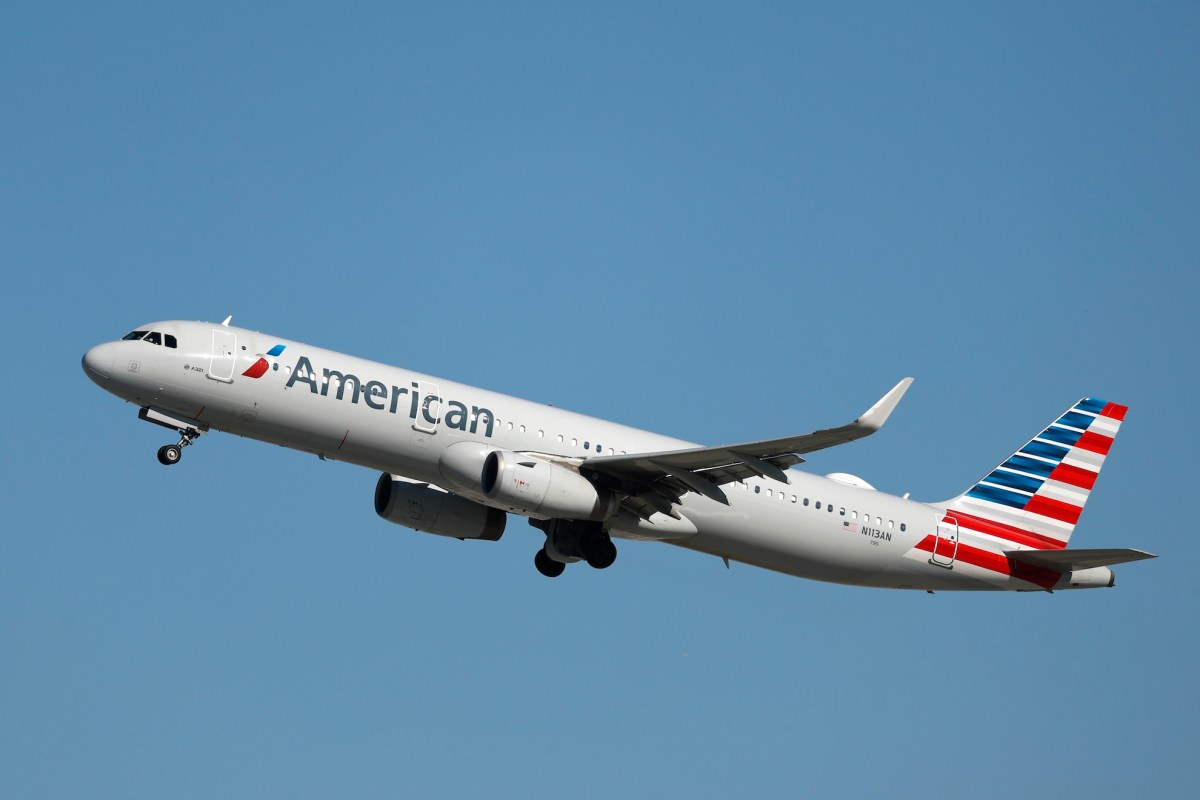
The last Spirit Airlines aircraft left no doubt about the outcome. On 2 May 2026, the ultra-low-cost carrier shut down formally, canceling all remaining flights and beginning the process of unwinding its Chapter 11 bankruptcy proceedings. The end had been deferred, not prevented. Passengers who had booked months ahead found themselves stranded mid-journey, rebooking at higher fares with carriers that suddenly had little incentive to compete on price. The terminals Spirit once crowded with budget travelers returned to something closer to their pre-disruption quiet.
Spirit filed for Chapter 11 protection in May 2026, ending what had become a slow-motion unraveling that the market had priced in years earlier. The carrier had carried roughly $2.4 billion in debt and was managing lease obligations on an Airbus fleet it could no longer profitably operate. As an ultra-low-cost carrier, Spirit's entire model depended on filling seats at margins that left almost no cushion for fuel volatility, demand troughs, or competitive pricing pressure from larger rivals. When that cushion vanished, the financial structure collapsed.
The rescue talks that preceded the bankruptcy were real, substantive, and ultimately unsuccessful. Spirit had been in active negotiations with the Trump administration about a federal assistance package, people familiar with the discussions confirmed. The reported size of the proposed package — $500 million — reflected the scale of the carrier's immediate liquidity needs, though the precise form of any government involvement remained unclear throughout the talks. No formal term sheet or Treasury commitment appears in the public record; what existed was a negotiation, not an agreement.
What the public record does show is that those talks ended without a deal. Spirit entered the bankruptcy process without the federal backstop it had sought. The company proceeded to wind down operations rather than attempt a reorganization that depended on external capital the market would no longer supply at viable terms.
The Trump factor
Donald Trump publicly weighed in repeatedly on Spirit's fate. On 1 May 2026, Trump posted to his social media platform that he was still considering a taxpayer-funded deal to bail out Spirit Airlines, a statement that arrived days after the rescue talks had effectively collapsed. The post kept the question of federal intervention alive as a political matter even as the corporate situation had moved beyond rescue.
The president's engagement with the Spirit file was not incidental. The administration had been willing to examine a federal package worth approximately $500 million, according to reporting on the talks. What that package would have contained in practice — direct grants, loan guarantees, targeted assistance for workers — went unspecified in public comments. No Department of the Treasury or Department of Transportation filing documents the contours of any formal proposal, leaving the public record to inference rather than evidence.
The political geometry around the deal was intricate. A federal rescue of Spirit would have been framed as a jobs-and-travel-access intervention: thousands of front-line workers, routes serving small and mid-size airports, a competitor keeping fares lower across the network. It would equally have attracted scrutiny as a bailout of a business whose own strategy had failed. The administration was navigating those competing framings publicly, which is what made Trump's statements — rather than a quiet back-channel negotiation — the visible face of the government's posture toward Spirit.
The stock market had, in effect, decided Spirit's fate before the administration did. By the time rescue talks became a matter of public record, Spirit's share price had already lost the overwhelming majority of its value. The market had assessed that the carrier's business model was no longer commercially viable under any plausible scenario, a judgment that made federal intervention the only remaining question, not the central one.
A balance sheet that ran out of time
Spirit had been struggling financially well before the final collapse became visible. The carrier posted material operating losses in 2023 and 2024, reflecting both competitive pressure from larger rivals and a cost structure that left minimal margin for error. Debt obligations were significant and compounding. Spirit's post-pandemic recovery was weaker than the broader travel market, which itself disappointed carriers that had anticipated a sustained demand uplift.
The Chapter 11 filing in May 2026 formalized what the market had effectively decided years earlier. The airline had already suspended operations by the time the bankruptcy papers were filed — the filing was the legal conclusion of an operational fact, not the start of a recovery attempt.
Ultra-low-cost carriers operate with structural fragility baked into their business model. They succeed when volumes are high and costs are controlled; they fail when either condition breaks down. Spirit's collapse was not a sudden shock but a慢性 erosion — of margins, of route viability, of the financial cushion that allowed it to compete on price rather than service.
The market structure question
The American domestic airline market is highly concentrated. Four major carriers control the substantial majority of domestic capacity, a consolidation that accelerated through the 2010s. Ultra-low-cost carriers like Spirit were introduced as a structural corrective: competitors that forced down fares, served underserved routes, and created pricing pressure that benefited travelers system-wide.
Spirit largely delivered on that function for over a decade. The carrier's presence on a route correlated with lower average fares for all carriers on that route. That competitive contribution is documented in airline pricing data from the Department of Transportation and independent fare analysts, and it is not seriously disputed.
What the Spirit episode reveals is the limits of that competitive corrective when the ultra-low-cost carriers themselves are financially fragile. When Spirit exits, the routes it served lose a competitor. The remaining carriers — predominantly the four majors — absorb the freed gates and slots. Fares on those routes tend to rise. The competitive pressure that Spirit was there to create disappears at the exact moment its absence is most felt.
The consolidation logic runs in one direction: the big carriers get bigger, the ultra-low-cost challengers who competed with them lose capacity, and travelers end up with fewer alternatives at higher prices. That dynamic does not require a conspiracy. It is a structural outcome of an industry whose cost structure favors scale and whose market has been clearing toward concentration for fifteen years.
What comes next for travelers and policymakers
The immediate impact of Spirit's shutdown is concentrated among its former passengers and workers. Travelers who held bookings have had to rebook with other carriers, typically at higher fares. Spirit's employees face the standard dislocation of an airline bankruptcy, with WARN Act notices and union negotiations shaping the timeline for workforce adjustments.
The structural question is harder and slower-moving. Spirit's failure does not resolve the competitive dynamics that squeezed the carrier in the first place. If anything, the conditions that made Spirit's model unsustainable — concentrated competition, cost inflation, a revenue-per-passenger model under pressure — will continue to constrain the remaining ultra-low-cost operators. The next candidate for a similar outcome is not obvious, but the logic that applied to Spirit has not changed.
For policymakers, the Spirit episode clarifies a durable tension. Government intervention in a company's financial failure is politically available in theory and practically constrained by the fact that markets typically reach their own conclusions before the paperwork is filed. The administration declined to proceed with a reported $500 million package — a decision framed in public as a refusal to bail out a business whose model had failed, and in private as a calculation that the capital required to sustain Spirit was greater than any plausible federal commitment would cover.
What Spirit's collapse ultimately demonstrates is that the question of whether government should rescue a failing company is rarely resolved by policy principles alone. It is resolved by balance sheets, by market timing, and by political judgments made before the market has already settled the answer. The workers and travelers who depended on Spirit are left with the consequences either way.
This publication's coverage of the Spirit Airlines bankruptcy differs from much of the wire reporting in its emphasis on the structural fragility of the ultra-low-cost carrier model rather than the political drama of the failed federal package. The financial and competitive dimensions of the collapse — not the bailout negotiations alone — are the article's primary focus.
Wire provenance
This editorial synthesis draws on the following public wire/social posts:
- https://t.me/BBCWorldoffl/31482
- https://t.me/BBCWorldoffl/31481
- https://x.com/unusual_whales/status/1918278345725841638