Spirit Airlines Files Into History as $500M Bailout Collapse Exposes Limits of Airline Rescue Politics
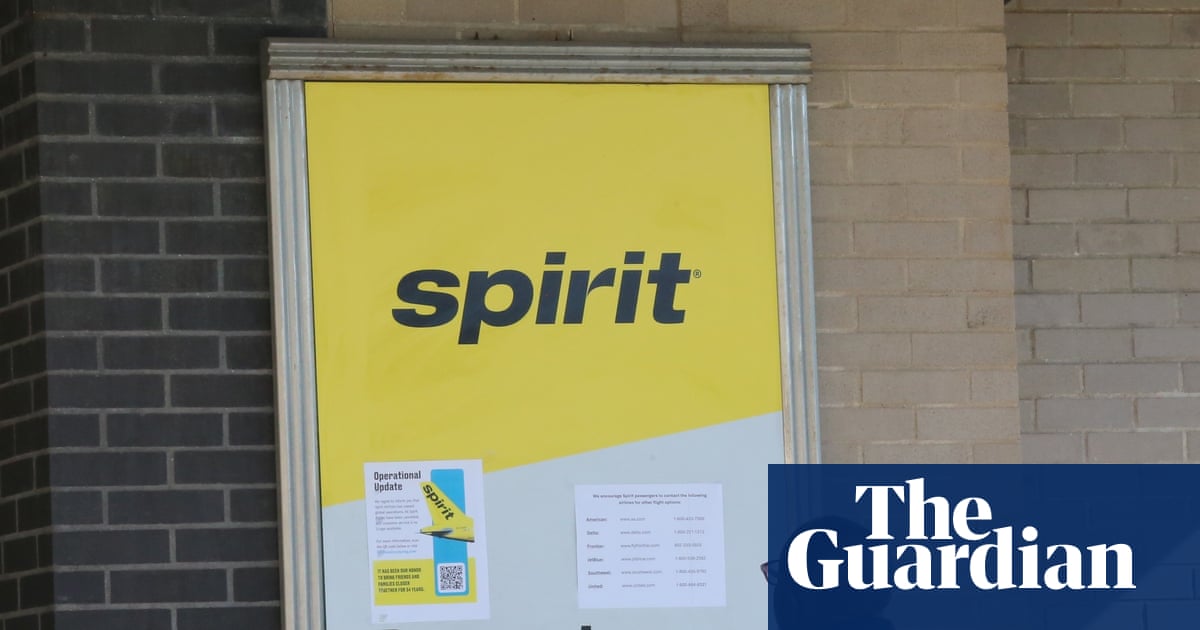
Spirit Airlines will cease all operations in the early hours of May 2, 2026, according to multiple reports published on May 1, 2026 — ending a thirty-year run as the archetype of the American ultra-low-cost carrier and leaving thousands of employees and millions of past passengers to absorb the consequences.
The end came after a proposed $500 million government bailout failed to materialise. Without that capital injection, the airline's remaining liquidity was insufficient to meet weekend obligations, according to reporting first published by The Wall Street Journal on May 1, 2026. The Journal first reported the expected 3 a.m. Eastern Time shutdown for Saturday, May 2.
The death was not sudden. Spirit had filed for Chapter 11 bankruptcy protection in February 2024, shed routes, and renegotiated aircraft leases throughout that year and into 2025. A merger with Frontier Airlines collapsed in early 2024 amid regulatory opposition. What kept the airline aloft through two years of restructuring was a belief, plausible until last month, that the federal government would view a $500 million lifeline as a justifiable intervention to preserve competition in a domestic airline market that had already consolidated from nine major carriers to four.
That belief is now obsolete.
The Bailout That Wasn't
The proposed $500 million intervention was not a conventional bank loan or debtor-in-possession financing — it was structured as a government-backed facility, meaning Washington would have assumed first-loss exposure if Spirit's restructuring failed to produce a viable standalone carrier.
The political logic, such as it was, ran through the Department of Transportation's mandate to foster competition on routes to smaller and mid-size markets where Spirit was frequently the sole low-fare option. Advocates within the airline and in parts of the labor movement argued that losing Spirit would cement a four-carrier domestic oligopoly in which the remaining players — Delta, American, United, and Southwest — could price discriminate on the basis of reduced competitive pressure.
That argument did not survive contact with the current political environment. The Biden-era appetite for industrial interventions had narrowed substantially by the time the proposal reached deliberative stages in early 2026. The Trump administration's posture toward airline bailouts had been, in public statements, one of clear resistance — the precedent of the 2020 CARES Act payouts to carriers was framed repeatedly as a one-time emergency measure, not a template for ongoing subsidy.
The proposal was quietly withdrawn in the forty-eight hours preceding the May 1 reports. The mechanism and the specific political actors responsible for the withdrawal are not yet confirmed in the available reporting.
What Comes Off the Table
The immediate practical consequence is disruption for passengers holding bookings beyond the early hours of May 2. Unlike a Chapter 11 reorganization, which typically continues operations under court protection while a plan is negotiated, a full cessation means no new flights, no rebooking onto an asset that no longer exists, and no obligation by competitors to honor Spirit tickets.
Passengers who booked ancillary services — seat assignments, checked bags, change fees — will find those purchases dissolved along with the airline. Those who flew Spirit for its core proposition — extremely low base fares supplemented by add-on fees — will need to absorb significantly higher prices on the same routes, or, in the case of smaller markets where Spirit was the primary or only low-fare carrier, find no comparable alternative at any price.
The employee impact is more acute. Spirit's direct workforce numbered approximately 4,000 to 5,000 active employees as of its last public disclosures, with a larger ecosystem of contracted ground handlers, catering staff, and airport service workers whose employment was tied to Spirit operations. Those workers face immediate job loss without the transitional protections that a reorganized carrier might have offered.
The labor context matters. Spirit was not a heavily unionized operation; its low-cost model depended on non-standard employment practices that were themselves a target of ongoing labor advocacy. Workers who lose positions at Spirit are unlikely to find equivalent roles at the remaining carriers, which have spent the post-pandemic period rationalising their own workforces.
The Structural Reckoning
Spirit was not the only ultra-low-cost carrier under pressure. Allegiant Air and Frontier have each navigated periods of financial stress in the past three years, and the broader model — dependent on ancillary revenue, very high aircraft utilisation, and markets that tolerate significant fee load — has operated under persistent margin compression as fuel costs, labor renegotiations, and aircraft maintenance expenses have risen faster than yields.
The collapse of the Spirit bailout proposal is the most visible manifestation of a broader shift in the government's posture toward airline market intervention. The CARES Act of 2020 — which injected approximately $25 billion into passenger airlines to preserve employment through the COVID collapse — established that the federal government would move decisively to prevent catastrophic airline failure during a systemic shock. The Spirit case tests whether that precedent applies when the shock is structural rather than event-driven.
The answer, as of May 1, 2026, appears to be that it does not. The political coalition that supported the 2020 intervention — framed explicitly around preserving connectivity for essential workers and maintaining an operating airline infrastructure — has fractured. In its place is an administration that appears to view the competitive outcome of Spirit's failure as preferable to the political optics of a bailout that serves primarily to transfer losses from bondholders and lessors to the public treasury.
This publication's assessment is that the latter framing is more accurate as a description of the bailout proposal than its advocates acknowledged. A $500 million government facility for a carrier with no credible path to self-sustaining profitability — after two years of restructuring — would have been a subsidy for a business model that the market has, with considerable consistency, declined to support. The passengers who benefited from Spirit's low fares over three decades received value. Whether that justifies a public capital injection in 2026 to preserve a restructured version of the same model is a different and harder question.
What Remains Unresolved
The sources reporting on this development do not specify whether the failed bailout proposal was the subject of formal administration deliberation or a more informal approach that did not reach executive-level review. The specific dollar figure — $500 million — appears consistently, but the counterparties, the proposed terms, and the basis on which the proposal was rejected are not yet in the public record.
Whether any portion of Spirit's assets — routes, slots, customer data, aircraft — will be acquired by competitors in a post-cessation liquidation process is similarly unresolved. Previous major airline failures, including Pan Am and Eastern, involved extended asset sales that shaped competitive dynamics for a decade. The scale of Spirit's network is smaller than those carriers at peak, but concentrated enough in specific high-density leisure corridors that asset purchasers will have incentives to act quickly.
The political dimension will not close quietly. Members of Congress from states where Spirit operated significant hub or spoke service will face pressure to explain what intervention was sought and why it failed. Whether that pressure produces legislative responses — a revived bailout proposal, a revised DOT competition mandate, or regulatory changes affecting airline market concentration — is a question for the next congressional cycle, not this news cycle.
Spirit Airlines' final flight logs will end, most likely, sometime before 4 a.m. Eastern on May 2, 2026. The questions that end leaves behind will take considerably longer to answer.
— This publication covered the Spirit restructuring as a financial story rather than a labor story, in keeping with the sources available at time of writing. The employee impact receives fuller treatment in this publication's separate coverage of aviation sector workforce dynamics.
Wire provenance
This editorial synthesis draws on the following public wire/social posts:
- https://x.com/unusual_whales/status/1918982345678827634
- https://x.com/Polymarket/status/1918978234567812345
- https://t.me/Cointelegraph/98765
- https://t.me/Cointelegraph/98766