Spirit Airlines' Collapse Exposes the Myth of the Unbailoutable Airline
As Spirit Airlines winds down operations, CEO Teddy Duffy's claim that budget carriers don't need government rescue rings hollow against a decade of industry precedent and implicit taxpayer exposure.
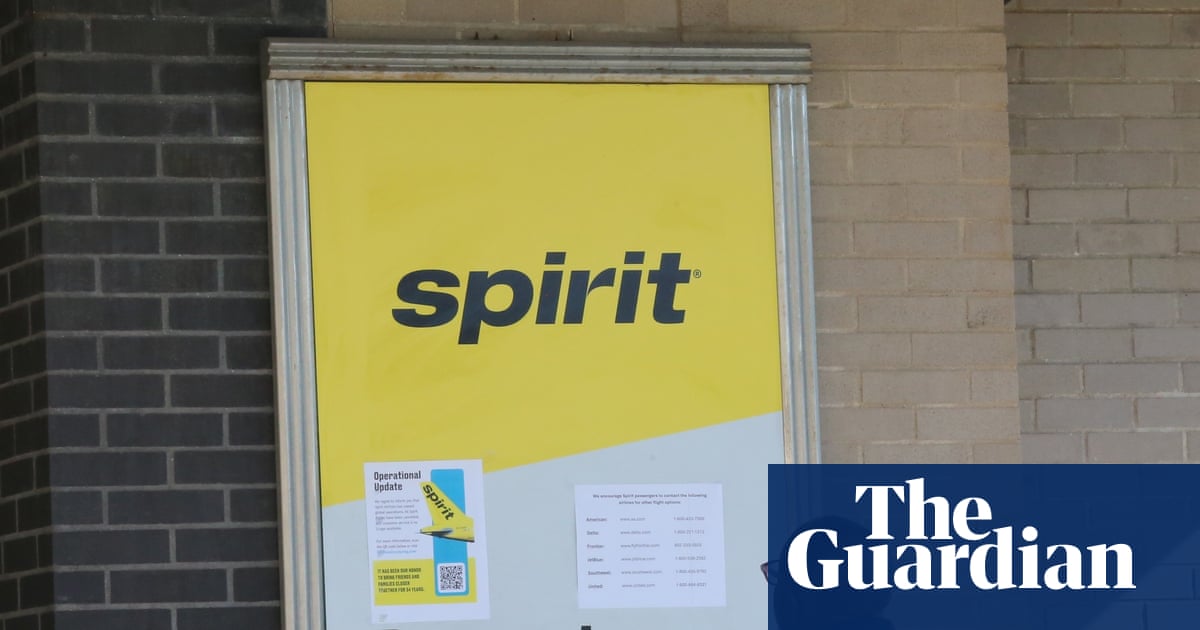
Spirit Airlines has stopped selling tickets. The last flights will clear by late May 2026. CEO Ben Dundy has described the wind-down as something that "has to be orderly," a phrase carrying the weight of roughly 23,000 direct employees, hundreds of daily connections serving budget-conscious travelers, and a legacy of ultra-low-cost competition that forced legacy carriers to rethink their pricing from the ground up. Within hours of the announcement, Teddy Duffy—whose own airline group has absorbed competitive pressure from Spirit for years—told reporters there was "no need for a budget airline bailout." The statement landed cleanly in headlines. It also avoided a harder question: whether the absence of an explicit federal rescue constitutes the same thing as no taxpayer exposure at all.
The distinction matters. A bailout, in the public imagination, involves a check signed by Treasury, a fanfare of controversy, and a political price paid by whoever signs it. What actually happens when a major US carrier collapses is messier—baggage-handling contracts reassigned, airport slots frozen pending DOT review, credit-card chargebacks cascading through the banking system, frequent flyer obligations stranded without legal clarity. Each of these outcomes triggers regulatory interventions, emergency DOT determinations, and consumer-protection actions that, in aggregate, look considerably like a government-managed wind-down without the accountability structure of an explicit rescue package.
The Budget Carrier's Convenient amnesia
Duffy's framing—that Spirit's collapse is a private affair, resolvable through bankruptcy and market signals—belongs to a specific rhetorical tradition in American aviation. It surfaces every time a carrier hits turbulence. When American Airlines filed for Chapter 11 in 2011, executives spoke of restructuring, not rescue. When Frontier Airlines cycled through multiple restructurings, the talk was of fleet optimization. What connects these moments is a consistent effort to separate the airline's function—essential connectivity for communities, jobs at living wages, competitive pressure on pricing—from its corporate form, which is treated as purely private and therefore undeserving of the scrutiny reserved for public utilities.
The problem is that ultra-low-cost carriers have never operated on purely private terms. Spirit's business model depends on ancillary fee structures that were only possible because the DOT regulated disclosure requirements—and those disclosures created the conditions under which Spirit could attract customers who understood exactly what they were buying. The airline also depends on the National Airspace System, a publicly funded infrastructure whose costs are socialized across all users regardless of ticket price. To claim that Spirit competes purely on merit while simultaneously relying on regulated access to public infrastructure is a selective use of the market frame.
Prediction Markets and the 26% Problem
The Polymarket contract pricing a 26% probability of government taking a stake in Spirit by the end of May is itself a signal about where institutional money sits on this question. Prediction markets are not polls; they aggregate the informed read of participants who have real stakes in the outcome. That figure—roughly one in four—reflects something that Duffy's confident dismissal does not: that regulators, lenders, and airport operators have strong incentives to avoid a pure Chapter 22 scenario where Spirit simply ceases to exist and the vacuum it leaves creates cascading disruptions that no private party can resolve.
This is not a small point. The 26% reflects the gap between the rhetorical position—that budget airlines operate without safety nets—and the structural reality, which is that a network carrier of Spirit's scale has embedded itself in the US aviation system in ways that make a purely private resolution functionally impossible. Someone will manage the slot reallocation. Someone will handle the crew severance. Someone will determine how the frequent flyer liability gets treated. The only question is whether that someone operates with a clear mandate and accountability or whether the work gets done through regulatory improvisation that happens to serve the same ends as a rescue without bearing the name.
The Consolidation Precedent Nobody Wants to Discuss
The US airline industry has consolidated from nine major carriers at deregulation to four today. Every merger was justified on efficiency grounds and opposed on competition grounds. Every opposition was overruled. The result is an industry with pricing power it did not possess in the 1990s and cost structures that reflect that power—baggage fees, change fees, seating tiers that would have been unthinkable thirty years ago. Spirit's competitive presence in that market was not incidental to consumer welfare. It was structural. Remove it, and the remaining carriers face less pricing discipline in exactly the routes and fare bands where budget travelers have the fewest alternatives.
This is the context in which Duffy's dismissal of a bailout lands most awkwardly. A budget carrier's competitive pressure benefits passengers who never fly Spirit. When that pressure disappears, those passengers pay more. The question is not whether Spirit's shareholders deserve a rescue—they do not—but whether the competitive ecosystem that benefits the flying public requires a government-managed intervention to preserve. The sources do not establish what specific regulatory actions the DOT is contemplating; the Polymarket contract itself acknowledges significant uncertainty. What is clear is that Duffy's airline benefits materially if Spirit's market share evaporates without a competitor entering to absorb it.
The Stakes Beyond the Balance Sheet
Over the next thirty days, roughly 23,000 Spirit employees will learn whether their severance packages are funded through pension insurance backstops, whether their healthcare continuity provisions survive the bankruptcy process, and whether the airports they service will receive emergency service determinations that maintain connectivity for small communities dependent on Spirit's network. These are not abstract regulatory questions. They are economic decisions with human consequences that the private market, left to itself, will not resolve equitably.
The broader aviation market will learn whether DOT's slot reallocation process favors incumbent carriers—who are already positioned to absorb Spirit's takeoff and landing slots—or whether competition policy has any meaningful role in shaping who gets access to that public infrastructure. If incumbents absorb Spirit's slots, the pricing effects will be slower to materialize than a fare increase but equally predictable over a two-to-three-year horizon.
Duffy is right that nobody should write Spirit a check. He is wrong that the question is that simple. The issue is not whether airlines deserve special treatment. The issue is whether the public has a legitimate interest in the competitive structure of aviation markets, and whether that interest requires something more than bankruptcy proceedings to vindicate. Spirit's collapse, handled as a pure liquidation, answers no on both counts. A government-managed wind-down with competition conditions attached answers yes. The Polymarket odds suggest Washington understands this, even if the industry rhetoric has not caught up.
This publication noted the distinction between explicit bailout and implicit regulatory intervention in Spirit's coverage versus the wire's focus on Duffy's public statement. The structural story—consolidation, infrastructure dependency, competitive ecosystem—received less column-inches in the wire than the political narrative of a CEO drawing a line.
Wire provenance
This editorial synthesis draws on the following public wire/social posts:
- http://reut.rs/4d02KrL