Spirit Airlines Collapses, Ending 34-Year Run as Budget Carrier
Spirit Airlines suspended all operations permanently at 03:00 ET on 2 May 2026, stranding passengers and leaving thousands of employees without jobs after a prolonged financial deterioration that resisted every restructuring attempt.
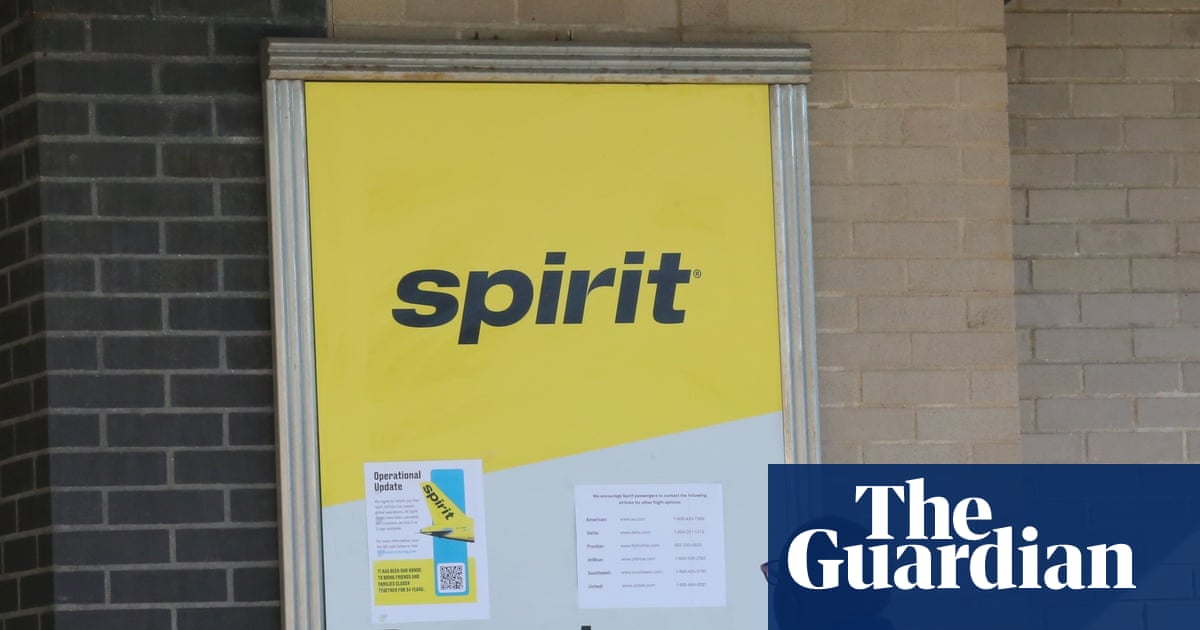
Spirit Airlines ceased all operations permanently at 03:00 Eastern Time on Saturday 2 May 2026, according to the airline's union representatives, bringing an end to 34 years of continuous service. Every scheduled flight was cancelled. Passengers who had already checked in found their journeys terminated mid-journey with no alternative carriage arranged. The collapse marks the most significant failure in the US commercial aviation sector since the post-pandemic consolidation wave reshaped the market's competitive geometry.
The shutdown was confirmed in the early hours of Saturday morning. A union official told sources that the airline's operational systems had been deactivated at the stated time, leaving no legal mechanism for further flights. Earlier reporting by The Wall Street Journal on Thursday evening had put the cease-fire time at approximately the same hour, with Polymarket subsequently reflecting elevated trading volumes on a motion to suspend operations. The convergence of union confirmation, financial-market indicators, and established media reporting gave the outcome the character of an open secret before the end arrived.
Spirit was founded in 1983 as a discount carrier operating out of Miramar, Florida, and grew into a publicly traded company that became the closest thing the United States had to a dedicated ultra-low-cost carrier model. Passengers paid a base fare stripped to its minimum; extras — carry-on bags, reserved seating, printed boarding passes — were priced as discrete add-ons. The model generated enormous brand loyalty among cost-sensitive travellers and persistent shareholder dissatisfaction in equal measure. When the airline filed for Chapter 11 bankruptcy protection in February 2024, it entered a restructuring process that would ultimately fail to produce a viable standalone outcome or a clean acquisition. Every structural alternative the company pursued over the subsequent months — merger proposals, equity injections, fleet reduction — fell short of the threshold required to sustain operations.
The immediate practical consequence is a stranded passenger problem at scale. Travellers who booked non-refundable tickets and arrived at airports to find no aircraft in the carrier's colours face a recovery process that will require credit card chargebacks, travel insurance claims, or, for many, direct financial loss. The Department of Transportation's airline consumer protection rules will govern some of the remediation obligations, but the enforcement timeline will be measured in weeks and months, not days. For passengers mid-journey on connecting flights that relied on a Spirit leg, the disruption is acute and immediate.
The workforce implications are severe. Spirit employed roughly 3,000 people at the time of the shutdown — pilots, flight attendants, ground crew, and back-office staff whose jobs vanish without warning on a Saturday morning. Federal WARN Act obligations require companies with more than 100 employees to provide 60 days' notice before mass layoffs. Whether Spirit complied with those obligations before operations ceased is a question regulators will need to address. Beyond the statutory requirements, the broader economic effect on the communities surrounding the 83 airports the carrier served will surface over the following months as local tourism spending patterns adjust to a reduced route network.
The ultra-low-cost carrier segment now faces a significantly altered landscape. Spirit was the only publicly traded dedicated ULCC operating in the United States; its departure leaves Frontier Airlines and Allegiant Travel as the principal remaining carriers serving that passenger demographic. Whether the two survivors absorb the demand freed up by Spirit's collapse is the immediate commercial question. Both have relatively modest fleet expansion plans and a more conservative growth posture than Spirit maintained at its peak. Adding routes requires aircraft, crew, and regulatory approvals — a process measured in quarters, not weeks. For the airports that built connecting traffic around Spirit's presence, the transition will not be seamless.
The consumer price signal that follows is predictable but worth examining carefully rather than assuming the worst. Spirit's departure removes a genuine floor from certain routes, particularly between large metropolitan hubs and secondary leisure destinations. The company's base fares historically averaged a fraction of what legacy network carriers charged on comparable city pairs. Whether remaining ULCCs move to capture that traffic at Spirit's former price points, or instead allow fares to drift upward now that direct competition has been removed, will define the market for budget-conscious travellers in the months ahead. The record suggests pricing discipline after a competitor's exit is the more common industry response than aggressive under-cutting, but the route-level dynamics vary enough that a uniform conclusion is too blunt an instrument.
Spirit is not the first legacy airline to fail, and its collapse fits within a longer arc of sector consolidation that accelerated through the 2010s. American Airlines and US Airways merged in 2013; United and Continental merged in 2010; Delta absorbed Northwest in 2008. Each combination reduced the number of meaningful competitors on overlapping route pairs and gave the surviving entities greater pricing leverage. The ULCC segment — Spirit, Frontier, Allegiant, and, briefly, Ryanair's US subsidiary — was supposed to provide a structural check on that tendency by serving passengers who would not engage with a network carrier under any circumstances. Spirit's exit narrows that counterweight materially.
The financial architecture of a defunct airline is complicated. Aircraft are leased from entities such as AerCap and SMBC Aviation Capital; engine maintenance contracts with CFM International and General Electric define obligations that do not automatically dissolve upon an operational shutdown; secured debt instruments sit above unsecured creditors in the priority queue when assets are liquidated. The Chapter 11 proceedings will continue — bankruptcy courts manage the wind-down, not the operational cessation — and the timeline for creditor recovery will run for years rather than months. Each constituency, from lessors to employees to frequent flyer members with unredeemed points, faces a different recovery horizon.
What is not in serious dispute is that the outcome was determined before this weekend. The company had pursued every available avenue — a failed merger with Frontier Airlines, a blocked acquisition by JetBlue that foundered on antitrust concerns, and a subsequent Chapter 11 process that failed to attract a buyer willing to meet the airline's debt obligations at anything close to a survivable valuation. Each of those failures left the carrier in a weaker position than it entered. The operations that ceased on Saturday had been declining for three years; the cessation simply made explicit what the structural evidence had suggested for considerably longer.
What remains genuinely uncertain is the second-order effect on the remaining ULCC operators and on the secondary airports that relied on Spirit's presence to maintain viable route economics. Whether Frontier or Allegiant expand into those markets depends on fleet availability, crew pipeline, and the financial calculations each management team applies to a route that a failed competitor previously served. The regulatory environment — already hostile to consolidation in the passenger airline sector following the Biden-era opposition to the JetBlue-Spirit deal — may factor differently into any acquisition consideration now that the competitive landscape has been altered without regulatory action. These questions do not resolve in the immediate aftermath of a shutdown. They define the medium-term trajectory of an industry that has been contracting, in one form or another, since the post-pandemic rebalancing.
The immediate task belongs to regulators and creditors: stranded passengers need to be made whole, employees need to be informed of their legal entitlements, and the asset base needs to be catalogued and administered. The longer task — whether the United States retains a functioning ultra-low-cost airline sector after the elimination of its most prominent practitioner — is a question that will not answer itself in the next few weeks.
This publication's coverage of Spirit's collapse foregrounds the structural dynamics of the ULCC model and the consumer implications of market exit — a frame that differed from wire reporting, which led with the operational details of the shutdown itself.
Wire provenance
This editorial synthesis draws on the following public wire/social posts:
- https://t.me/megatron_ron/42912
- https://x.com/unusual_whales/status/1920017825340796952
- https://x.com/unusual_whales/status/1919644072969916622
- https://x.com/polymarket/status/1920381689746915412