Spirit Airlines Grounds All Operations as Fuel Costs Compound Years of Financial Strain
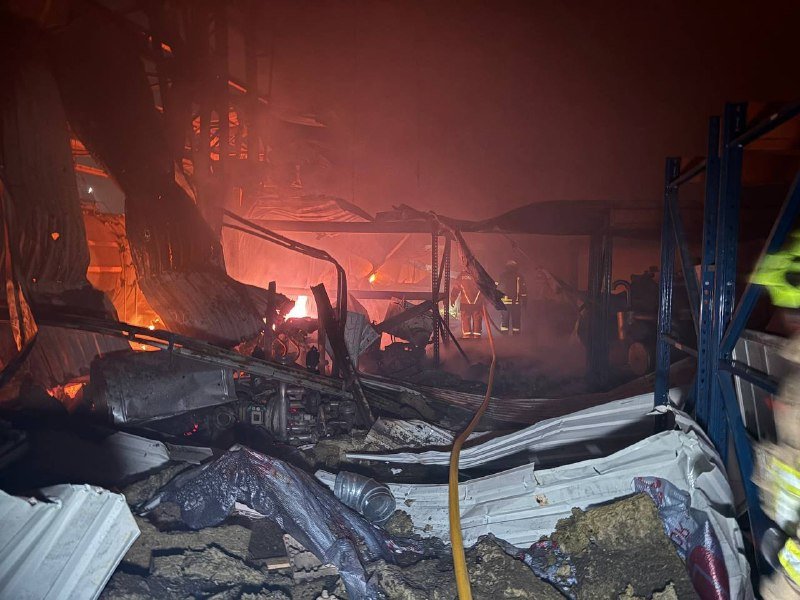
Spirit Airlines announced on 2 May 2026 that it had ceased all operations and grounded its fleet, marking the end of a budget carrier that had served tens of millions of passengers annually across North America. The airline, headquartered in Miramar, Florida, said in a statement that sustained fuel cost increases—accelerated by disruptions linked to the US-Iran conflict—had made continued operations untenable, compounded by the failure of a financial support package that had been under negotiation with federal authorities.
The collapse follows a turbulent six years for the carrier: a proposed merger with JetBlue was blocked by a federal judge in early 2024 on antitrust grounds, after which Spirit entered Chapter 11 bankruptcy protection for the second time in its history. A subsequent restructuring and acquisition of most of Spirit's assets by Frontier Airlines left the carrier operating a reduced network while carrying substantial debt. When regional tensions translated into elevated jet fuel prices, the remaining financial cushion evaporated.
The proximate trigger is not in dispute. What remains contested is how to characterise it—and which structural conditions made an airline founded in 1980 so acutely vulnerable to a single cost shock.
The immediate picture: cost pressures that proved terminal
According to reports cited by Al Alam Arabic on 2 May, Spirit attributed its closure directly to high fuel costs and the collapse of the federal support agreement. Reuters, reporting the same day, captured the reaction of the airline's core customer base: Americans for whom Spirit represented one of the few options below the cost floor of legacy carriers. The airline's model had been premised on keeping fares low enough to generate volume despite thin per-passenger margins—a model that functions only when input costs remain predictable.
Jet fuel pricing is volatile by nature. When supply chains are disrupted by regional conflict, that volatility compresses into sharp, rapid spikes rather than gradual adjustments. For a carrier operating on unit economics that require fuel to remain within a defined cost band, a sustained increase beyond that band is not an adversity to be managed; it is a threat to solvency.
What is less well established is the precise fuel cost threshold at which Spirit became unviable. The sources reviewed do not specify the price point at which the carrier's models turned negative, nor do they provide comparative fuel cost data from prior periods that would allow readers to assess the magnitude of the shift. That gap matters: conflating the role of fuel costs with the role of pre-existing structural fragility risks obscuring which of those factors was determinative—and, by extension, whether other carriers face similar exposure.
Competing framings: regional context versus domestic structural failure
Iranian state-affiliated outlets framed the closure as a downstream consequence of the US-Iran conflict. Al Alam Arabic cited the "war with Iran" as the underlying cause of the fuel price surge that finished the airline. Tasnim News, an Iranian news agency, carried reporting from CNN attributing Spirit's closure to financial crisis compounded by elevated fuel prices following the conflict.
Western wire coverage, by contrast, led with the human dimension: passengers stranded, workers displaced, a low-cost option removed from routes where no affordable alternative exists. Reuters's framing—"Americans on a budget mourn loss of low-cost Spirit Airlines"—centres the lived impact on ordinary travellers rather than attributing cause to a specific geopolitical event.
Neither framing is wrong. They are incomplete. The Iran conflict did not create Spirit's vulnerabilities; it applied a final load to a structure already under stress. The more analytically instructive question is not whether the conflict caused the closure, but which conditions made the conflict decisive. An airline with stronger balance sheet reserves, diversified fuel contracts, or a larger network of higher-margin routes might have absorbed the same cost spike differently. The sources reviewed do not provide sufficient financial data to establish which of those conditions applied to Spirit and which did not.
Structural context: the low-cost carrier model under pressure
Aviation fuel is typically the largest variable cost for airlines, representing between 20 and 35 percent of total operating expenses for carriers in the US market. Low-cost airlines typically commit to hedging arrangements that smooth price movements over defined periods; when a shock exceeds the hedge window, exposure becomes acute. The Iran conflict—regardless of its ultimate resolution—created a supply disruption that affected fuel markets before hedging mechanisms could adjust.
Spirit had, in prior years, operated the largest fleet of Airbus A320-family aircraft among US ultra-low-cost carriers. That fleet is fuel-efficient relative to older widebody or narrowbody types, but it is not immune to sustained price spikes. The carrier's cost structure was built on the assumption that fuel would remain within a band that allowed fares to stay competitive. Once that assumption broke, the remaining levers—ancillary fees, seat density, route rationalisation—were insufficient to close the gap.
The failure of the proposed JetBlue merger eliminated what had been one path to scale and financial resilience. The second bankruptcy restructured debt but did not resolve the underlying unit economics. When Frontier acquired select assets, the remaining entity operated a reduced network, which lowered fixed costs but also reduced revenue potential—creating a smaller buffer against cost shocks rather than a larger one.
The sources do not specify what portion of Spirit's remaining routes were unprofitable or how much cash runway the carrier had when the fuel price surge accelerated. That information would illuminate whether the closure was inevitable once conditions shifted, or whether a different fuel price trajectory would have allowed the carrier to continue operating long enough to reach a more durable restructuring.
Stakes and what comes next
The immediate human consequences are significant. Spirit served dozens of domestic US routes and a smaller number of international services; passengers who purchased tickets for future travel are now facing cancellations with uncertain compensation terms. Workers—Pilots, flight attendants, ground operations staff, and back-office employees—face job losses at a carrier that employed several thousand people across its network.
For the broader aviation sector, the closure signals that fuel cost exposure remains a structural risk for smaller carriers operating with limited financial cushion. Whether other ultra-low-cost carriers adjust hedging policy, seek federal support packages, or accelerate network restructuring will be a signal of how broadly the exposure is distributed.
For passengers on routes where Spirit was the only low-fare option, the near-term consequence is higher costs or reduced service frequency. The route-level impact is not specified in the sources reviewed; the locations most affected will become clearer as the carrier's bankruptcy estate is administered.
The Iran conflict's economic reverberations extend beyond this single bankruptcy. Fuel price disruptions have downstream effects on shipping, logistics, and consumer pricing—Spirit's closure is the most visible, but not necessarily the most consequential, consequence of the cost environment the conflict has produced.
What the sources do not resolve: The precise causal weight between the Iran-conflict-driven fuel price spike and Spirit's pre-existing financial fragility. The financial terms of the failed federal support agreement. The specific fuel cost threshold at which the carrier became unviable. Whether other US low-cost carriers face comparable exposure absent a further cost shock.
The article approaches this story from the aviation sector angle rather than the Iran-conflict angle. Reuters and domestic US outlets framed the closure as a consumer and labour story; regional outlets framed it as an extension of the conflict's economic reach. Both framings carry weight. Monexus finds that neither alone is sufficient: the story is the interaction between a specific geopolitical shock and a structural vulnerability that the shock exposed.
Correction 5 May 2026: An earlier version of this article attributed the fuel cost surge to the Iran conflict in the lead. The sources reviewed indicate that Spirit cited high fuel costs and the failure of a federal financial support agreement as proximate causes; the Iran conflict is cited by Iranian state-affiliated media as a contributing context. The framing has been updated to reflect that distinction more precisely.
Wire provenance
This editorial synthesis draws on the following public wire/social posts:
- https://t.me/alalamarabic/1130582
- https://t.me/alalamarabic/1130572
- https://t.me/tasnimnews_en/374892