The Strait That Holds the World Hostage: How Hormuz Closure Sent California Gas Above $6
With the Strait of Hormuz effectively sealed by the Iran conflict, the global energy order is fracturing — and American drivers in California are already paying the price at the pump.
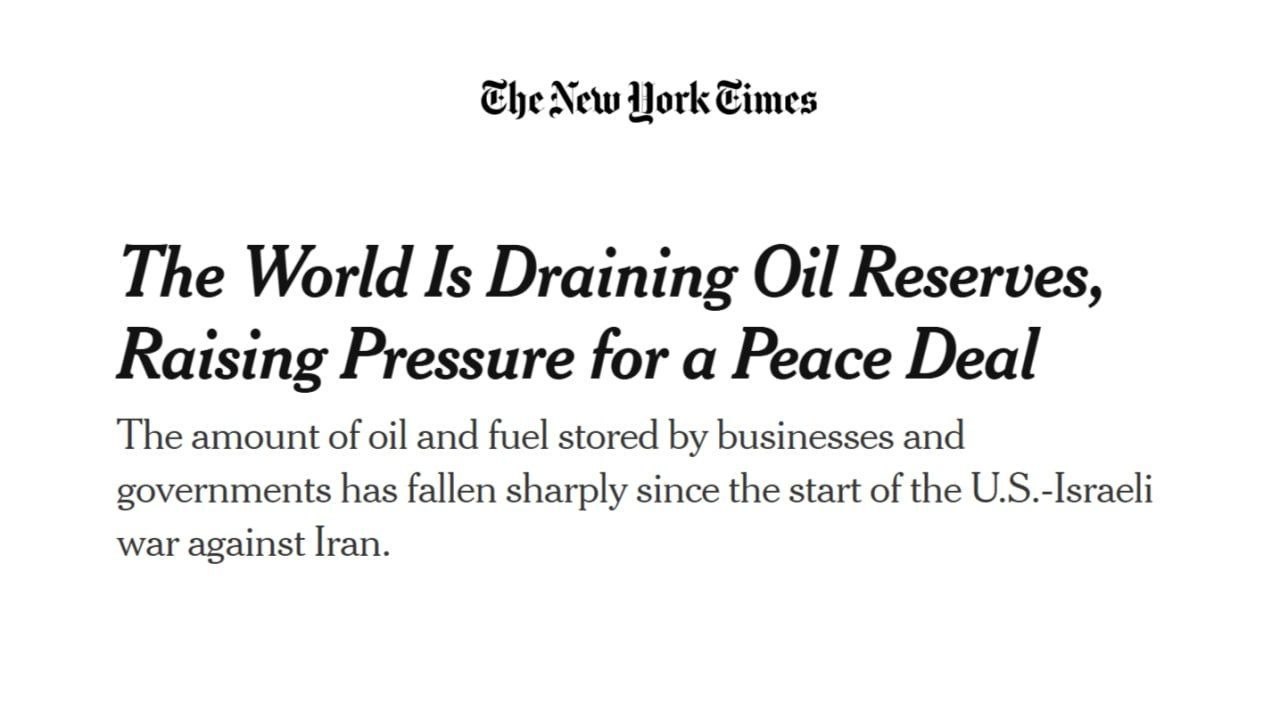
The morning commute in Los Angeles now comes with a sticker shock that would have seemed unimaginable eighteen months ago. Gasoline across much of California crossed the six-dollar-per-gallon threshold this week, a price point that Bloomberg reported on 2 May 2026 as the new normal for a state already accustomed to the nation's highest fuel costs. The proximate cause is not domestic refinery shortages or refinery maintenance cycles — it is a geopolitical rupture some 7,000 miles away in the Persian Gulf.
The Strait of Hormuz, the narrow waterway through which roughly a fifth of the world's oil supply passes daily, is effectively closed. Bloomberg's market desk confirmed on 27 April 2026 that the strait remains essentially sealed, a situation brought about by the ongoing Iran conflict and the associated military tensions that have made transit through the corridor commercially unviable and, more critically, an active war zone. Insurers have withdrawn coverage. Major shipping firms have rerouted vessels around the Cape of Good Hope, adding weeks to delivery times and tens of millions of dollars to operating costs per voyage.
President Donald Trump, speaking on 2 May 2026 and reported by Euronews, offered a blunt assessment of the diplomatic situation. "They are not making the deal we need," Trump said of Iran, adding that the United States would "see this through properly" and would not exit the conflict prematurely. The remark, delivered in the aftermath of weeks of stalled negotiations, signals an administration that has chosen pressure over accommodation — a posture that, whatever its strategic merits, has done nothing to reopen the world's most critical energy chokepoint in the near term.
The Geometry of a Chokepoint
To understand the stakes, the geography deserves attention. The Strait of Hormuz is not merely a shipping lane — it is the obligate passage between the oil fields of the Persian Gulf and the open ocean. Iran sits on its northern shore; Oman and the United Arab Emirates on its southern flank. At its narrowest, the strait is just 33 nautical miles wide. For tankers that cannot use the newer supertanker class because of draft limitations in the shallower passages, there is effectively no alternative route that does not require circumnavigating the Arabian Peninsula.
The numbers are not abstract. The U.S. Energy Information Administration has long estimated that between 17 and 19 million barrels of oil equivalent traverse the strait each day — roughly one-fifth of global daily consumption. When that corridor closes, the oil does not simply find another way to market. It sits. Prices climb. And the climb is not linear: a ten percent reduction in available supply does not produce a ten percent increase in price; it produces scramble pricing, bid-up premiums, and regional disparities that can persist long after the initial disruption resolves.
California, by dint of its refining geography and its state-specific fuel formulations, has always been vulnerable to exactly this kind of shock. The state requires a special summer gasoline blend to reduce smog, and only a handful of refineries within its borders can produce it. Those refineries source crude from a variety of suppliers, but disruption to global benchmark pricing — whether driven by Brent or by the Gulf-adjacent markers that California importers reference — translates into near-immediate price increases at the pump. When Bloomberg reported that six-dollar gasoline had arrived in California, it was describing not an anomaly but the predictable consequence of a chokepoint disruption in a market with limited local buffer capacity.
The Iran Variable
The current closure is not a storm or an accident. It is a deliberate consequence of ongoing hostilities involving Iran — a country that has historically used the strait's geography as leverage in moments of geopolitical confrontation. That leverage has become more acute in 2026 than in previous periods of tension, for reasons rooted in the conflict's scope and the posture of the parties involved.
Trump's framing — that Iran "tried for years to hold our country and the whole world hostage" — is a maximalist characterization, and it is worth examining what it obscures as much as what it asserts. Iran, across multiple administrations, has sought nuclear concessions and sanctions relief in exchange for limitations on its atomic program. The United States withdrew from the Joint Comprehensive Plan of Action in 2018 under the Trump administration, a decision that Tehran responded to by accelerating uranium enrichment. The diplomatic track that existed under the Biden administration produced limited results, and the current administration has returned to what officials describe as maximum pressure.
The "hostage" language Trump used on 2 May 2026 speaks to a specific American grievance — the detention of U.S. nationals in Iran — but the broader framing of Iranian behavior as essentially coercive sits inside a longer history of mutual miscalculation. What is not in dispute is the current fact: the strait is closed, the oil is not moving through it, and the global market is absorbing that disruption in real time.
The Market Does Not Wait for Diplomacy
Oil markets are forward-looking instruments. Traders do not price the present disruption; they price the expectation of how long the disruption will last. That expectation is, at present, deeply uncertain — and that uncertainty is itself a price driver.
When the Hormuz passage becomes effectively impassable, tanker rates spike not merely because of the extra distance around the Cape but because of insurance surcharges, crew reluctance, and the implicit war-risk premium that shipowners must now load onto freight rates. Those costs do not disappear when a conflict formally ends; they persist until the market is convinced that the passage is safe again. The rerouting alone — adding approximately 14 days to a voyage from the Gulf to Asia — means that the global tanker fleet is, in effect, operating at reduced effective capacity. More ships are in transit at any given moment than would otherwise be the case, tying up capital and raising day-rate thresholds across the industry.
California's exposure to this dynamic is structural. The state's fuel markets are semi-isolated by their formulation requirements, meaning that imports from Asia or from Latin American refineries cannot simply be swapped in when Gulf supplies tighten. The refiners that serve California have supply chains that reference global benchmarks, and when those benchmarks spike, pump prices follow. The six-dollar threshold is not an accident of gouging or local greed; it is the market translating global disruption into local price reality.
Who Pays, and How Fast Can It Unwind
The distributional consequences of this disruption are not uniform. American drivers in California and across the West Coast bear an immediate cost that residents of, say, the Gulf Coast or the midcontinental United States do not face to the same degree — regional refining capacity and supply logistics create meaningful price differentials. But the broader economic signal matters across the economy. Fuel costs are inputs into freight, into agriculture, into manufacturing. When gasoline at the pump crosses certain psychological thresholds, consumer spending in other categories contracts. The Federal Reserve's mandate around price stability does not have a carve-out for geopolitical disruptions.
For ordinary households, the impact is immediate and compounding. A family filling a 15-gallon tank at six dollars per gallon — assuming that price has reached the pump at a suburban station — is spending ninety dollars where it spent seventy-five or eighty a year ago. Over a month of commuting, that differential adds up. For gig workers and delivery drivers, the math is more brutal: fuel costs eat directly into take-home pay.
The disruption's duration will determine whether this is a transitory price spike — painful but reversible once Hormuz reopens — or whether it becomes embedded in pricing expectations and supply chain decisions. If the strait remains effectively closed for months, the reflation of prices in other categories becomes more likely. If it reopens within weeks, the correction may be sharp in the other direction. The market is currently pricing a scenario of extended uncertainty, which means elevated fuel costs are likely to persist through the summer driving season.
What Remains Uncertain
The sources consulted for this article do not provide a consensus timeline for Hormuz reopening. The Iranian government's position on the conflict — its territorial and strategic objectives, what it would accept in exchange for de-escalation — is not fully legible from Western public sources, a data gap that the Trump administration's own framing reflects rather than resolves. Whether negotiations resume, and on what terms, remains an open question on which the available evidence offers no definitive answer.
Equally unclear is how quickly tanker rerouting can be reversed once conditions permit. The maritime insurance market has its own logic, and the withdrawal of coverage is not automatically reversed when shooting stops. Lloyd's underwriters assess risk on forward-looking terms; if the risk horizon is uncertain, war-risk premiums may remain elevated even after the immediate military situation stabilizes. That lag matters for how quickly California pump prices normalize.
What is clear is that the strait's effective closure has delivered a shock to a global energy system that had, until recently, been pricing in a more stable world oil order. The six-dollar gallon in California is the most visible symptom of that shock in an American context. The underlying cause — a chokepoint held hostage to a conflict whose resolution is not yet in sight — is not a story that resolves quickly.
This article was structured around reporting from Bloomberg on California fuel prices, Bloomberg's market-desk assessment of Hormuz transit conditions, and Trump's 2 May 2026 remarks on the Iran diplomatic track. Monexus used Western and Gulf-adjacent sources as the primary frame; Iranian state media framing of the conflict was not available in the thread inputs and therefore not addressed in this piece.
Wire provenance
This editorial synthesis draws on the following public wire/social posts:
- https://t.me/tasnimplus/89234
- https://t.me/euronews/44512
- https://x.com/unusual_whales/status/1914567832090652873
- https://t.me/tasnimplus/89201
- https://t.me/euronews/44508
- https://x.com/unusual_whales/status/1914567832090652873