Strait of Discord: How Hormuz Tensions, OPEC+ Moves, and China's Positioning Are Converging
As Iran reportedly explores unconventional deterrence tactics in the Strait of Hormuz, an OPEC+ production hike proceeds alongside Chinese diplomatic pressure on Washington — raising questions about whether oil, security, and diplomacy are operating on the same page or at cross-purposes.
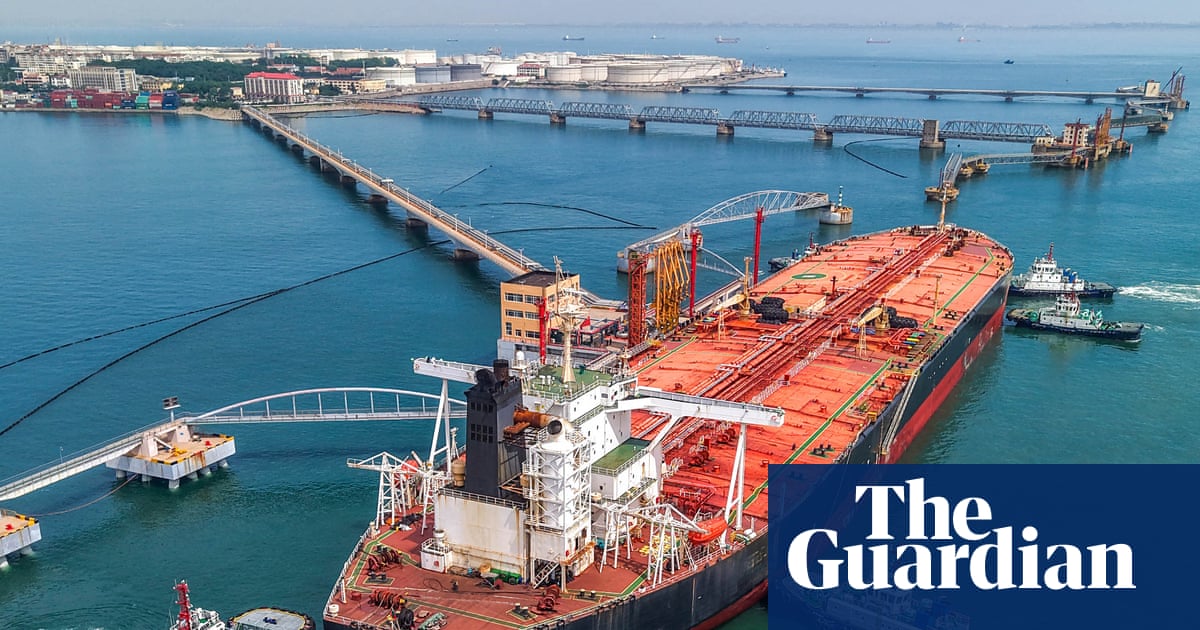
A report emerged on 2 May 2026 that Iran's Islamic Revolutionary Guard Corps is considering deploying marine mammals — specifically dolphins equipped with sea mines — as a deterrent against United States naval vessels transiting the Strait of Hormuz. The claim, carried by the New York Post citing unnamed defense officials, landed in a week already crowded with signal and counter-signal from the Persian Gulf.
Also on 2 May, seven OPEC+ member states announced a preliminary agreement to increase collective production targets by approximately 188,000 barrels per day, according to preliminary reporting by The Cradle Media. The decision proceeds despite the United Arab Emirates formally exiting the grouping — a departure that, on its face, might have been expected to complicate consensus on supply expansion.
And in a parallel diplomatic track, China's foreign ministry issued a statement through PressTV attributing current instability in the Strait of Hormuz to what it termed "the illegitimate US-Israeli war against Iran," asserting that disruption from heightened regional tensions has inflicted significant economic damage worldwide.
Three data points, three distinct registers — military, commercial, diplomatic — arriving within hours of each other. The question is whether they represent a coherent strategy or a cluster of competing calculations that happen to share geography.
The Dolphin Proposal: Signal or Substance?
The IRGC's reported interest in employing marine mammals as mine-delivery vectors is not, in strict operational terms, unprecedented. The US Navy itself deployed marine mammal programs — dolphins and sea lions — for mine detection and swimmer interdiction during the Cold War and more recently in Iraq. Iran has maintained a known program under its Navy and IRGC Navy components. The novelty in the current reporting lies not in the platform but in the stated purpose: not detection, but offensive delivery of ordnance.
Military analysts caution against reading too much into the disclosure. A junior officer's briefing paper is not a fleet order. Naval strategists familiar with asymmetric deterrence doctrine note that such proposals typically serve a signalling function — demonstrating willingness to employ unconventional means — rather than representing a realistic operational plan for a sustained military engagement with the US Fifth Fleet.
What the disclosure does accomplish is narrative extension. It normalises the framing that the Strait of Hormuz is an active conflict zone and that normal commercial transit carries escalating risk. That framing has consequences regardless of whether a single mine-bearing dolphin ever reaches a US warship.
OPEC+ and the Production Puzzle
The OPEC+ production increase of 188,000 barrels per day is modest in absolute terms — roughly 0.2 percent of global daily demand — but its timing is charged. Seven member states reached agreement despite the UAE's formal withdrawal, suggesting that Riyadh and its core partners remain committed to a gradual market-share recovery strategy rather than the output discipline that would characterise a response to wartime supply disruption.
There is an apparent contradiction worth examining. If Iran genuinely intends to threaten or actually disrupt Strait of Hormuz traffic — the conduit for approximately 20-25 percent of global oil trade — the rational market response would be price escalation, which would ordinarily argue against expanding supply at this moment. OPEC+'s willingness to proceed suggests one of two things: either the producers do not credit the military posturing as genuine, or they are calculating that prices will hold regardless of regional turbulence because demand signals are sufficiently strong to absorb a supply shock.
The UAE's exit adds a layer of complexity. Abu Dhabi has been building its unilateral production capacity and global investment footprint — in ADNOC expansion, in international refinery positions — for several years. A UAE that is structurally less dependent on OPEC+ output discipline is a UAE that has more freedom to act on its own security calculations. Those calculations may include its own posture toward Iran, which has its own commercial interests in Strait transit.
Beijing's Position: Calibration or Opportunity?
China's statement attributing the Hormuz situation to "the illegitimate US-Israeli war against Iran" is notable for its formulation. Beijing has historically been careful to avoid language that frames it as aligning with Tehran against Washington in explicit terms. The phrase "illegitimate war" goes beyond the measured neutrality China has typically maintained on Middle East conflicts.
Structurally, China's position serves several interests simultaneously. It positions Beijing as a voice for global economic stability — the "significant economic damage worldwide" formulation is implicitly an appeal to European and Asian energy consumers who have the most to lose from Gulf disruption. It distances China from any perception that it is complicit in Iranian escalation, while also signalling to Washington that Beijing is watching the military dimension closely.
The underlying calculation is straightforward: China is the world's largest crude oil importer, the majority of it flowing through the Strait of Hormuz. A disrupted Strait is a direct threat to Chinese energy security. But China's response is calibrated — diplomatic rather than military, rhetorical rather than operational. Beijing is not dispatching naval assets. It is shaping the framing of the crisis in a direction that makes the US and its allies bear the diplomatic cost of the current trajectory.
That framing — that the instability originates in external aggression rather than in Iranian behaviour — deserves scrutiny. The IRGC's disclosed military deliberations, whatever their operational credibility, are not a response to an invasion. They are a factor within a broader regional dynamic in which multiple actors bear responsibility for escalation. Beijing's characterisation flattens that complexity in ways that serve its own diplomatic positioning.
What This Convergence Actually Means
The cluster of events on 2 May does not amount to a coordinated strategy by any single actor. Iran is signalling, not necessarily acting. OPEC+ is managing a commercial logic that is partly but not wholly independent of security risk. China is occupying diplomatic space that a disrupted Strait creates — offering itself as a stakeholder in stability while making clear where it places primary blame.
The through-line is the Strait itself, and the degree to which its importance to global energy markets makes it a permanent site of strategic competition. Every actor — Tehran, Riyadh, Washington, Beijing — has an interest in the waterway remaining open and navigable. Yet every actor also has an interest in being seen as the party with the legitimate grievance if it does not.
For global energy markets, the immediate risk premium is, for now, contained. OPEC+'s production increase and the modest scale of Iran's military signalling are both consistent with a market that is pricing in turbulence without pricing in actual disruption. That calculus could shift quickly if any single event — a mine placement, a vessel seizure, a naval incident — breaks the pattern.
The sources do not specify what response, if any, the Pentagon or Central Command has prepared for unconventional naval threats in the Strait. The ambiguity is itself a signal: the US has not escalated publicly, which suggests either that the reports are not taken at face value internally, or that the response is classified, or both.
What is clear is that the Strait of Hormuz in May 2026 is a place where military posturing, commercial strategy, and diplomatic positioning are operating in parallel — not necessarily in concert — and where the margin between signal and substance is deliberately unclear.
This article was edited to reflect the updated OPEC+ production figures as reported by The Cradle Media's 2 May 2026 briefing.
Wire provenance
This editorial synthesis draws on the following public wire/social posts:
- https://t.me/thecradlemedia/18432
- https://t.me/presstv/89214