Taiwan's Drone Deficit: How Budget Paralysis Is Costing Taipei Critical Time Against a Proven Threat
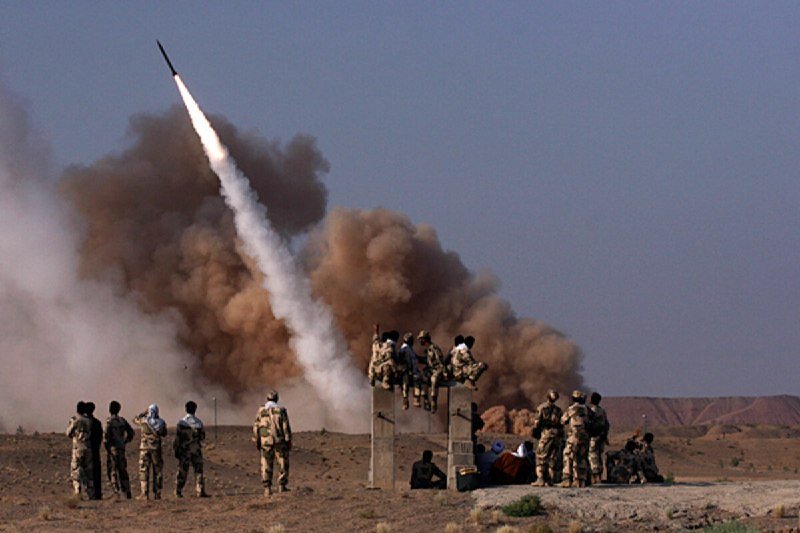
On the fields of eastern Ukraine, Iranian-supplied Shahed drones have probed Ukrainian air defenses nightly for more than two years. In the same conflict, Ukrainian FPV and maritime drones have sunk Russian warships, destroyed armored columns, and turned static battle lines into kill zones. The lesson is not subtle: autonomous, expendable, hard-to-intercept platforms now define the modern battlefield.
Yet Taiwan — an island whose air and sea approaches are far more contested than any point along the Ukraine-Russia front — remains dangerously short on all three categories of unmanned systems. The reason is not a lack of technology or strategic intent. It is a budget. And that budget is stuck in Taiwan's Legislative Yuan, where the 2026 defense appropriation has been delayed by political deadlock between the ruling Democratic Progressive Party and the opposition Kuomintang-led coalition.
The consequences of that impasse, outlined in reporting from Nikkei Asia on 2 May 2026, are concrete: procurement lines for drone development, battlefield reconnaissance platforms, and coastal defense unmanned systems face deferral or cancellation. The delay comes at a moment when China's People's Liberation Army has maintained near-continuous air and naval activity in the Taiwan Strait and its vicinity, normalizing operations that would have been considered provocative a decade ago.
The Tactical Case That Shouldn't Need Making
Ukrainian commanders have described the drone as the most cost-effective weapons system in the conflict. A Shahed-136, costing an estimated $20,000–$50,000, can force the launch of a surface-to-air missile worth orders of magnitude more. Ukrainian naval drones, built from improvised civilian watercraft and commercially sourced components, have repeatedly struck Russian vessels in the Black Sea, including warships carrying air defense systems. The cost-exchange ratio has been so favorable to Ukraine that Western defense planners now treat unmanned systems as a baseline capability — not a supplement.
Taiwan's geography intensifies the logic. The island sits roughly 180 kilometers from the mainland at its narrowest strait point. An invading force would need to move men and material across that water gap under contested conditions. Drones — ISR (intelligence, surveillance, reconnaissance) platforms for early warning, loitering munitions for anti-ship roles, and expendable decoys to saturate air defenses — would be among the most useful systems available to a defender. They are also systems Taiwan is still predominantly purchasing or developing rather than fielding at scale.
Legislators involved in the budget negotiations, cited in the Nikkei Asia reporting, have identified the drone outlays as among the most vulnerable to the ongoing appropriations fight. That is not a classified assessment. It is the publicly visible result of a political calculation in which opposition parties are using the defense budget as leverage for broader governance demands — a dynamic familiar from budget disputes in democracies across the world, but with stakes that are categorically different for Taiwan.
The Iran Variable and What It Reveals
One element frequently cited in the debate over Taiwan's drone posture is the performance of Iranian-made systems in both the Ukraine conflict and in Iran's own regional operations. The Shahed family of drones — designed for saturation strikes capable of overwhelming layered air defenses — has been used by Russian forces against Ukrainian infrastructure and civilian targets. Iran has also deployed similar systems in its own standoff engagements with regional adversaries.
That record cuts both ways for Taiwan's defense planners. On one hand, it demonstrates that low-cost unmanned systems can be manufactured and deployed at scale by adversaries who lack the industrial base of major powers. On the other, it demonstrates the defensive utility of drone countermeasures — electronic warfare systems, directed energy weapons, and coordinated counter-UAV networks — all of which Taiwan has begun to develop but not yet deploy in quantity.
The Iran case also illustrates a structural vulnerability Taiwan shares with other island or coastal defense forces: the difficulty of maintaining sustained production of expendable systems when supply chains are concentrated in a small number of factories. Ukrainian officials have repeatedly described running short of first-person-view (FPV) drones at critical moments in the conflict, not because the technology was unavailable but because procurement timelines and budget approvals moved too slowly to keep pace with consumption. Taiwan's legislative deadlock recreates that dynamic at the strategic level.
The Budget Fight in Context
Taiwan's defense budget for 2026 was not rejected by the legislature — it was delayed, which in practice creates many of the same consequences as a cuts. Procurement programs that require years of advance ordering, testing, and integration into existing command architectures cannot simply be restarted when a budget finally passes. Component suppliers move to other customers. Production lines reorient. Personnel trained on systems that never arrive are reassigned.
The opposition Kuomintang has framed its demands around fiscal review authority and broader government accountability measures — legitimate democratic concerns that exist in every legislature. But the timing places drone procurement, which Taiwan's defense ministry has identified as a priority in its own published strategic planning documents, in the crossfire of a political dispute whose primary stakes are domestic. This is not unique to Taiwan; similar dynamics have played out in US defense procurement debates, European NATO member budgets, and South Korea's five-year defense planning cycles. The difference is the proximity of the threat.
Taiwan's Ministry of National Defense has not publicly disputed the characterization of the drone lines as among the most exposed in the current appropriations process. The ministry has stated that it remains committed to the unmanned systems development roadmap, but officials acknowledge privately that budget uncertainty makes long-lead procurement difficult to execute on schedule.
What Taiwan Has and What It Still Needs
Taiwan does not start from zero. The island's defense industry — including the state-run Chungshan Institute of Science and Technology — has developed prototype systems in the loitering munition and maritime drone categories. The Institute's Chuan Hsi (Gin Sentry) system has been publicly displayed and is reported to be in limited production. Commercial manufacturers in the Taiwan robotics and electronics sector have supplied components to the defense establishment.
What Taiwan lacks is scale. The systems exist at a prototype or low-rate production level; the budget delay threatens to keep them there. A force that has 50 deployable maritime drones when it needs 500 is not a drone force — it is a demonstration project. The gap between those two numbers is measured in time and money, both of which the Legislative Yuan is currently withholding.
The broader strategic context makes the delay more consequential, not less. Chinese military activity in the Taiwan Strait has followed a pattern of gradual normalization — what was once described as exceptional is now described as routine. PLAN (People's Liberation Army Navy) and PLAAF (People's Liberation Army Air Force) operations near the island have become a structural feature of the regional security environment rather than an occasional crisis signal. A Taiwan that cannot move quickly to acquire the systems most suited to its defensive geography is allowing the threat timeline to shorten while its own response timeline lengthens.
What We Verified / What We Could Not
Verified:
- Taiwan's 2026 defense budget has been delayed by legislative gridlock, per Nikkei Asia reporting published on 2 May 2026.
- The delay affects drone procurement lines identified as priority programs by Taiwan's Ministry of National Defense.
- Ukraine has deployed drones — including maritime FPV variants and Shahed-sourced systems — to significant tactical effect in the ongoing conflict with Russia.
- Iranian-made drones have been used by Russian forces in the Ukraine conflict and by Iranian forces in regional operations.
- China's PLA maintains ongoing air and naval activity in the Taiwan Strait vicinity.
Could not verify:
- Specific dollar figures for the deferred Taiwan drone procurement lines — those figures are not present in the available reporting.
- Exact timeline for legislative resolution — the sources do not specify when or how the budget dispute will be resolved.
- Specific capability figures for Taiwan's existing drone inventory — that data is not publicly available in the sourced material.
- Precise cost-exchange ratios cited in Ukrainian reporting — those figures vary by source and context.
Unresolved:
- Whether opposition legislators are using the drone budget specifically as a lever or whether the drone lines are simply collateral damage in a broader political dispute — the sources do not draw that distinction definitively.
The picture that emerges is one where a democratic legislature is doing what democratic legislatures do — scrutinizing spending, exercising oversight, making political calculations. That process has costs, and in most policy domains those costs are manageable. Against the backdrop of an ongoing military modernization campaign by a nearby adversary with declared interests in the island's political status, those costs accumulate faster than they would in a less constrained security environment. Taiwan's drone deficit is not a technology problem. It is a political economy problem with a known solution — if the political economy can be resolved.
Monexus covered this story as a defense-industrial and democratic governance tension rather than as a binary China-threat narrative. The wire framing, driven by regional outlets, defaulted to the Chinese threat dimension. We treated the legislative process as the primary subject and the strategic context as the frame — which is where the structural stakes live.
Wire provenance
This editorial synthesis draws on the following public wire/social posts:
- https://t.me/nikkeiasia
- https://t.me/TSN_ua
- https://t.me/TSN_ua
- https://t.me/nikkeiasia