Tehran's Conspiracy Script Has a Audience Problem
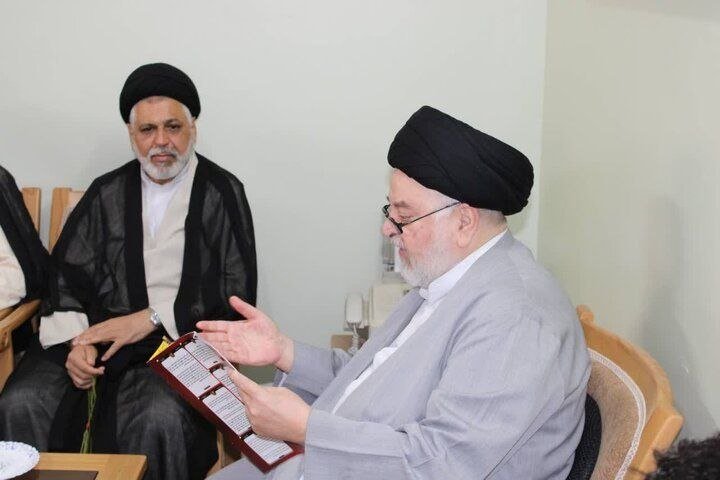
On 2 May 2026, Iran's Ministry of Foreign Affairs issued a statement describing terrorist attacks against religious sites and scholars in Syria as "part of the American-Israeli conspiracy" designed to sow sectarian discord. The statement placed responsibility for civilian security on the nascent transitional government in Damascus and called for collective action to identify and punish perpetrators. The framing was familiar. The timing was not.
Iran has long deployed the conspiracy narrative as a foreign-policy instrument — attributing regional instability to external orchestration rather than internal contradiction. But in the Syria of 2026, that reflex looks less like a coherent strategy and more like a reflexive fallback. The transitional government in Damascus is navigating a brutal immediate aftermath. Multiple armed factions continue operating outside its control. The Alawite community, associated with the former Assad regime, has faced targeted violence — and the men and women who run the new order in Syria have limited capacity to secure every shrine and scholar simultaneously. That is a structural reality, not a plot.
The Conspiracy as a Reflex
The Iranian foreign ministry's statement is not an analysis. It is a template. Tehran has used nearly identical language across multiple contexts: strikes against Shia pilgrims, unrest in Iraq, the killing of Soleimani, protests inside Iran itself. Each time, the operative phrase is the same — an American-Israeli conspiracy — and each time, the explanation forecloses any need to examine what actually happened on the ground. The formula protects the regime's preferred narrative: that Iran is a victim of hostile external forces, never a cause of regional instability in its own right.
This approach had utility during the height of Tehran's regional influence, when the IRGC and its proxy network could credibly claim to be the primary constraint on Sunni militancy across the Levant. In that framing, attributing violence to an American-Israeli conspiracy served a dual purpose — it delegitimised the United States and Israel while positioning Iran as the indispensable stabiliser. The audience was the Arab street, sympathetic governments, and domestic hardliners who needed an external enemy to justify repression.
That audience has shrunk. The axis of resistance that Tehran spent decades constructing has taken severe blows. Syrian state structures that once hosted Iranian military infrastructure are gone. Hezbollah's military capacity has been degraded. The regional order Tehran once navigated has been remade. The conspiracy template still deploys — but it deploys into a different room, with fewer people listening.
The Transitional Government Problem
The Iranian statement also contains an internal contradiction. Tehran demands that the Syrian transitional government "bear responsibility for providing security for the Syrian people with all their national, religious and sectarian components" — while simultaneously framing that government's failures as part of a foreign plot. If the attacks are an externally orchestrated conspiracy, the transitional government's failure to prevent them is a symptom of enemy action, not governance incapacity. If the attacks reveal genuine gaps in the transitional government's security apparatus, then the conspiracy framing is incidental. Tehran appears to want both arguments simultaneously.
The transitional government in Damascus faces an environment where multiple armed groups operate with varying degrees of loyalty to a central authority that is still taking shape. The Alawite community — a minority that supported the Assads for decades and now faces communal anger over that alignment — is exposed. Armed actors with scores to settle operate in territory the new state does not yet fully control. These are not conspiracy-generated conditions. They are the conditions of a state in the painful early phase of rebuilding itself from the wreckage of a decades-long civil war.
Iran's demand that Damascus provide comprehensive security is reasonable in principle. But it arrives from a government that spent years propping up the Assads' security apparatus — the very forces responsible for some of the worst atrocities of the Syrian civil war. The irony of Tehran lecturing Syria's new rulers on civilian protection would be sharper if it were not so serious.
What the Conspiracy Framework Misses
The problem with framing every setback as a manufactured plot is that it renders Tehran incapable of learning from its own strategic errors. The Islamic Republic built its regional position on a bet: that Syria would remain a stable platform for Iranian influence, that Hezbollah would remain an effective deterrent, that the sectarian cards Tehran held would always outweigh the structural weaknesses of its partners. Each of those bets has gone wrong in different ways, and each failure had causes internal to the Iranian strategy — overreach, misreading of local dynamics, the refusal to adapt when conditions changed.
Attributing every reversal to an American-Israeli conspiracy does not address those causes. It elides them. And in doing so, it leaves Tehran working from a map of a region that no longer exists, issuing statements calibrated for an audience that has largely moved on. The transitional government in Syria will determine its own future — with or without Iranian endorsement. The question is whether Tehran's foreign policy establishment is capable of recognising that moment, or whether it will continue reading from a script nobody else is still reading.
The MFA statement on 2 May will circulate in Tehran's diplomatic circles and its state media ecosystem. It will likely find resonance among hardliners who prefer the comfort of external causation to the difficulty of internal reckoning. But in Damascus, in Beirut, in the capitals of the Gulf — the audience for that particular framing is growing smaller by the month. A foreign policy built on permanent victimhood has a shelf life. Tehran may be approaching the end of it.
This publication notes that wire coverage of the Alawite shrine attacks led with casualty figures and transitional government statements, treating Iran's response as a secondary diplomatic reaction. Monexus has reversed that framing: Tehran's statement is the primary subject, and the structural logic of the claim — not the events themselves — is what warrants examination.
Wire provenance
This editorial synthesis draws on the following public wire/social posts:
- https://t.me/alalamarabic/18766
- https://t.me/alalamarabic/18765
- https://t.me/alalamarabic/18764
- https://t.me/alalamarabic/18763