Tehran Witnesses Mass Gatherings in Revolution Square, State-Affiliated Channels Report
Iranian state-affiliated media outlets reported large-scale demonstrations in Tehran's Revolution Square on 2 May 2026, with participants expressing solidarity with the country's leadership and armed forces, though independent verification of the gatherings remains unavailable.
Multiple Iranian state-affiliated media outlets reported mass gatherings in Tehran's Revolution Square on 2 May 2026, describing the demonstrations as expressions of public solidarity with the country's leadership and armed forces. Al-Alam Arabic, a news service linked to Iranian state media, labelled the gatherings "urgent" and described participants as gathering "in defense of Iran's rights." Farsna and Mehr News, both Iranian news agencies, published footage from the same event, with slogans referencing Iranian martyrs. The reports did not specify attendance figures, the stated purpose beyond general expressions of support, or what may have prompted the gatherings.
The demonstrations were framed by Iranian state-adjacent channels as spontaneous expressions of popular backing for the government and military. That framing is consistent with how such gatherings are typically characterised in official Iranian media. The sources do not independently confirm the scale or duration of the gatherings, and no casualty reports or specific grievances were cited in the available dispatches. Independent news organisations had not published corroborating accounts at the time of reporting.
Limited Primary Source Material
The available source material consists of three Telegram posts from Iranian state-adjacent channels, all published within minutes of each other on 2 May 2026 between 18:55 and 19:58 UTC. All three describe the same gathering without providing additional context. One post from Farsna used language characterising unnamed parties in the square as "enemies" of the Iranian people, a formulation frequently employed in official Iranian media discourse but which the source material does not elaborate upon. The posts do not identify what event, if any, the gathering responded to, nor do they specify whether the demonstrations were announced in advance.
This limitation shapes what can be reported with confidence. The gatherings did take place — three separate channels published footage from the same location on the same day. Beyond that, claims about scale, motivation, or broader political significance cannot be sourced to the available material. Media organisations covering Iran routinely face this constraint: state-affiliated outlets provide the first public record of such events, but that record arrives through a lens that serves particular institutional interests.
Geopolitical Context
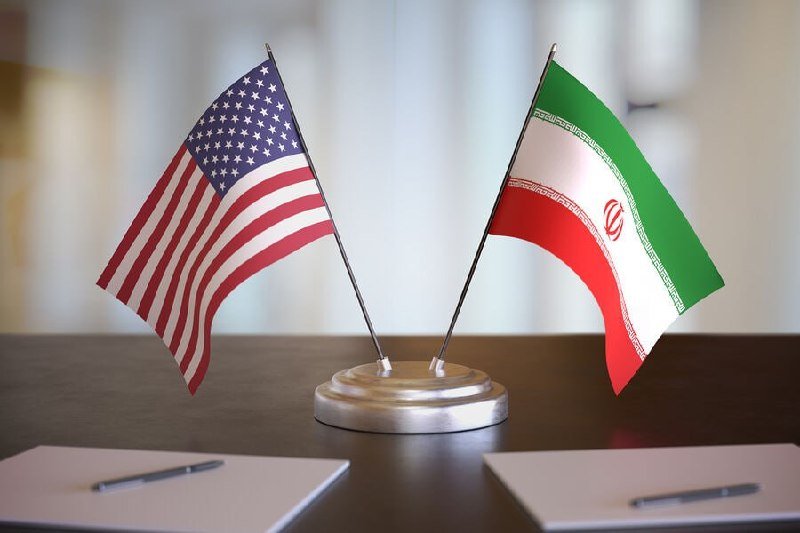
The demonstrations occurred amid ongoing turbulence in US-Iran relations and an unresolved nuclear file. Negotiations between Washington and Tehran over Iran's nuclear programme have produced periods of diplomatic oscillation rather than durable agreement, with both sides holding positions that have proven resistant to compromise. Iranian officials have repeatedly insisted on the right to civilian nuclear development, while the United States and European partners have sought constraints that Tehran views as infringements on national sovereignty.
In such an environment, visible displays of popular support for the Iranian leadership serve a clear communicative function — directed simultaneously at domestic audiences and at international counterparts engaged in or contemplating diplomatic engagement with Tehran. The timing of public demonstrations relative to diplomatic moments is not unique to Iran, but the pattern is recognisable: expressions of public unity tend to reinforce the position of official negotiators and complicate efforts by foreign governments to present the Iranian leadership as isolated or unrepresentative.
The sources do not explicitly link the 2 May demonstrations to any specific diplomatic development. The gathering was described in broad terms — support for leadership and armed forces, reference to martyrs — without naming a precipitating event. Readers should treat any inference about connection to current diplomatic tensions as speculation rather than reporting.
What Remains Unverified
Independent confirmation of the demonstrations' characteristics is not available in the source material. Several key questions cannot be answered from the available evidence: whether the gatherings represented a large-scale mobilisation or a more modest assembly, whether they were planned or reactive, and whether they reflected a coordinated national effort or a localised Tehran event. Reports from international wire services, human rights organisations, or independent Iranian journalists — none of which appear in the current source set — would be required to address these gaps.
The framing choices in the Iranian state-adjacent reporting merit scrutiny. Descriptions such as "defense of Iran's rights" and characterisations of unnamed participants as "enemies" reflect a rhetorical framework that assigns political meaning to the gathering before the evidence can support such conclusions. This is standard practice across state-adjacent media ecosystems; the relevant editorial discipline is to distinguish between the event itself and the interpretive layer applied to it.
The absence of alternative accounts does not constitute evidence that the demonstrations did not occur. Three independent channels reporting the same gathering on the same day in the same location provides reasonable grounds to accept that a gathering took place. The characterisation of that gathering as a massive, representative expression of public sentiment rests on sources with a direct interest in that conclusion.
The trajectory of US-Iran relations will determine whether such demonstrations recur, intensify, or attract international attention. Monexus will continue monitoring available sources as the story develops.
This article relies on source material from Iranian state-adjacent Telegram channels. Independent corroboration was not available at time of publication.
Wire provenance
This editorial synthesis draws on the following public wire/social posts:
- https://t.me/alalamarabic/78942
- https://t.me/farsna/45671
- https://t.me/mehrnews/82394