The Logic of the Annexation Clause: Trump's Coercive Diplomatic Architecture
Trump's back-to-back statements on Cuba and the Strait of Hormuz reveal a consistent diplomatic logic — one that treats military dominance as a substitute for negotiation, and annexation as a negotiating position rather than a final outcome.
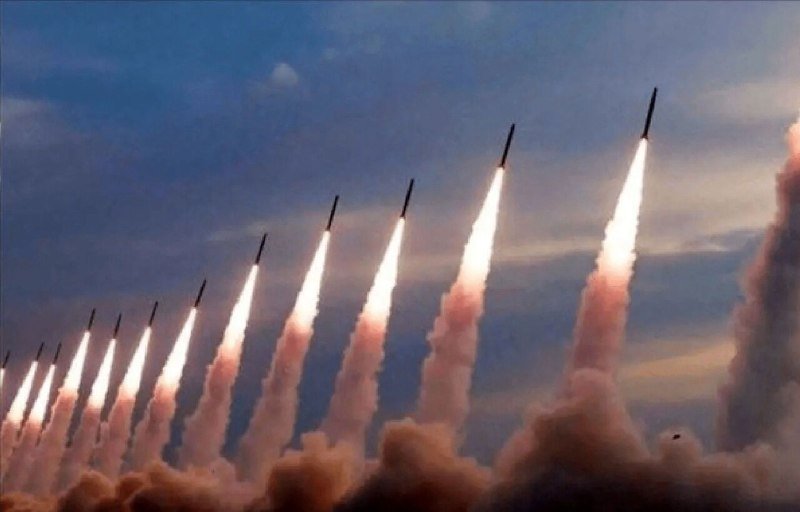
On 1 May 2026, President Trump delivered two statements that would have been considered extraordinary by the standards of any recent administration. The first, reported by wire services tracking White House remarks, indicated the United States would take over Cuba almost immediately in the event of a Cuban invasion. The second, addressed to vessels in the Strait of Hormuz, carried an explicit military ultimatum: vessels were to turn around, evacuate their engine rooms, and clear the waterway — or face direct U.S. Navy action.
The Cuba and Hormuz statements landed in close succession. Separately, each is notable. Together, they reveal a coherent — if deeply destabilising — diplomatic logic.
The logic is this: military presence and explicit threats of annexation or seizure are not outcomes to be achieved after negotiation fails. They are negotiating instruments deployed from the outset. The goal is not to compel a specific, agreed outcome but to establish a frame within which every subsequent concession appears preferable to the alternative of U.S. military action.
The Cuba Gambit: When Annexation Is a Starting Position
The Cuba statement was unusually direct. Trump spoke of having an architect who had done significant preparatory work, and framed a potential Cuban operation as something already substantially planned — not a hypothetical but an imminent capability. The reference to the U.S.S. Abraham Lincoln aircraft carrier, reportedly positioned to return from Iranian waters via the Caribbean, added a specific military dimension.
This framing deserves scrutiny. Cuba's 1959 revolution ended six decades of direct U.S. dominance, and Washington has periodically attempted to reverse that outcome through sanctions, diplomatic isolation, and covert operations. The Bay of Pigs invasion of 1961 — a CIA-backed operation that collapsed within 72 hours — remains the most instructive recent data point on the limits of coercive regime change in Cuba. The island's government has survived the Cold War's end, the collapse of its Soviet patron, and one of the world's most comprehensive U.S. sanctions regimes.
The administration may argue that a direct military intervention, underwritten by a carrier group and presented as an accomplished fact, would be different from a covert proxy operation. That argument has surface plausibility. But it elides the legal, human, and diplomatic costs of launching a full-scale invasion of a sovereign nation in the Western Hemisphere. It also underestimates the political response such a move would generate across Latin America — where the United States already faces a credibility deficit over its support for authoritarian governments in the region.
The more probable function of the statement is not to prepare an actual invasion but to signal to Havana that no international support will materialise if Washington escalates — and that the Cuban government should accordingly seek a negotiated accommodation with U.S. interests. Whether that signal produces the desired result is a separate question.
The Strait of Hormuz: Seizing Ships as Coercive Performance
The Strait of Hormuz ultimatum carries different but related risks. The strait is among the world's most critical maritime chokepoints, carrying roughly one-fifth of global oil commerce. Any disruption reverberates through energy markets worldwide. The Trump administration's explicit instruction to vessels to clear the waterway — with the implication that U.S. Navy action will follow non-compliance — represents a claim of right to control international shipping lanes by force.
The statement follows a pattern of treating the Strait of Hormuz as a point of leverage rather than a shared global resource. Iranian officials have long maintained that the strait's security depends on respect for international maritime law. The administration's framing — evacuate your engine room or face consequences — inverts that logic: U.S. naval dominance, not international law, is the operative constraint.
The consequences of that position, if acted upon, would be substantial. Seizing vessels in international waters constitutes a violation of the United Nations Convention on the Law of the Sea, to which the United States is not a signatory but whose provisions it has historically respected as customary international law. Beyond the legal dimension, disrupting Hormuz transit would spike global energy prices, trigger immediate responses from China and the European Union, and hand Iran a propaganda victory framing the United States as the destabilising force in the Gulf.
The administration appears to be wagering that the credible threat of disruption will extract concessions from Tehran — on nuclear enrichment, on regional proxy networks, on oil revenue flows — without requiring the actual disruption to materialise. That wager is not new. It has been placed, and lost, by multiple administrations. The question is what happens when the threat is no longer believed.
The Structural Pattern: Dominance Without Strategy
Stripped of the rhetorical specifics, what these statements share is a vision of American diplomacy in which the primary instrument is not negotiation, not international law, and not the careful calibration of incentives and disincentives across a defined strategy. It is the explicit invocation of U.S. military power at the opening of any diplomatic exchange.
This approach has several structural weaknesses. First, it treats sovereignty — the foundational principle of the post-1945 international order — as conditional on alignment with U.S. interests. The United States helped construct that order. Walking it back incrementally, clause by clause, is not a cost-free move.
Second, it signals to every smaller state watching these exchanges that formal alliances and international law offer diminishing protection against a great power that has decided coercion is cheaper than negotiation. That signal produces predictable responses: hedging behaviour, accelerated arms acquisitions, alignment with alternative security partners, and — in the most acute cases — the very nuclear proliferation the United States has spent decades attempting to prevent.
Third, it hands adversaries a clear account of American intentions. When the President of the United States publicly states that a carrier group can be repositioned from the Persian Gulf to the Caribbean for an invasion, that statement functions simultaneously as a threat and as a specification of operational limits. Adversaries can plan accordingly. The element of strategic surprise, which military planners prize, is systematically sacrificed for the theatrical effect of an explicit threat.
What Is Actually at Stake
The Strait of Hormuz carries roughly 21 million barrels of oil per day. A closure — or even the credible threat of closure — spikes global prices within hours. American consumers feel it at the pump; East Asian manufacturers feel it in input costs; global inflation dynamics feel it in shipping and logistics spreads. The U.S. economy is not insulated from these disruptions. It is deeply embedded in them.
Cuba's strategic importance to Washington is historical and symbolic more than military. The island is 90 miles from Florida, a fact that has animated U.S. policy since the Monroe Doctrine. But a Cuban operation would consume diplomatic capital across the Americas, accelerate the drift of Latin American states toward alternative partnerships, and generate legal challenges at the International Court of Justice that the United States would be forced to either contest or ignore — either outcome damaging.
The framing that this is strength — that American willingness to threaten and, if necessary, to use force is what keeps adversaries honest — deserves interrogation on its own terms. The evidence from 80 years of post-1945 great-power competition is that sustained coercive pressure without a defined political end-state produces sustained resistance, not capitulation. The countries subjected to existential-level pressure do not fold; they adapt, acquire allies of necessity, and develop the resilience that proximity to a great power generates.
The deeper cost of this posture is the one not captured in any single headline: the slow erosion of the norms and institutions that make great-power competition survivable for the smaller states caught within it. A world in which the United States routinely claims the right to seize vessels, threaten annexation, and position carrier groups as instruments of intimidation — a world in which those claims are treated as legitimate negotiating positions rather than violations of the international order — is a more dangerous world for everyone, including Americans.
The administration appears to believe otherwise. The next 18 months will test whether that belief survives contact with the actual mechanics of global power.
Wire provenance
This editorial synthesis draws on the following public wire/social posts:
- https://t.me/wfwitness/12458
- https://t.me/wfwitness/12457
- https://t.me/BellumActaNews/8923