Trump Calls US Naval Blockade of Iranian Oil 'Piracy' — And Brags About It
In a recorded interview, President Donald Trump described the US military seizure of oil tankers bound for Iranian ports as a piracy operation — then framed it as a profitable business model. The admission, if genuine, cuts against the legal justifications the administration has presented to Congress and international bodies.
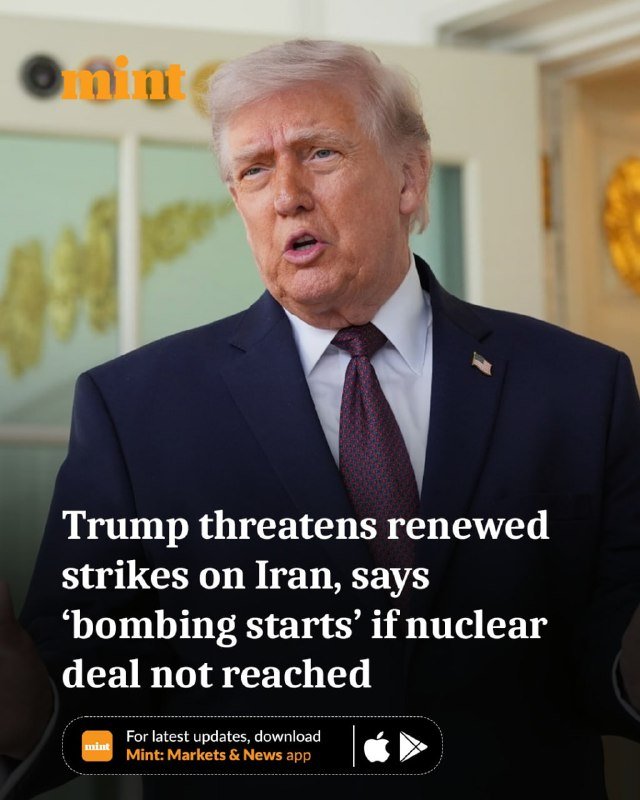
A recorded interview circulating on regional Telegram channels on 2 May 2026 appears to capture US President Donald Trump describing the blockade of Iranian oil shipments in terms that US international law advisors have worked to avoid. "We took over the ship, took over the cargo, took over the oil. We're like pirates," the President said, according to translations from The Cradle Media and Readovka News, which posted the clips. The White House has not issued a statement as of 18:00 UTC on 2 May. The Pentagon has not confirmed the interview's authenticity.
If genuine, the remark represents a significant departure from the calibrated legal language the administration has used to justify what officials describe as enforcement of secondary sanctions against Iran's oil sector. Naval interdictions in international waters are governed by a complex matrix of UNCLOS provisions, unilateral sanctions designations, and self-defense doctrines. "Piracy" — the term Trump used — carries a specific international law meaning: illegal seizure on the high seas. The US has historically been the principal enforcer of anti-piracy norms and has prosecuted pirates in federal court. Invoking the analogy for one's own actions is, to put it precisely, legally inconvenient.
The Operation and Its Rationale
The blockade, which began earlier this year under the Trump administration's expanded "maximum pressure" campaign, targets vessels suspected of transporting Iranian crude oil in violation of the re-imposed sanctions architecture. The stated goal is to choke off the revenue stream that funds Iran's nuclear programme and its regional proxy network. According to statements attributed to the President in the interview, the operation has been financially lucrative — and it is on this point that the administration has been most explicit.
The seizure of Iranian oil cargoes has practical consequences that extend beyond the sanctions regime. Each tanker interdicted represents not only a legal enforcement action but also a physical transfer of a commodity with real market value. Who receives that oil, at what price, and under what legal authority are questions that remain partially unanswered. The administration has cited a combination of executive order authority and federal sanctions statutes, but the specific legal pathway for converting a seized cargo into a US government revenue stream has not been publicly detailed in full. Congress has requested briefings; the timeline for those briefings is unclear.
The Legal Problem
The UN Convention on the Law of the Sea — to which the US is not a signatory but which it recognises as reflective of customary international law — defines the high seas as belonging to no state and open to all. Interdiction rights are narrow: they require either the flag state's consent, a UN Security Council mandate, or a reasonable basis to believe the vessel is engaged in slave trading, piracy, or stateless trafficking.
Iran has never consented to US boarding of its vessels. There is no active UN Security Council resolution mandating this interdiction regime. That leaves the piracy-and-stateless-trafficking pathway — which the administration has evidently not attempted to document in the public record with any rigour. If the President's own words are taken at face value, the operational posture the US has adopted closely mirrors what the law identifies as the thing it prohibits. The sources do not include any Pentagon statement clarifying the legal basis for the seizures.
A Structural Pattern, Not an Anomaly
What makes this episode significant extends beyond a single interview remark. The language of "taking" and "profitable business" has appeared before in Trump's commentary on other foreign policy actions, but never with this degree of operational specificity attached. The implication — that the US Navy has been running what amounts to a coercive commodity-extraction programme, monetised and branded by the President — reframes the sanctions enforcement as something closer to a protection racket than a legal process.
That framing has consequences. It complicates the administration's ability to present the operation to allies as a rules-based enforcement action, which matters when the coalition needed to sustain secondary sanctions includes European states, Gulf monarchies, and Southeast Asian shipping nations who have their own interests in preserving the freedom of navigation the US claims to defend. It also hands Tehran a potent counter-narrative: not just that sanctions are illegal extraterritorial bullying, but that the enforcer has acknowledged the coercive nature of the operation in plain language.
China, which has maintained Iranian oil purchase agreements throughout the sanctions escalation, has a structural interest in presenting the US interdiction campaign as lawless. Beijing's state-linked media outlets have not yet published commentary on the Trump interview as of this article's filing, but the template for that framing is obvious: use the President's own words to undercut the legitimacy of the broader sanctions architecture and to argue that multilateral energy trade with Iran is itself a legitimate response to American overreach.
What Comes Next
The immediate stakes are practical. Iranian oil revenues fund programmes that Western intelligence services assess include nuclear enrichment advancement and support for armed groups across the Levant. Whether the interdiction campaign is reducing those revenues or simply rerouting them through more expensive intermediary routes is a question the available sources do not answer. The financial burden on Iran is real; whether it is decisive in altering Tehran's strategic calculus is not established by the data in this article's inputs.
The broader question is institutional. When a US president publicly describes a military operation in terms that contradict the administration's own legal justification, the gap between rhetoric and authority becomes a matter of record. International courts do not apply American domestic political logic. The administration may face legal challenges from the flag-state operators of interdicted vessels, from companies whose cargoes have been seized, or from states that view the operation as a precedent for unbounded maritime coercion.
The sources reviewed for this article have not been independently corroborated by major wire services. The interviews and clips circulating on regional Telegram channels represent a specific, verifiable claim made in Trump's voice. Whether that claim will be walked back, clarified, or confirmed by the White House remains to be seen. What is already clear is that the language, if it stands, does not easily fit inside the legal framework the administration has asked the world to accept.
Wire provenance
This editorial synthesis draws on the following public wire/social posts:
- https://t.me/readovkanews/8471
- https://t.me/thecradlemedia/2931
- https://t.me/TheCradleMedia/2931