Trump Confirms 5,000-Troop Germany Withdrawal as Iran Deadline Passes
The Trump administration has confirmed the withdrawal of approximately 5,000 US troops from Germany over the next 6–12 months, a move framed as retaliation for European reluctance to support the US war on Iran.
The United States will withdraw approximately 5,000 troops from Germany within the next 6–12 months, a decision announced just days after President Donald Trump publicly feuded with European allies over their reluctance to escalate support for the US war on Iran. The reduction represents roughly 7 percent of the current American force presence in Germany, according to a reporting timeline that places the announcement on 1 May 2026. The move, framed by the administration as leverage against partners deemed insufficiently aligned with Washington's Iran strategy, arrives as a formal deadline for a negotiated settlement has passed without agreement.
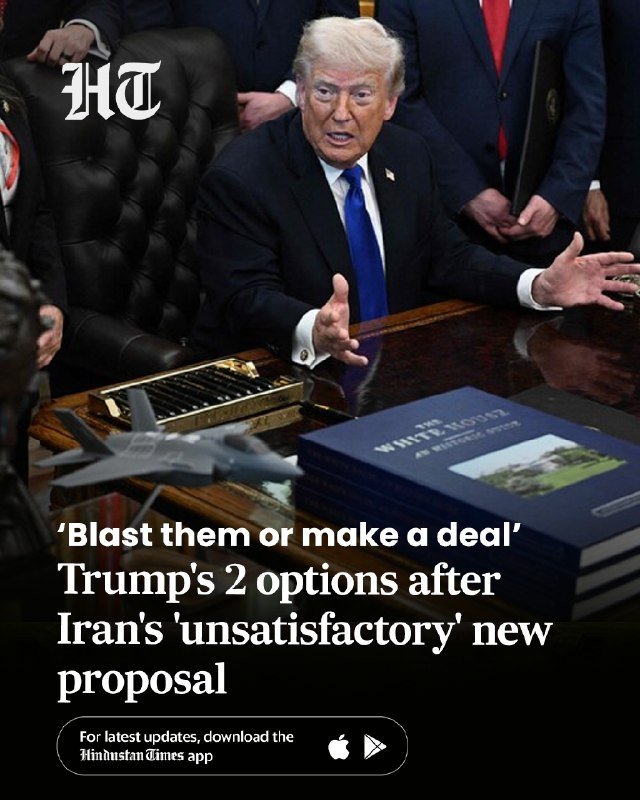
Trump, speaking on 1 May 2026, confirmed the withdrawal and explicitly linked it to transatlantic friction over Iran. The president also declared himself "not satisfied" with Iran's latest proposal to resolve the conflict, according to a separate Reuters report filed at the close of 1 May, and said he would not seek congressional approval to extend whatever negotiating window remained. The combination of signals — troop reduction, diplomatic impatience, sidestepping legislative oversight — has sent ripples through NATO capitals already unsettled by four years of unpredictable alliance management.
The Breakout Moment
Germany's vice chancellor, Robert Habeck, offered the sharpest institutional response from the European side, calling on the United States to end what he described as a "war of aggression" against Iran. Habeck's remarks, carried by Iranian state media outlet PressTV on 1 May 2026, represented an unusually direct public rebuke from a senior German official. Berlin has faced pressure from domestic constituencies — industrial interests with exposure to Iranian trade, a pacifist-leaning segment of the Bundestag, and a broader public skeptical of military escalation in the Middle East — to distance itself from Washington's trajectory.
The troop withdrawal, when viewed alongside the Iran war footing, underscores a structural tension that European capitals have been managing for months: the United States remains the backbone of European security architecture, yet the political character of American leadership has become a variable that European planners cannot assume away. Germany hosts the largest concentration of US forces in Europe — a legacy of post-World War II positioning and Cold War deterrence architecture. Reducing that footprint by 5,000 personnel, even over a year-long timeline, signals a willingness to apply economic and diplomatic pressure directly against the alliance's geographic centre of gravity.
A Diplomatic Clock Still Running
On the specifics of the Iran negotiations, Trump on 1 May 2026 accused Tehran of failing to deliver a deal meeting US requirements. "Iran isn't coming through with the kind of deal that we need to have," the president said, adding that American forces would not be departing early. The language marked a continuation of the administration's position that Iranian military capacity — described by Trump as effectively dismantled, with "no navy, no air force, no anti-aircraft systems, no radars" — has been sufficiently degraded to impose terms rather than negotiate them.
The deadline that passed without a formal agreement was the latest in a series of negotiating windows the administration had set. Trump confirmed he would not seek congressional authorization to extend whatever statutory or procedural mechanism underpinned the current phase of talks, a decision that places the executive on a narrower legal footing as it pursues continued pressure.
Whether the troop withdrawal constitutes a concrete military planning decision or a negotiating signal — or both — remains partially unclear from the available sourcing. A full 5,000-person redeployment involves logistics, housing, equipment disposition, and host-nation agreements that cannot be executed on a social-media timeline. The 6–12 month frame noted in OSINT reporting suggests a phased drawdown that could be accelerated, decelerated, or renegotiated depending on how the Iran file develops.
The Structural Context
What this episode lays bare is the degree to which the post-1945 security bargain between the United States and Western Europe has become a point of leverage rather than a fixed assumption. American troops in Germany are not simply a military presence; they are a geopolitical常数 — a constant signal that the transatlantic relationship operates on terms the US can renegotiate. When Washington uses that presence as a tool in a dispute over a third-country conflict, it changes the nature of the guarantee in ways that NATO's institutional architecture was not designed to absorb.
Germany, for its part, occupies a peculiar position: the country most integrated into both the European project and the American security architecture, yet increasingly the loudest voice within that architecture questioning Washington's judgment. Habeck's language — "war of aggression" — borrowed from the vocabulary of international law, signals that Berlin is willing to frame its objections in the language of principle rather than merely interest. That framing is likely to find sympathies across EU member states where public opinion has tracked negatively on extended Middle East engagements.
The withdrawal's effect on European defence planning is real but not immediate. NATO's Article 5 collective defence guarantee remains intact; the European Union's emerging strategic autonomy discussions predate this episode and will continue regardless. But the episode adds a data point to a trend that European defence planners have been tracking since at least 2023: the assumption that American ground forces would remain a permanent feature of the continent's security architecture is no longer one that can be made without contingency.
Forward Stakes
The immediate question is whether the troop withdrawal announcement is a opening negotiating move or a closing one. If the administration intends to return to Tehran with intensified leverage — fewer American bodies in Europe to defend, a faster pivot to Pacific competition — the withdrawal serves a strategic purpose that transcends the Germany file. If, however, European capitals interpret the move as evidence that the alliance cannot be relied upon precisely when they are being pressed to support a Middle East war they did not choose, the long-term cost to US influence in Europe could exceed any short-term diplomatic gain.
Germany has elections ahead, and the political environment in which Habeck's remarks were made could shift. But the underlying structural question — what the United States expects of its allies, and what it is willing to trade away to get it — does not rotate with any single news cycle. The 5,000-troop figure is concrete. The signal it sends about alliance reliability is the story that will outlast any individual deadline.
This article was desked on 2 May 2026. The wire frame focused on the troop withdrawal as a bilateral dispute; this piece foregrounds the structural implications for the European security architecture and the NATO relationship.
Wire provenance
This editorial synthesis draws on the following public wire/social posts:
- https://t.me/OSINTtechnical/2846
- https://t.me/presstv/19241
- https://t.me/BellumActaNews/11017
- https://t.me/BellumActaNews/11016
- https://t.me/BellumActaNews/11015