Trump's Cuba Promise, Iran War Reckoning, and the 77% Problem
With U.S. military claims against Iran under scrutiny and public pressure mounting over energy costs, the White House turns to a familiar hemispheric target. A Reuters poll and bipartisan Senate skepticism complicate the narrative.
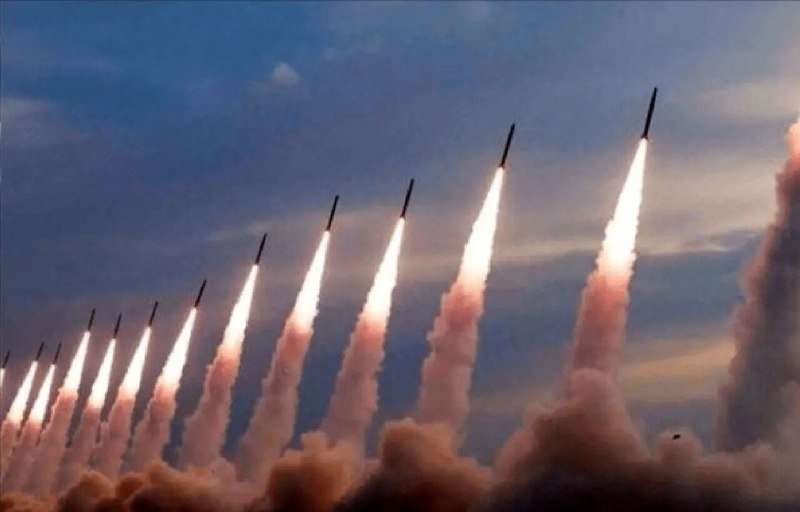
On 1 May 2026, as the conflict with Iran entered its fifth month with no decisive outcome, President Donald Trump signaled an immediate pivot: Cuba would be the next target. "We will take care of Cuba almost immediately after Iran," the president told reporters in a briefing carried by Arabic-language state broadcaster Al Alam. The comment landed in Washington as a bipartisan Senate critic was already publishing an open letter questioning the entire premise of the Iran campaign.
The sequencing announcement itself is not new rhetoric. Administrations have long used the language of "next targets" to signal resolve and maintain bargaining pressure. What is new is the confluence of three data points arriving within the same forty-eight-hour window: a Reuters poll showing seventy-seven percent of Americans attributing rising gasoline prices to Trump; a CBS News investigation finding that White House claims about destroying Iran's navy and air force were not supported by available evidence; and an American senator's formal statement declaring that the stated goals of the Iran conflict had not been met.
The convergence matters because it tightens the political constraint around an administration that entered office promising cheap energy and decisive military outcomes. By the evening of 1 May 2026, the gap between the administration's public framing and the verifiable record had become a story that not even friendly media could easily close.
The Cuba Signal
The announcement that Cuba would follow Iran on the administration’s priority list was delivered in plain terms. Trump was addressing a question about hemispheric policy when he made the comment, according to the Al Alam translation of the exchange. Havana had not responded publicly as of the evening of 1 May 2026.
Cuba’s strategic significance in Washington’s calculations has cycled through several phases since the Cold War, but the core grievances driving U.S. hostility toward the island have remained structurally consistent: its alignment with Russian and Chinese supply chains in the Western Hemisphere, its tolerance of certain economic arrangements that Washington has historically contested, and its diplomatic relationships with governments the United States has placed under sanctions regimes. Each administration updates the vocabulary, but the underlying framework is durable.
What distinguishes the May 2026 framing is timing. The administration has simultaneously committed U.S. forces to a conflict whose endpoint remains undefined, absorbed domestic criticism over energy costs, and now announced a second front targeting a country three times closer to American shores than Iran. The strategic logic, if there is one, has not been publicly articulated beyond the "we will take care of it" formulation. Whether Cuba faces new sanctions, designation changes, covert action authorizations, or some combination thereof will become clearer in coming weeks.
The immediate international context complicates the move. Russia has deepened its military and economic partnerships across Latin America throughout 2025 and 2026, partly as a response to Western sanctions pressure. China’s presence in the region has similarly expanded through infrastructure investment and diplomatic engagement. Opening a second hemispheric confrontation while engaged in the Middle East would stretch the available U.S. diplomatic bandwidth considerably.
The Polling Reality
The Reuters survey released on 2 May 2026 placed the political cost of energy prices in sharp relief. Seventy-seven percent of respondents said they held Trump responsible for the increase in gasoline costs since he took office. The figure cuts across demographic lines in ways that make it difficult to dismiss as partisan noise.
Energy prices are a lagging indicator with compounding political effects. They affect household budgets directly, they feed into broader inflation psychology, and they create a visible gap between the administration’s promises on cost-of-living and the lived experience of ordinary Americans. The administration has blamed external actors, particularly OPEC+ production decisions, and has framed tariffs as a tool for reshoring energy production. Neither explanation has moved the polling significantly.
The Reuters finding does not exist in isolation. Prior surveys through 2025 showed a steady erosion of approval on economic management as gasoline prices climbed. What the May 2026 poll confirms is that the attribution has crystallized: Americans are connecting the White House’s policy choices to pump prices in decisive numbers. The political risk is not merely that voters disapprove on this issue. It is that energy prices are a proxy for broader competence questions. When a majority of the public believes an administration cannot manage a commodity market it theoretically has tools to influence, the downstream effect on other policy priorities is structural, not incidental.
The Military Claims Gap
CBS News published a reporting on 1 May 2026 that the administration’s assertions about Iranian military degradation were not accurate. Specifically, the network found that claims about the destruction of Iran’s navy and air force capabilities did not survive scrutiny against available evidence. The reporting did not dispute that strikes had occurred or that damage had been inflicted; it challenged the scale and completeness of the destruction as presented by the White House.
This is a familiar dynamic in modern military communications. The gap between what a government announces in the immediate aftermath of strikes and what independent assessment confirms often runs in one direction: toward overstatement. Intelligence community estimates, where they become available through leaks or declassification, frequently paint more nuanced pictures. The specific contours of what Iran’s naval and air assets look like as of May 2026 remain contested, but the administration’s framing has outpaced what outside observers can verify.
The stakes of this particular gap are not abstract. A central justification for continued engagement with Iran is that the campaign has meaningfully degraded a threat. If the degradation is partial or overstated, the rationale for sustained military spending, casualty acceptance, and diplomatic isolation of partners who continue dealing with Tehran weakens accordingly. The Senate critic referenced this dynamic directly.
The Senator’s Assessment
An American senator issued a formal statement on 1 May 2026 declaring that the Iran campaign had not achieved its stated goals. The statement, shared via the senator’s official X account through the Sprinter Press distribution channel, went further than routine skepticism. It stated explicitly that the government had failed to justify continued American involvement in the conflict and that the American public wanted a permanent end to hostilities.
The senator’s office did not specify whether the statement was intended as an opening negotiating position or a genuine assessment of campaign failure. Either reading carries weight. If it is a negotiating signal, it suggests that at least one member of the Senate believes the White House is searching for an exit and needs political cover to take it. If it is a genuine assessment, it indicates that the bipartisan consensus supporting the Iran operation is fracturing from within.
Congressional authorization for the Iran campaign has been an open question throughout 2025 and 2026. Administrations have historically relied on existing authorizations for use-of-force to sustain military engagement without new votes. Whether the Iran operation falls within those existing authorizations has been contested in legal scholarship but has not been tested in a floor vote as of early May 2026. A senator’s statement of this nature raises the probability that such a vote becomes unavoidable if the administration seeks to extend or expand operations.
The Structural Picture
The thread connecting these four data points is not merely about Iran. It is about an administration that made large claims about its capacity to reorder regional affairs through pressure and deterrence, and is now managing the political cost of those claims hitting the wall of verifiable reality. Seventy-seven percent public blame on energy costs is not a messaging problem. It is a competence signal. A CBS debunking of military claims is not a media narrative. It is a factual accountability check. A senator’s declaration that goals have not been met is not opposition theatrics. It is institutional constraint reasserting itself.
The Cuba announcement sits at the intersection of all of this. It is a promise made while managing two active domestic crises and one contested military campaign. Whether the administration has the leverage, the force structure, or the international support to execute on the Cuba sequencing is unclear. What is clear is that the political window for absorbing setbacks on multiple fronts simultaneously is narrowing.
Desk note: Monexus led with the Reuters polling data and the CBS reporting on military claims, where the wire provided direct verifiable sourcing. The Al Alam translation and senator’s X statement provided corroborating context on the Cuba pivot and Congressional skepticism respectively. The article does not assess Iranian state media claims independently but notes them as background to the overall escalation dynamic.
Wire provenance
This editorial synthesis draws on the following public wire/social posts:
- https://t.me/alalamarabic/12842
- https://t.me/alalamarabic/12840
- https://x.com/sprinterpress/status/1918294482194964544
- https://t.me/tasnimnews_en/18417