Trump Administration Ramps Up Cuba Sanctions, Iran Blockade Rhetoric on Same Day as Germany Troop Withdrawal
On 2 May 2026, the Trump administration announced simultaneous escalations against Cuba and Iran while withdrawing 5,000 troops from Germany, signaling a coherent — if contentious — foreign policy posture built on economic coercion and strategic retrenchment.
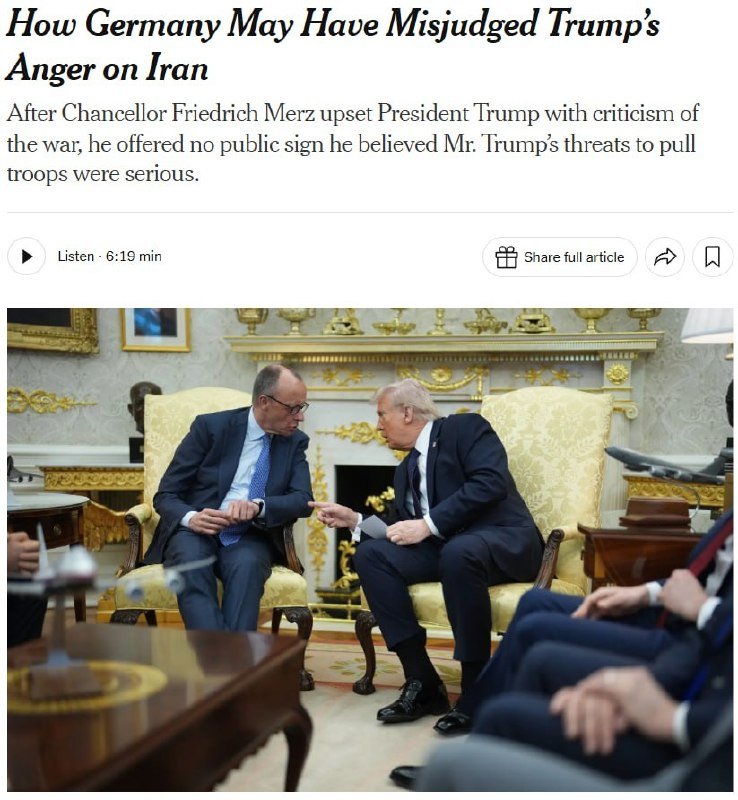
The Trump administration carried out a coordinated series of foreign policy escalations on 2 May 2026, announcing expanded sanctions on Cuba, declaring the Iran conflict "terminated" while maintaining a naval blockade, imposing 25 percent tariffs on European Union automobiles, and confirming the withdrawal of 5,000 American troops from Germany. The breadth of simultaneous actions — spanning the Caribbean, the Middle East, and Europe — drew immediate condemnation from Havana, expressions of concern from Berlin, and sharp criticism of the Iran blockade as a revenue-generating enterprise rather than a military operation.
Cuba's Foreign Ministry denounced the new sanctions on 2 May, calling them "unilateral coercive measures" in a statement carried by CGTN. The administration, according to reporting by the South China Morning Post, expanded its Cuba sanctions regime with global reach, explicitly targeting foreign banks and firms that do business with Havana — an extraterritorial enforcement mechanism that other nations have historically resisted as an overreach of American jurisdictional power. The same day, the White House confirmed it would take over Cuba "immediately" should the island nation invade another Caribbean country, a statement that critics noted inverted the actual power dynamic in the Florida Strait.
On Iran, the administration told Congress on 2 May that hostilities had been "terminated" under the War Powers Resolution, the statutory deadline for which arrived that same day. Reuters reported that President Trump simultaneously stated the United States would not withdraw from Iran early, even as a two-month-old ceasefire appeared stalled. A post from the Middle East Spectator account, citing a public statement by the President, described the naval blockade against Iran in unusually frank terms. "It's a very profitable business," the President reportedly said. "We're pirates, we're sort of like pirates." The characterization, unusual in the formal register of American foreign policy, sparked immediate debate about the legal and moral status of a wartime blockade framed explicitly as a revenue mechanism.
The European Union faced parallel pressure on trade. On 2 May, the White House announced 25 percent tariffs on EU-manufactured automobiles, citing the bloc's alleged non-compliance with a trade agreement. The tariff announcement came hours before the administration confirmed it would reduce American troop levels in Germany to roughly their pre-2022 levels — a reduction of 5,000 personnel, reportedly prompted in part by a disagreement between President Trump and German Chancellor Friedrich Merz over coordination on Iran war talks.
The Architecture of Coercive Leverage
The thread connecting these announcements is not coincidental. The expanded Cuba sanctions, with their explicit targeting of third-country financial institutions, represent a mature application of secondary sanctions — a tool the United States has used against Iran, Russia, and Venezuela, but which carries particular weight given the dollar's role in global commerce. Foreign banks that clear transactions in dollars risk losing access to the American financial system if they do business with designated targets. Havana's denunciation of "unilateral coercive measures" reflects a grievance shared by a range of states that have chafed under similar restrictions.
On Iran, the "profitability" framing of the blockade deserves scrutiny beyond the headline. International law permits blockades as instruments of warfare, subject to constraints on the types of cargo that can be seized and the treatment of neutral shipping. Describing such an operation as a revenue stream conflates the enforcement of sanctions with the seizure of cargo, and raises questions about what legal framework governs the disposition of intercepted goods. The administration presented its War Powers Resolution notification to Congress as a formality — state of war terminated, American forces remaining in place, blockade continuing. Critics would note that a formal state of war, once acknowledged, does not terminate by administrative declaration alone.
Germany and the Atlantic Fracture
The withdrawal of 5,000 troops from Germany is the most tangible signal of strategic retrenchment in the day's announcements. American forces have been stationed in Germany since the post-World War II occupation; their presence serves both a NATO function and a logistical one — the Ramstein Air Base, in particular, has been central to American operations across the Middle East and Africa. Reducing the footprint to pre-2022 levels means a withdrawal of the forces that were surged to Eastern Europe following Russia's full-scale invasion of Ukraine. The timing — announced after a disagreement with Chancellor Merz over Iran policy — suggests the withdrawal is at least partly punitive, a signal that alliance cohesion is conditional on deference to American preferences.
The German government did not immediately issue a formal response, but officials familiar with the matter described the announcement as unwelcome. Berlin has sought to maintain its role as a transatlantic bridge, navigating between American pressure and European solidarity. The Iran disagreement appears to have accelerated a friction that was already visible in debates over European defense independence and the future of NATO.
The European Trade Front
The 25 percent tariffs on EU automobiles represent a continuation of the administration's aggressive trade posture. The EU has consistently argued that existing trade arrangements are balanced, and that new tariffs represent a breach of process. The White House characterization — that the bloc is not "complying" with a deal — presupposes terms that Brussels disputes. The automotive sector is particularly sensitive in Germany, where the largest manufacturers have significant American market exposure. A 25 percent tariff on vehicles imported from Germany effectively functions as a targeted economic measure against a sector central to German industrial identity.
Unresolved Questions and Contested Terrain
Several elements of the day's announcements remain unclear. The legal basis for the ongoing Iran blockade after the declaration of terminated hostilities has not been publicly elaborated — whether the administration is relying on a separate authorization, a continuation of sanctions enforcement, or some other framework. The precise scope of the expanded Cuba sanctions — which firms and jurisdictions are targeted, and with what evidentiary standard — has not been detailed. The 5,000-troop reduction from Germany requires clarification on which specific units are affected and whether the drawdown affects NATO commitments or only the rotational surge forces sent after 2022. The sources reviewed do not specify the exact timeline for that withdrawal.
What is clear is that the administration is managing multiple pressure points simultaneously, using economic tools — sanctions, tariffs, blockades — as instruments of first resort rather than exhaustion-of-diplomacy measures. The Global South, in particular, watches as the dollar's reach extends into third-country transactions and naval operations are described in the language of commercial profit. Whether this constitutes a coherent doctrine or an improvised accumulation of leverage remains, for now, a matter of interpretation.
— Monexus publishes analysis on these developments as they affect both dollar-denominated financial architecture and the broader distribution of geopolitical power. Our assessment is that the day's announcements warrant scrutiny not only for their individual merit but for the pattern they collectively represent.
Wire provenance
This editorial synthesis draws on the following public wire/social posts:
- https://t.me/Middle_East_Spectator/9999
- https://t.me/wfwitness/9999