Trump Declares Victory. Iran Is Still Holding the Strait.
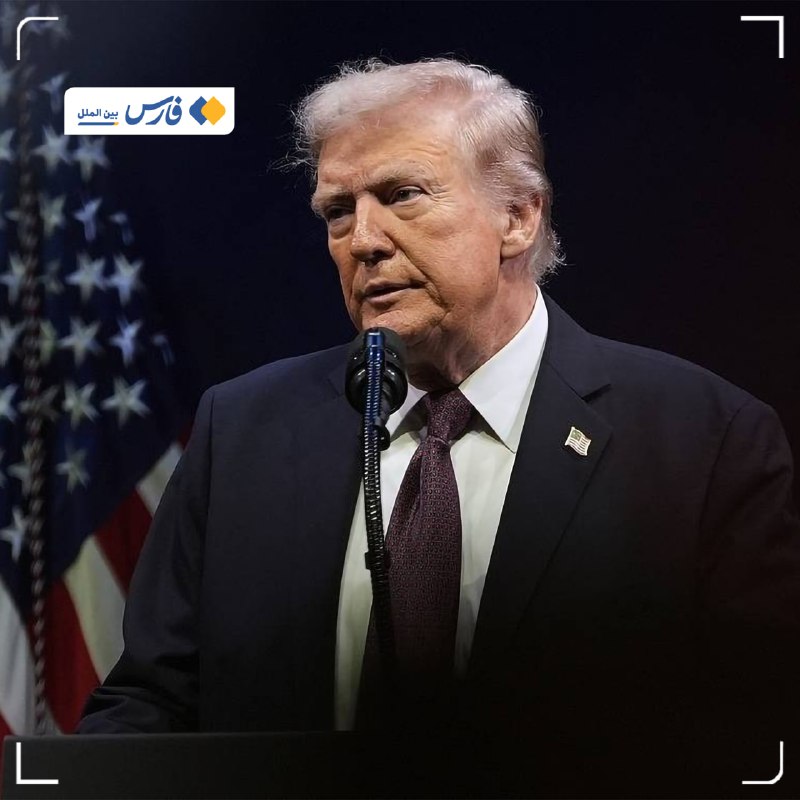
The White House notified Congress on 1 May 2026 that the special military operation in Iran had "terminated" — language deliberately chosen, sources familiar with the notification told Polymarket. By the following day, President Trump was publicly framing the outcome as incomplete but headed in the right direction. "They are not making the deal we need," Trump told reporters in remarks carried by Euronews. "We will see this through properly; we will not leave early."
Yet the single most consequential fact on the ground has not changed: the Strait of Hormuz remains effectively closed to normal commercial traffic. On 27 April, British Prime Minister Keir Starmer spoke with Trump by phone about what a joint readout described as the "urgent need" to reopen the waterway. That same day, Axios reported — citing three sources briefed on the discussions — that Iran had put a proposal on the table: reopen the Strait, end the wider hostilities, and defer the nuclear question to a later round of talks.
The sequencing of these events tells a story that the administration's public framing has not fully reckoned with. Washington declared the operation over. Tehran has not retreated. And the narrow waterway connecting the Persian Gulf to the open ocean — through which roughly 20 percent of the world's oil shipments pass — has become the central arena where the actual balance of leverage is being settled.
A Ceasefire in Name, a Siege in Practice
When Iranian state-aligned channels reported on 27 April that Tehran had proposed reopening the Strait as part of an initial framework, the offer was notable less for its novelty than for what it revealed about Iranian strategy. The proposal, per Axios's reporting, was structured in two parts: an immediate cessation of threats to shipping in exchange for a pause in major military operations, and a separate, deferred track for nuclear negotiations that would not begin until the more volatile front had cooled.
This is not a concession. It is an opening position that acknowledges the Strait's centrality while signaling that Iran understands the leverage it holds better than the Trump administration's public rhetoric suggests. To close the Strait is to move oil markets. To threaten its closure is to move every allied government that depends on Gulf crude — Japan, South Korea, India, much of Europe. Tehran's calculus has always factored in that the costs of disruption fall disproportionately on consumer nations and their allies, not on Iran itself.
The Reuters analysis published on 2 May made this point directly, arguing that the current standoff could leave Trump worse off than before the operation began — with a reopened Strait as the best-case outcome, and without the nuclear concessions the administration had publicly targeted. The White House has not publicly disputed this framing.
What Congress Was Told — and What It Means
The notification to Congress on 1 May that the operation had "terminated" was simultaneously a legal filing and a political signal. Trump's team separately argued, according to a Polymarket-tracked post, that the ceasefire agreement with Iran authorized additional military operations without further Congressional approval. The argument rests on the War Powers Resolution's exception for operations conducted pursuant to a specific statutory authorization — in this case, the claim that the ceasefire framework itself constitutes that authorization.
Constitutional lawyers across the ideological spectrum have raised questions about this reading. The ceasefire, as reported, is not a treaty and was not submitted to the Senate. It does not, on its face, authorize the use of force in the manner that a formal Authorization for Use of Military Force would. If the administration seeks to conduct additional strikes inside Iran under this umbrella, the legal fight is likely to land in federal court within weeks.
For now, the more immediate question is what the ceasefire actually contains. The public record is incomplete. Starmer's readout described "urgent" diplomatic activity. Iran's offer, as described by Axios, contemplated a freeze on operations in exchange for Hormuz normalization. What the ceasefire actually binds both sides to — and what triggers its termination — has not been made public in detail.
Nuclear Negotiations: Deferred, Not Resolved
The most significant dimension of the Iranian proposal, if Axios's sourcing is accurate, is what it says about the nuclear file. Tehran's opening position was not to negotiate at all in the current environment, but to park the nuclear question while the immediate military standoff was addressed. The administration, according to public statements, had made a comprehensive agreement — covering both the nuclear program and Iran's regional missile capabilities — its stated objective.
Iran has now separated these tracks. Whether this is a negotiating tactic or a genuine red line is impossible to determine from the available record. What is clear is that the nuclear file involves centrifuge counts, monitored sites, and IAEA inspection access that cannot be verified quickly. A deferred negotiation could stretch across years. The Trump administration's public impatience with that timeline is evident in the President's statement that Iran is "not making the deal we need."
The gap between what Washington wants and what Tehran has offered is not semantic. It reflects two different theories of what a deal requires. The United States has historically insisted on comprehensive, front-loaded verification — a model that Iranian negotiators have rejected in every previous round. Tehran's preference, evident in both the current proposal and in the structure of the 2015 JCPOA it eventually walked away from, is for sequenced sanctions relief tied to incremental compliance. The ceasefire proposal, if read along these lines, is a maximalist Iranian negotiating position dressed in the language of conciliation.
The Strait as Structural Leverage
Hormuz is not merely a shipping lane. It is the physical expression of a structural reality that geography has baked into the regional order for millennia: Iran controls the exits. No amount of carrier group posturing, no amount of coalition-building among Gulf allies, changes the fundamental fact that the Persian Gulf's only open mouth is Iranian territory on one shore and Omani territory on the other — and that Oman has historically maintained careful diplomatic neutrality that limits its utility as a Western operational base.
This does not mean Iran can close the Strait permanently. It can threaten it, disrupt it, raise insurance premiums on tankers transiting it, and create conditions under which commercial operators exercise their own caution. That caution has already manifested. Lloyd's of London and major shipping insurers began adjusting risk assessments within days of the initial hostilities. The Starmer-Trump call on 27 April, with its specific reference to reopening the waterway, was a recognition that this insurance and routing problem was reaching the level where heads of government needed to address it directly.
The Reuters analysis on 2 May argued that the current trajectory leaves the administration with a narrower set of options than it entered with. The military operation has ended without the comprehensive nuclear deal that was publicly advertised as its purpose. The Strait is closed. Iran has offered to reopen it — in exchange for a freeze on military operations that it would, in any case, need to rebuild its capacity to sustain. The structure of the offer is such that Iran can comply with its terms at low cost while the United States absorbs the reputational and diplomatic cost of having declared victory and then negotiated a reopening of a chokepoint it did not control.
Execution as Signal
On the same day Trump was speaking to reporters about unfinished business with Iran, Iranian state media reported that Tehran had executed two individuals convicted of spying for Mossad, Israel's foreign intelligence service. The timing is unlikely to be coincidental. The message is directed at multiple audiences: domestic, to demonstrate that the intelligence apparatus remains intact and responsive; regional, to signal that the relationship with Israel — and by extension with Washington's closest Middle Eastern ally — remains adversarial regardless of any ceasefire at sea; and Washington, to remind the administration that the Iranian state retains the capacity for unilateral action even within a ceasefire framework.
This publication has reported extensively on the patterns of Iranian domestic signaling during periods of external negotiation. Executions of those convicted of espionage are not uncommon during periods of diplomatic tension; they are a means of demonstrating that the state controls its own security environment regardless of external pressures. The execution of individuals linked to Mossad carries particular weight given the centrality of Israeli intelligence concerns to the American public framing of the Iran question.
What Remains Uncertain
The sources reviewed for this article do not contain the full text of the ceasefire agreement, if one exists in documented form. The notification to Congress on 1 May uses the word "terminated," but the legal basis for that determination — and whether it constitutes a full cessation of hostilities or merely a pause in major strikes — is not public. The Iranian proposal reported by Axios describes the contours of an opening framework, but not the specific triggers, timelines, or fallback conditions that would govern its execution.
The nuclear file remains the central unresolved question. The Trump administration has stated publicly that a comprehensive agreement is its objective. Iran's opening position is that this file is for later. The gap between those positions is not a detail — it is the entire substantive dispute. Whether the administration accepts a phased approach in order to reopen the Strait, or holds out for comprehensive commitments before lifting any sanctions, will define the next phase of this negotiation.
This article was filed from Washington. Monexus is tracking developments in the Iran ceasefire and will publish updates as the situation clarifies.
Wire provenance
This editorial synthesis draws on the following public wire/social posts:
- https://x.com/polymarket/status/1917255512343625728
- https://x.com/polymarket/status/1917255512343625728
- https://t.me/euronews/15678
- https://t.me/Cointelegraph/89234
- https://t.me/Cointelegraph/89234
- https://x.com/reuters/status/1917325678901424128
- https://t.me/ClashReport/18477
- https://x.com/polymarket/status/1917255512343625728