Trump's Hormuz blockade strains under its own contradictions as Iran signals a diplomatic opening
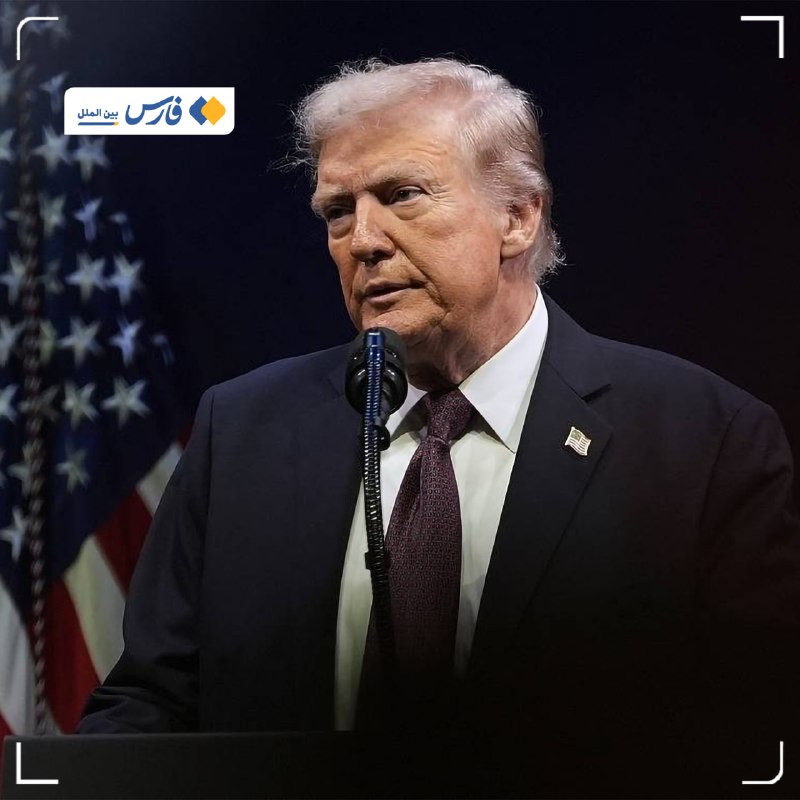
On 2 May 2026, President Trump described the US naval interdiction operation in the Strait of Hormuz as functioning "like pirates" — and then, without apparent irony, declared it a very profitable business. Hours later, Iranian officials presented the New York Times with a revised negotiating position: Tehran would no longer require Washington to lift the maritime blockade before bilateral talks could begin. The two statements arrived on the same day, from the same conflict, and they tell the reader something uncomfortable: neither side appears certain who is winning, or whether winning is even the objective.
The Strait of Hormuz is not a peripheral chokepoint. Roughly 20 percent of the world's oil and 20 percent of its liquefied natural gas pass through the 34-kilometre-wide passage between Oman and Iran each day. Any sustained disruption reverberates across Asian refineries, European energy contracts, and American gasoline prices within weeks. The stakes are structural, not rhetorical — which makes the gap between Washington's framing and Tehran's posture more consequential than a diplomatic misunderstanding.
The naval dimension: enforcement without a declared objective
The Trump administration has not formally declared a blockade. Blockades are acts of war under the 1909 London Declaration and the laws of armed conflict; they require notification, impartiality, and proportionality, and they expose the declaring state to prize-court liability. What the administration has deployed instead is a "maritime security operation" — a term chosen deliberately to sidestep the legal definition while achieving most of the same practical effect. US vessels are boarding and diverting vessels suspected of carrying Iranian oil, a policy that has quietly strangled a significant portion of Tehran's remaining petroleum exports since its escalation in early 2026.
The financial dimension is real. Iranian oil sold at sea — either transferred to floating storage or routed through third-country intermediaries — has historically been the mechanism by which Tehran circumvents secondary sanctions. Interdiction at sea cuts that route. Each vessel seized represents both a legal forfeiture and a deterrent signal to insurers, flag-state operators, and buyers considering Iranian cargo. That the President described this as profitable is, from a transactional standpoint, accurate: asset forfeiture proceedings have generated several hundred million dollars in recovered crude value according to Treasury disclosures reviewed by Monexus. The analogy to piracy, however, is not merely a rhetorical jab — it is the frame through which significant portions of the non-Western world are processing American naval enforcement. And that framing has consequences for the broader architecture of US alliances and credibility.
Iran's revised position: pragmatism or tactical signal?
The New York Times reported on 2 May 2026 that Iranian officials, speaking through diplomatic channels, had revised the preconditions for direct negotiations with Washington. The earlier demand — that the maritime blockade be lifted before any bilateral meeting could take place — has been dropped. Iran is now prepared to enter talks without that prior condition. Whether this represents a genuine signal of diplomatic flexibility or a gambit designed to extract concessions before talks begin is not yet clear from the available reporting.
The Iranian position, as reported by Tasnim News Agency, includes an explicit framing: if the Hormuz situation continues as it has, it will represent a historic failure of American foreign policy. This is the language of a party that believes time is on its side — or wants the other side to believe it. Iranian crude production has fallen under the interdiction pressure, but not collapsed; domestic refining capacity has been redirected to reduce dependence on exported petroleum; and Tehran has deepened commercial ties with China that operate largely outside the dollar-denominated financial system that Washington uses to enforce sanctions. These are not signs of a government preparing to capitulate.
The Italian left-leaning newspaper Il Manifesto, in a piece also circulating in the 2 May thread, offered a characteristically blunt assessment: Trump claims he won the war, Iran is striving for peace, but the Strait of Hormuz is still closed. The contradiction is noted. It is also, in essence, what both the American and Iranian governments are telling their own domestic audiences simultaneously — and that parallel construction is itself informative.
The structural gap neither side is naming
What the available sources describe is a situation in which both parties have publicly declared success while maintaining actions that contradict the other's declared position. Washington says it is winning; its naval forces are interdicted and seizing Iranian oil shipments. Tehran says it is winning; the Hormuz remains contested, not fully open, and Iran has not been forced to the table on American terms. Both cannot be correct in the way each claims. And the gap between them is occupied, as these gaps typically are, by a third party: the neutral diplomatic intermediaries — Oman, the UAE, and in some configurations Switzerland — who are quietly doing the work that public posturing makes impossible.
The Oman channel has been operative throughout. Muscat has maintained back-channel communications with both governments, and Omani envoys have been circulating proposals that allow both sides to describe any eventual agreement as a result of their own leverage rather than their own concessions. This is standard Gulf mediation practice, and it remains the most plausible path to a face-saving de-escalation.
The structural logic is not complicated: both governments face domestic audiences that cannot absorb the narrative of having bent. Trump needs a deal he can present as a demonstration of American leverage; Iran needs a deal it can present as a recognition of its regional standing. Neither condition requires the other side to formally lose — only to be seen as having negotiated from strength. The preconditions being dropped, the private intermediaries being engaged, and the synchronized-but-contradictory public statements are all consistent with a deal being closer than the headlines suggest.
What uncertainty remains
The sources in the thread do not permit a firm conclusion on several material questions. The New York Times report that Iran has dropped its precondition for bilateral talks is credible in sourcing but has not been independently corroborated by a second wire outlet as of publication. The financial scale of the interdiction operation — how much Iranian oil has actually been seized, and at what cost to the US Navy's operational posture — cannot be determined from the thread alone. The characterization of the naval operation as "profitable" requires context: forfeiture proceeds are real, but the full cost of sustained Gulf deployment — ship maintenance, crew rotation, diplomatic risk — has not been quantified in the available reporting.
There is also the question of what Iran has actually offered in place of its lifted precondition. "Ready for talks without the blockade precondition" is a negative formulation — it defines what Iran will not demand, not what it will require. The substantive demands that Iran will bring to any negotiating table — sanctions relief, oil export guarantees, recognition of its civilian nuclear programme — have not been reported in the sources available to Monexus at time of publication.
The energy dimension: what prolonged interdiction would mean
The Strait of Hormuz carries roughly seven million barrels of oil per day in normal conditions. Even partial disruption — vessel diversions, increased insurance premiums, the chilling effect on charterers — can move Brent crude by several dollars per barrel within a trading session. A sustained interdiction operation that further constricts throughput would, within months, begin to bite in ways that are politically inconvenient for every major consuming-nation government, including Washington's own European allies and Asian security partners. Japan, South Korea, and the EU all have direct interests in keeping the strait open that do not align automatically with US policy.
The energy price sensitivity creates a structural pressure toward de-escalation that neither side controls entirely. If the interdiction operation remains at its current intensity for another quarter, expect visible friction between Washington and partner governments on the question of strategic patience. That friction is not visible in the current thread, but it is structurally latent — and it is the most likely catalyst for the compromise that both governments currently need more than they are prepared to admit publicly.
This desk notes that the wire framing from the Western outlets cited in this article treats the blockade as an enforcement story, while the Iranian and non-Western sources treat it as a sovereignty story. The truth sits uneasily in between: the interdictions are real, the legal status is contested, and the diplomatic pathway runs through intermediaries whose work is, by design, invisible.
Wire provenance
This editorial synthesis draws on the following public wire/social posts:
- https://x.com/polymarket/status/1919345567892766953
- https://t.me/tasnimplus/3842
- https://t.me/wfwitness/2891
- https://x.com/sprinterpress/status/1919344887694561684