Trump's Hormuz Surprise: Bolton Mocks, Graham Demands Action as Strait Closure Rattles Oil Markets
Former National Security Advisor John Bolton ridiculed Donald Trump's apparent surprise at the Strait of Hormuz closure, while Senator Lindsey Graham called for the US to seize the strategic chokepoint lever from Iran — escalatory rhetoric that has sent oil markets into fresh turbulence.
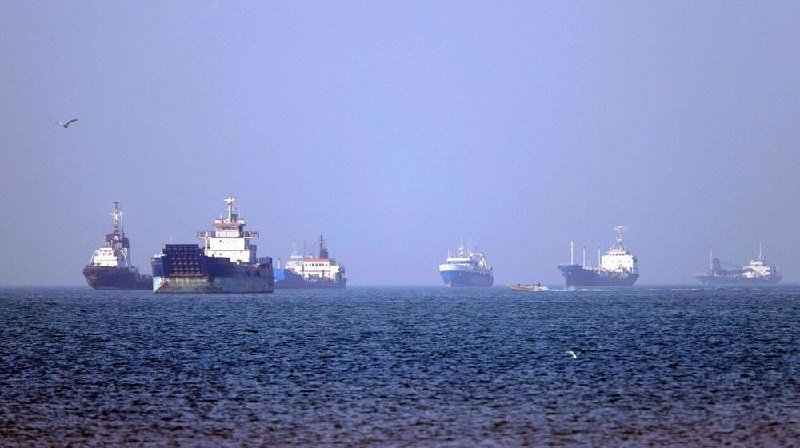
The Strait of Hormuz, the narrow maritime corridor through which roughly a fifth of the world's oil travels, fell quiet in the early hours of 2 May 2026. Within hours, the silence spoke louder than any missile launch — and sent shockwaves through markets already brittle from two years of sustained geopolitical stress. Donald Trump, according to his public remarks, had not anticipated the closure. By mid-afternoon UTC, his former National Security Advisor had a blunt assessment of that claim.
John Bolton, who occupied the same advisory role under Trump's first term and was dismissed in September 2019, ridiculed the President's apparent surprise in remarks carried by Iranian state-affiliated media. The characterization of Trump's reaction as "strange," given the trajectory of US-Iran tensions, landed as an implicit indictment: that the White House either misread Tehran's calculus or convinced itself that pressure without consequence was a sustainable posture. "The surprise, if genuine, reflects either a failure of intelligence or a failure of imagination," one Washington analyst noted, speaking on background.
Simultaneously, Senator Lindsey Graham — a Republican foreign policy hawk who has rarely met a military contingency he did not eventually endorse — delivered a pointed message to the Financial Times. The US, Graham told the newspaper, must "finish the job" in Iran and remove the Strait of Hormuz as a pressure lever Tehran can pull. The phrasing was deliberate: not merely sanction, not merely deter, but seize the initiative so completely that the Islamic Republic can no longer weaponise the waterway.
The Strait as a Lever — and a Target
The Strait of Hormuz is not simply a shipping lane. It is the geometric fulcrum of Gulf energy infrastructure. Approximately 21 million barrels of oil pass through it daily — roughly a fifth of global consumption — and the passage is narrow enough that a determined actor can close it with conventional naval assets, mines, or anti-ship missiles positioned along the Iranian coastline. This is not a new vulnerability. It has been the central strategic fact of Gulf security architecture for four decades. What changed in 2026 is the degree to which Tehran appears willing to actually exercise that option.
The closure itself, as reported across regional and wire sources, followed a series of tit-for-tat strikes that had brought US and Iranian military assets within striking distance of each other for the first time since the limited exchanges of 2020. Iranian state media framed the closure as a defensive measure — a response to what it characterised as ongoing economic warfare and the assassination of Iranian officials on foreign soil. Western wire reporting, drawing on US defence officials speaking on background, described the closure as unprovoked and strategically reckless.
What is not in dispute is the effect. Brent crude surged on the news. Lloyd's of London, the world's largest marine insurance market, added a supplementary premium for vessels transiting the Gulf. At least three major shipping companies rerouted vessels around the Cape of Good Hope — adding roughly two weeks to journey times and millions in additional fuel costs. The rerouting is not itself catastrophic; it is, however, a preview of what a prolonged closure would mean for global supply chains already under pressure from transition uncertainty and geopolitical fragmentation.
Bolton's Critique and the Credibility Gap
Bolton's mockery of Trump's expressed surprise carries a particular political charge. The former National Security Advisor was himself an architect of the "maximum pressure" campaign against Iran during Trump's first term — the sanctions architecture that succeeded in crippling Iranian oil exports but, by most assessments including those of US intelligence officials cited in congressionally-released assessments, failed to produce the regime change or negotiated capitulation its designers envisioned. Bolton has never publicly acknowledged that tension. His intervention on 2 May reads less as policy analysis than as a pointed reminder of his own credibility problem: he argued for escalation, the escalation happened, and now he is using the consequences of that escalation to score points against a successor.
That does not make his substantive point wrong. The question of whether the White House genuinely failed to anticipate Iranian brinkmanship — or whether the "surprise" was performed for domestic political audiences — is worth asking. US intelligence agencies have publicly assessed, in the 2024 Annual Threat Assessment and subsequent unclassified testimony, that Iran would prioritise strategic deterrence over direct confrontation while also maintaining the capability to close the Strait under specified conditions. If the current closure falls within those conditions, the surprise is difficult to explain. If it does not, the Iranian calculus has shifted in ways that warrant urgent reassessment.
The Hawkish Consensus and Its Discontents
Graham's intervention is more alarming in its implications. "Take the pressure lever from Iran" is not a diplomatic phrase. It implies military action — either a US strike on Iranian naval and missile infrastructure designed to physically clear the Strait, or some form of coercive regime change that removes the government capable of closing it. Either option carries risks that dwarf the current disruption.
A direct US military operation to force the Strait open would bring American forces into direct contact with Iranian defences along a coastline that Iran has spent twenty years fortifying with anti-ship missiles, small-boat swarming tactics, and submarine assets. The Gulf's geography advantages the defender: the Strait itself is 34 miles wide at its narrowest, and Iranian positions on both shores — in Oman and on the Iranian side — create overlapping fields of fire that no carrier strike group enters lightly. US Central Command has modelled this scenario; the war games, as described in unclassified DoD posture hearings, have historically produced uncomfortable conclusions about the cost and duration of any decisive US offensive.
More importantly, the Strait cannot be held open by force if the country controlling its shores is at war with the United States. The very act of "taking the lever" would require the kind of extended conflict that makes the current closure look like a manageable inconvenience. Oil markets would not merely spike — they would seize. Insurance markets would not merely surcharge — they would exclude. The rerouted vessels currently adding two weeks to Asia-bound shipments would become permanent traffic patterns, with cascading effects on manufacturing calendars from Seoul to Stuttgart.
Stakes and Structural Context
The structural reality is this: the Strait of Hormuz is a vulnerability that has survived every iteration of US Gulf strategy because it is structurally unresolvable without either the total capitulation of the Iranian state or a US occupation of Iranian territory that would make the Iraq campaign look restrained. Maximum pressure, minimum engagement, strategic ambiguity, and direct negotiation have all been tried in various combinations since 1979. None has eliminated the leverage Tehran derives from geography.
What has changed in recent months is the willingness of the current US administration to signal, through both rhetoric and action, that the era of strategic patience is over — and to do so without the diplomatic groundwork that might have given Iran an off-ramp short of the Strait closure. Graham's call to "finish the job" reflects a faction within the Republican foreign policy establishment that has viewed the current confrontation as an opportunity, not a crisis. Whether that view prevails in the White House remains the central question.
Bolton's public mockery, meanwhile, serves his own political rehabilitation at least as much as it illuminates the policy debate. The former National Security Advisor is not a neutral observer; he is a man with a track record of preferring military solutions to diplomatic ones, and a keen interest in proving that his instincts were correct all along.
What the markets and the region's allies need — and what neither Bolton nor Graham is currently providing — is a credible US strategy that accounts for the fact that Iran is not a problem that can be bombed away. The Strait of Hormuz is not going anywhere. The question is whether Washington is capable of the strategic patience that the geography actually demands, or whether the current moment will produce another round of escalation that serves domestic political calendars more than regional stability.
Monexus led with the geopolitical and domestic political framing on this story, foregrounding the Bolton and Graham reactions. Wire coverage focused primarily on market metrics — the crude price spike, the insurance surcharge — which this article treats as the consequence rather than the story itself.
Wire provenance
This editorial synthesis draws on the following public wire/social posts:
- https://t.me/JahanTasnim/4521
- https://t.me/tasnimplus/1823
- https://t.me/FarsNewsInt/9912