Trump's Iran Blockade Comments Are a Strategic Gift to Hardliners in Tehran
When the President of the United States calls an economic blockade 'profitable' and likens his navy to pirates, he hands Iran's hardliners exactly the propaganda weapon they needed. That is not a rhetorical excess — it is a structural gift to a regime that has survived decades of sanctions precisely by reframing external pressure as criminal aggression.
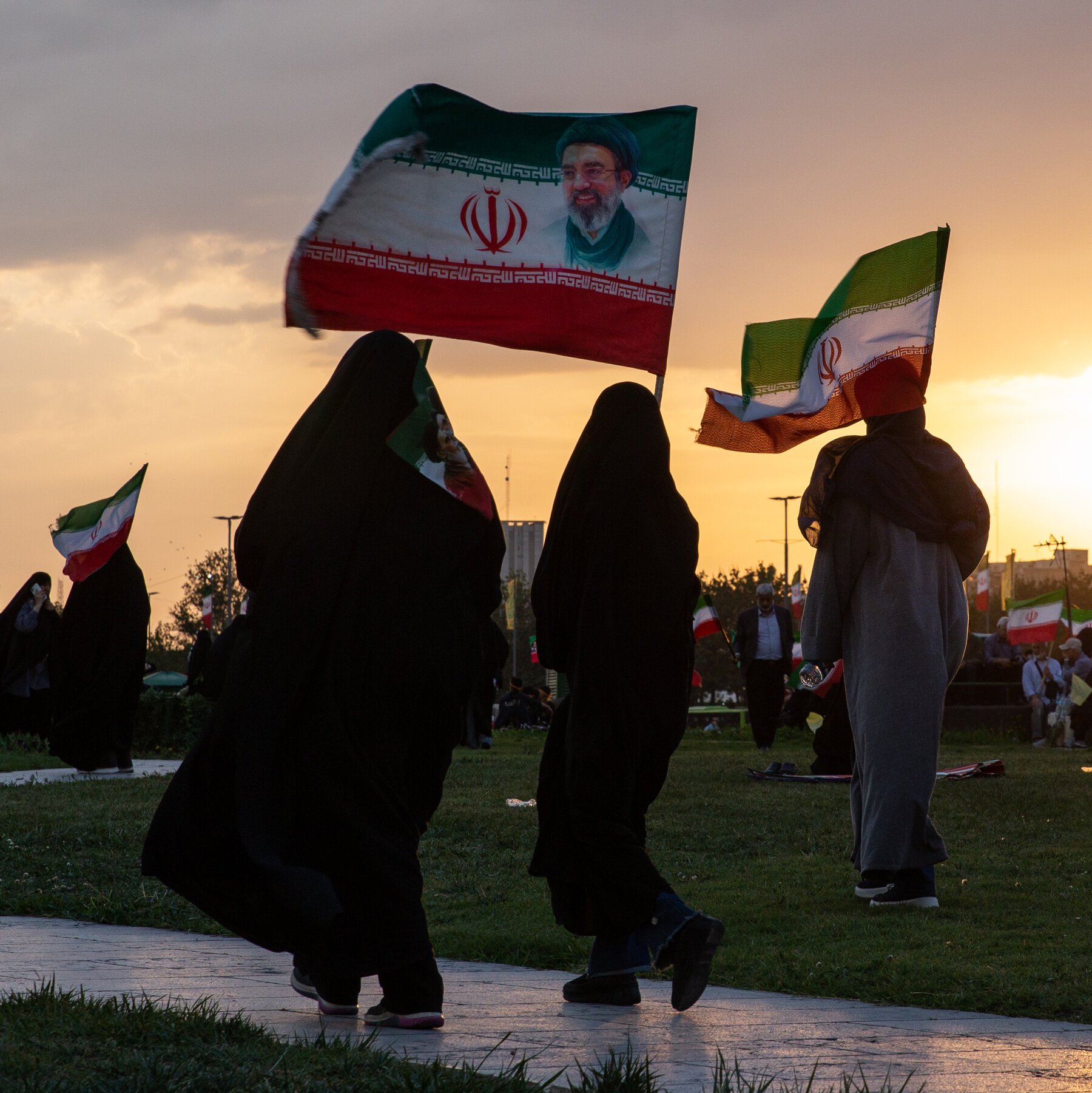
The comment landed without obvious fanfare in the American press — a quick clip, a few social-media shares, then the news cycle moved on. But what Donald Trump said about the US naval blockade of Iran on 2 May 2026 deserves more than a day's attention. "This is a very profitable business," the President told assembled media. "We're sort of like pirates." The statement was not a slip. It was a strategic framing choice, and it matters more than the immediate reaction suggested.
The blockade — maintained under cover of the ongoing ceasefire agreement — restricts Iranian oil exports and chokes the revenue streams that fund both the government in Tehran and the regional networks it supports. That is not in dispute. The structure of the policy is conventional: economic coercion designed to produce political concessions. What is not conventional is the language used to describe it. Calling a state-sanctioned naval operation "profitable" transforms an act of sovereign enforcement into a commercial enterprise. And likening US naval forces to pirates — a word that carries centuries of legal and moral weight — does something more: it recasts the most powerful military in the world as outlaws acting for personal gain rather than as agents of a constitutional democracy enforcing international norms.
That framing is a gift to the hardliners in Tehran.
The Leverage Problem
Iran's theocratic establishment has spent decades surviving Western sanctions. The mechanism of that survival has been consistent: portray external pressure as aggression by a hostile West, rally domestic nationalist sentiment, and use the resulting cohesion to suppress reformist opposition. The harder the external pressure, the easier that narrative becomes to sell. When the United States Senate was debating enhanced sanctions in 2012 and 2015, Tehran's response was never primarily technical — it was political. The Islamic Revolutionary Guard Corps and its allies understood that each new round of restrictions strengthened their domestic position by confirming the very hostility they had always warned about.
Trump's "pirates" comment does the same work in less time and at lower cost. It gives Iranian hardliners a direct quote from the American President himself, confirming that the blockade is not about nonproliferation or human rights or regional stability — it is, in the President's own framing, about making money. That removes one of the central pillars of any reformist argument inside Iran: that negotiating with the United States might produce a relaxation of sanctions and an opening for economic modernisation. If the other side is openly treating Iranian economic strangulation as a profit centre, the entire premise of dialogue as a pathway to relief collapses.
That matters because the ceasefire in place since early 2026 was fragile. It produced a pause in direct hostilities, but it did not resolve the underlying tensions that drove the conflict. Iranian officials — including figures associated with the IRGC's regional operations — had publicly indicated that a negotiated normalisation of trade and financial flows was a precondition for sustained calm. The blockade under ceasefire conditions undercuts that precondition systematically.
The Constitutional Question
The second significant statement from Trump in this period concerned not the blockade but the legal basis for expanding military operations against Iran under the ceasefire framework. According to a Polymarket-linked report on 1 May 2026, the President claimed he did not require congressional approval for additional strikes, citing the ceasefire agreement as sufficient legal cover. The claim is legally contestable.
The War Powers Resolution of 1973 requires the President to report to Congress within 48 hours of introducing US armed forces into hostilities or imminent hostilities. It does not grant unlimited authority to expand operations simply because a ceasefire framework exists. A ceasefire agreement reached without Senate ratification or explicit congressional authorisation does not automatically confer new operational authorities. Constitutional scholars across the ideological spectrum have flagged the precedent this sets: if a President can claim ceasefire-era authority to conduct strikes without congressional approval, the boundary between executive war-making and constitutional warmaking collapses.
The practical implication is not academic. If Iranian leadership concludes that the ceasefire is being used as a legal pretext for escalating hostilities rather than a genuine framework for de-escalation, the agreement's credibility collapses. That risks triggering the very military response the ceasefire was designed to prevent.
What This Costs the United States
The blockade's immediate profitability — in terms of seizure revenues and leverage over third-party traders who fear US sanctions enforcement — is real. Several shipping firms have rerouted away from Iranian ports since the blockade tightened. Insurance premiums for vessels transiting the Gulf have spiked. The financial pressure on Tehran is genuine and measurable.
But economic warfare operates on a timeline that rarely aligns with political objectives. Iran has demonstrated, across multiple cycles of sanctions and negotiation, that it can absorb sustained economic pressure for longer than Western policymakers typically estimate. The Revolutionary Guard's control over key economic sectors means that sanctions pain is distributed across the civilian population before it meaningfully constrains the security apparatus that governs Tehran's behaviour. This is not an argument against economic pressure as a tool — it is an observation about the gap between pressure applied and pressure effective.
The more immediate cost is diplomatic. The United States is currently negotiating with several Gulf states about the broader regional architecture that would follow any normalisation of US-Iranian relations. When the American President characterises the blockade as a profit line rather than a policy instrument, it becomes considerably harder to persuade third-party states that the US approach is calibrated to regional stability rather than to the transactional interests of the current administration. Gulf states with their own Iran anxieties are watching. So are their Chinese and Russian counterparts, who have a structural interest in portraying US policy as self-interested rather than rules-based.
The Hardliners' Victory
It would be easy to treat Trump's "pirates" comment as a media operation — an effort to portray himself as a strongman who protects American interests ruthlessly, without regard for diplomatic niceties. That reading has merit. But it misses the structural effect: every time a statement like this circulates in Tehran's state media, it does work that the IRGC's internal security apparatus could not accomplish at equivalent speed. It is not the Western press covering the blockade — it is the American President himself, making the hardliners' case for them.
The ceasefire holds on borrowed time. The blockade continues. The President has handed Tehran a recruitment poster. Whether the eventual cost in regional instability and lost diplomatic leverage exceeds the short-term gains in seizure revenue is a question the current data cannot answer. But it is the right question to ask — and it deserves more than a day's attention before the cycle moves on.
Monexus covered this story against the wire: while wire outlets focused on ceasefire mechanics and ceasefire-adjacent military briefings, this analysis foregrounds the framing battle inside Iran and the constitutional dimension of the blockade's legal basis.
Wire provenance
This editorial synthesis draws on the following public wire/social posts:
- https://x.com/sprinterpress/status/1920345712459268161
- https://t.me/IRIran_Military/9848
- https://x.com/sprinterpress/status/1920345403854487551
- https://x.com/polymarket/status/1920173408654549121