Trump Administration Frames Iran Escalation as 'Profitable Business' as Sanctions Expand to Cuba
The Trump administration is escalating its confrontation with Iran while simultaneously expanding sanctions on Cuba, framing maritime seizures as commercially viable and openly discussing the legal architecture designed to keep the engagement outside wartime definitions.
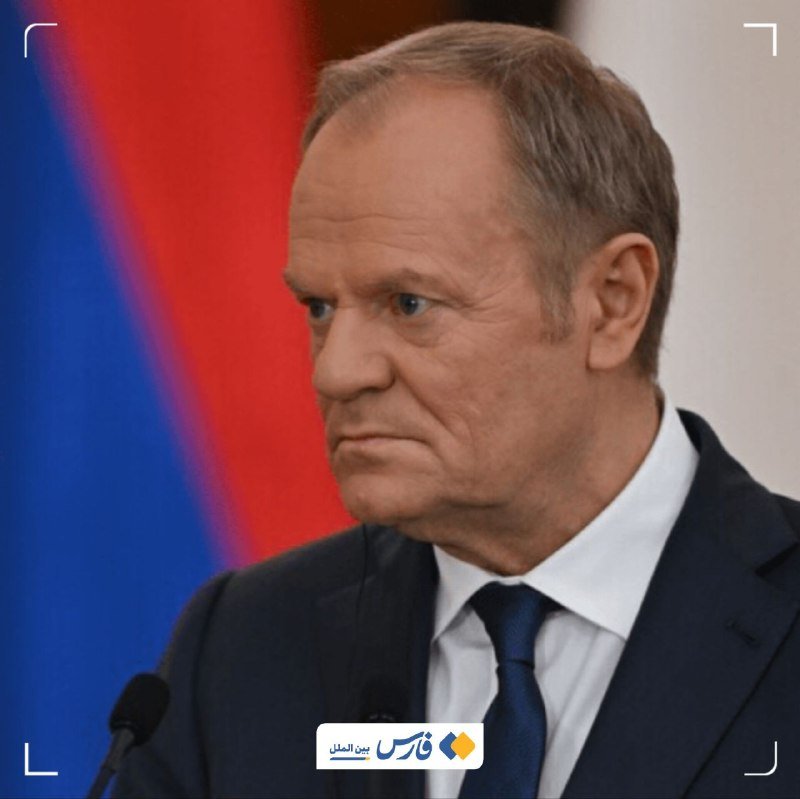
On 2 May 2026, the Trump administration expanded its pressure campaign on two governments in the Western Hemisphere simultaneously: new sanctions targeting the Cuban government and its affiliates were announced via Reuters, while senior administration officials outlined to CBS News a rationale for repositioning US forces in Germany framed around dissatisfaction with NATO's response to the Iran confrontation.
The dual-track escalation comes as President Trump himself offered unusually direct characterizations of the administration's Iran strategy in comments reported across multiple channels. According to transcripts cited by the Arabic-language Al Alam outlet and corroborated by the GeoPWatch monitoring service, Trump described the ongoing seizure of Iranian vessels as "a very profitable business" and invoked a maritime analogy: "We are like pirates! We landed on the deck of the Iranian ship, took control of it, and took the cargo and oil." The same sourcing describes the president acknowledging that his administration deliberately labels the Iran engagement a "military operation" rather than a war for legal purposes.
Reuters reported on 2 May 2026 that the administration had expanded sanctions on the Cuban government and affiliated entities. The CBS News report, citing officials who spoke on condition of anonymity, connected the decision to withdraw American soldiers from Germany directly to the president's dissatisfaction with NATO's level of support in confronting Iran.
The combination of maritime interdiction, dollar-denominated sanctions, and troop repositioning forms a coherent pattern that goes beyond rhetorical pressure. Whether the framework constitutes a sustainable long-term strategy or an improvised accumulation of coercive tools is a question the sources do not yet resolve.
The Iran Posture: Commercial Framing Meets Legal Architecture
The "profitable business" framing is notable precisely because it is unusual. Administrations typically justify coercive actions against adversaries in the language of deterrence, denuclearization, or human rights. Describing the seizure of a sovereign nation's vessels as a revenue line is a different register entirely — and the sources suggest it was not accidental phrasing.
Trump's comment that any agreement with Iran "must be bad for it" and that "it may be better for us not to conclude a deal at all" signals a negotiating posture that departs from the standard US formula of conditional engagement. Previous administrations — Democratic and Republican alike — approached Tehran through a framework of mutual benefit,哪怕有限,as the architecture for瓦iver协议. The current position appears to treat agreements as zero-sum instruments whose value lies primarily in extracting concessions rather than in establishing durable arrangements.
The legal architecture is equally deliberate. By maintaining that the Iran engagement is a "military operation" rather than a war, the administration preserves certain operational flexibility while avoiding the formal war powers that would trigger congressional notification requirements and constitutional thresholds. The sources describe this distinction as explicitly acknowledged by the president — not as a euphemism constructed by spokespeople but as a conscious design choice. Legal scholars have noted that the distinction between Armed Conflict and Hostilities under US domestic law and international humanitarian law carries material consequences for how the engagement is conducted and how third parties — including European allies — respond.
European governments have largely avoided public endorsement of the Iran posture while halting short of direct condemnation. The sources do not include statements from Berlin, Paris, or London on the specific quotes, but the context of NATO friction over burden-sharing suggests the relationship between the United States and its European allies is under genuine strain in a way that extends beyond trade disputes.
Cuba: The Secondary Target Gets Accelerated
"We will take care of Cuba almost immediately after Iran," Trump stated in comments reported on 1 May 2026, according to the Al Alam Arabic outlet. The Reuters reporting confirms that sanctions on the Cuban government and affiliated entities were expanded on 2 May 2026, creating a direct sequence: Iran first, Cuba next.
The timing is not incidental. Havana has maintained its alignment with Caracas and Tehran throughout the recent escalation. Cuban financial institutions have processed transactions for parties subject to US sanctions, according to Treasury assessments cited in prior reporting cycles. Expanding the sanctions perimeter to include entities previously treated as tangential to the primary Iran sanctions architecture represents a narrowing of the safe harbor that smaller jurisdictions have historically used to maintain commercial relationships with sanctioned states.
The "aircraft carrier near the Cuban coast" comment — described as a tactical proposal to coerce surrender — is the most explicitly escalatory statement attributed to the president in the thread. International law treats coercive naval operations in another state's exclusive economic zone as a matter of contested legality, particularly absent UN Security Council authorization. The sources do not confirm whether any carrier deployment has been ordered; the comment appears in the context of a discussion of pressure tactics rather than a confirmed operational directive.
Cuba's economic situation gives the sanctions particular bite. The island's economy has not recovered from the compounded pressures of US sanctions, the Venezuelan collapse, and post-pandemic constraints. Expanded sanctions targeting affiliates — likely including remittance processors, shipping intermediaries, and financial conduits — will further compress the operational space for even humanitarian-tier commerce.
Germany, NATO, and the Burden-Sharing Fracture
The CBS News report, cited in the Al Alam thread on 1 May 2026, connects the decision to withdraw American soldiers from Germany to Trump's dissatisfaction with NATO's support for the air defense mission in the context of the Iran confrontation. The sources do not specify the number of troops, the timeline, or whether this represents a partial drawdown or a more fundamental repositioning.
What the sourcing does establish is that the rationale is explicitly tied to the Iran engagement rather than to the generalized NATO spending disputes that characterized the first Trump administration's demands. Germany hosts the largest US military footprint in Europe — roughly 35,000 personnel across multiple installations. A withdrawal of even a fraction of that presence would have cascading effects on US European Command posture, the NATO reinforcement architecture, and the forward-deployed deterrence model that has undergirded European security since World War II.
The structural implication is significant. The NATO alliance's Article 5 collective defense commitment has always rested on the premise that the United States would treat an attack on a European ally as an attack on itself. If US force posture is now conditional on allies' willingness to support American-conducted operations against third parties — including Iran — the alliance's foundational logic shifts from collective security to transactional participation. European capitals have spent two decades managing tensions between strategic autonomy ambitions and the practical reality of relying on US capabilities. The current friction accelerates the pressure toward the former.
The Structural Frame: Dollar Power, Coercive Architecture, and the Multipolar Counter
What the thread collectively describes is not merely a confrontational Iran policy or a hardline Cuba posture. It is a coherent deployment of the tools available to a state that retains dominant influence over the global financial messaging system.
Sanctions are effective precisely because the dollar underpins the majority of cross-border settlement. The expanded Cuba measures will work — or fail — based on whether European and Asian banks and trading houses treat them as enforceable. The maritime interdictions function because the US Navy retains carrier strike group dominance in the relevant waters. The "profitable business" framing acknowledges what traditional diplomatic language obscures: the coercive apparatus has a revenue dimension.
The countervailing tendency is structural, not ideological. China, Russia, and a growing set of Middle Eastern and Southeast Asian states have spent the past decade building alternative settlement infrastructure — CIPS, SPFS, bilateral currency swaps, commodity pricing in non-dollar terms — precisely because they anticipated a moment when the dominant power might use dollar access as a primary weapon. The sources do not quantify how much of Iran's trade has shifted to these alternative channels, but the direction is established: sanctions compliance has become selective rather than universal.
The administration appears to be operating on a theory that the dollar's reach is still sufficient to coerce compliance even as the alternatives develop — that the pain threshold is high enough that most actors will prefer accommodation to circumvention. Whether that theory holds will be tested against the responses of trading partners who face the choice between US sanctions compliance and commercially significant Iranian or Cuban relationships.
The thread leaves several material questions unresolved. The troop withdrawal from Germany lacks specificity on scale and timeline. The aircraft carrier positioning near Cuba has not been confirmed as a standing order. The legal architecture distinguishing the Iran engagement from war has not been tested in courts or in the UN Security Council, where any resolution referencing the Iranian situation would face vetoes. The sanctions expansion on Cuba lists affiliate entities that the Reuters reporting does not name individually.
What the sources do establish with confidence is a posture: confrontational, explicitly transactional, and framed in language that departs from the diplomatic register administrations typically employ. Whether that posture reflects a coherent strategy or an improvised accumulation of leverage is a question the evidence does not yet settle.
This publication's wire feeds included a significantly broader volume of Telegram-sourced transcript material from Arabic-language and geopolitical monitoring channels than from US wire services on this story. The asymmetry reflects the unusual character of the sourcing — direct presidential quotes that did not appear in mainstream English-language wire copy on deadline.
Wire provenance
This editorial synthesis draws on the following public wire/social posts:
- http://reut.rs/4tLC598
- https://t.me/alalamarabic/
- https://t.me/alalamarabic/
- https://t.me/alalamarabic/
- https://t.me/alalamarabic/
- https://t.me/GeoPWatch/
- https://t.me/alalamarabic/
- https://t.me/alalamarabic/