Unknown Territory: Trump, Iran, and the Fraying Edge of Nuclear Diplomacy
The Trump administration says it does not know who leads Iran and has cancelled planned nuclear negotiations in Pakistan, raising questions about the future of any diplomatic track between the two countries.
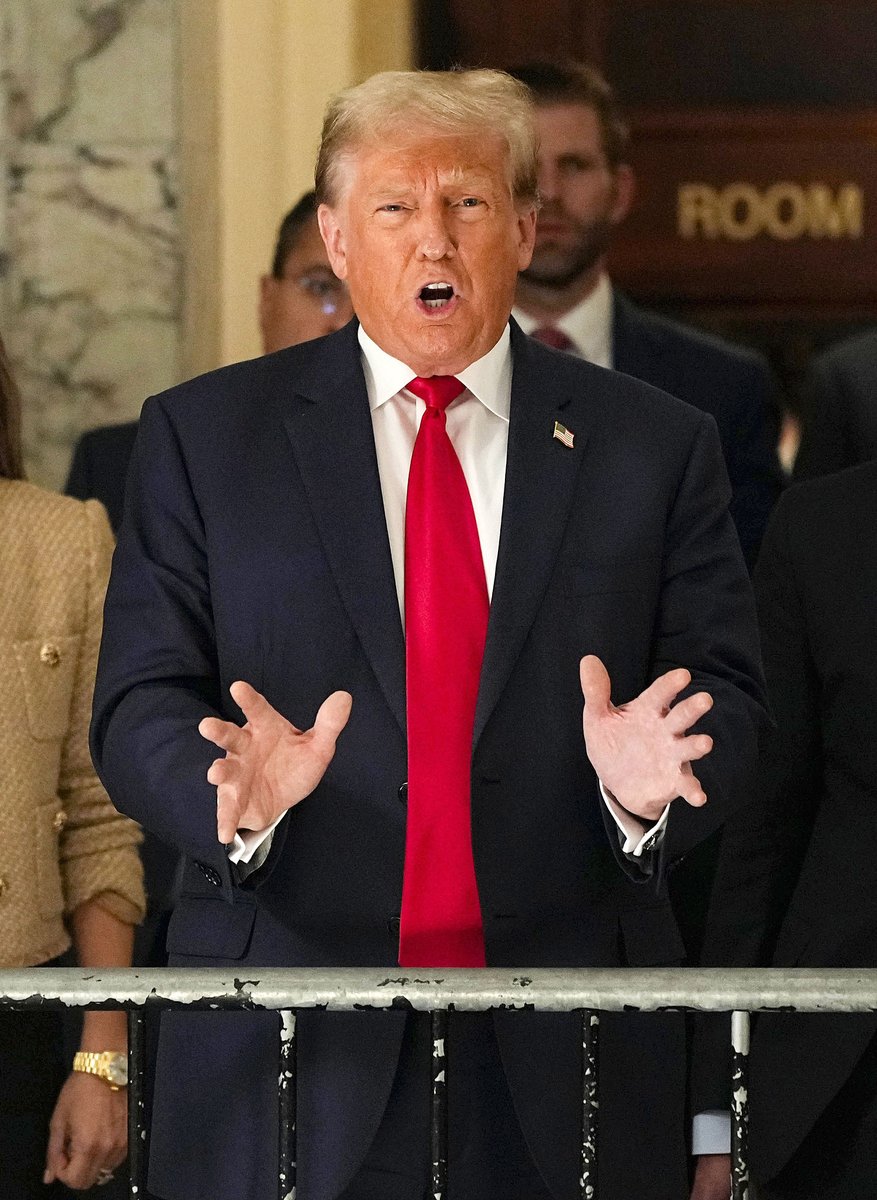
When President Trump was asked on 1 May 2026 whether he needed congressional authorization to launch additional military operations against Iran, his answer was unambiguous: he did not. The legal basis, he suggested, derived from what his administration considers an active ceasefire. The assertion immediately drew scrutiny from constitutional scholars and members of Congress who have spent years debating the precise boundaries of executive war power — a debate the administration appears willing to settle by fiat rather than by argument.
The claim landed against a backdrop of profound ambiguity about the state of US-Iran relations. Two days earlier, on 27 April, BBC News reported that oil prices had risen as US-Iran peace talks stalled. Trump himself acknowledged that the administration had cancelled plans to send a negotiating team to Pakistan, where indirect talks with Iranian officials had reportedly been scheduled. The signals were contradictory: ceasefire language on one hand, cancelled diplomacy on the other.
Then came the more striking admission. Trump told reporters he did not know who Iran's leader was. "We don't know who their leader is," he said, according to a transcript reviewed by OSINTdefender on 2 May 2026. "Many of the country's leaders have been targeted in US operations." The statement was unusual in its frankness and its implications. It suggested not merely diplomatic confusion but a fundamental uncertainty about the identity of the counterpart the United States was attempting to engage — or threaten.
The Vacancy Problem
Iran's political architecture has never been simple. Supreme Leader Ayatollah Ali Khamenei remains the head of state in constitutional terms, but his health has been a subject of persistent, low-grade Western intelligence reporting for years. The death or incapacity of the Supreme Leader would trigger a succession process governed by the Assembly of Experts — a body whose deliberations are opaque and whose outcome is impossible to predict from outside the Islamic Republic's clerical establishment.
Below the Supreme Leader, the presidency of Masoud Pezeshkian — elected in a 2024 contest after the death of Ebrahim Raisi in a helicopter crash — carries real administrative weight but limited independent authority on matters of nuclear policy and regional military strategy. Those decisions flow upward, toward institutions that have been the target of sustained US pressure.
Trump's framing, however, implied something more structural than confusion about a single succession. By acknowledging that the United States did not know who its primary adversary in Tehran actually was, the president was conceding a gap in intelligence, assessment, or both. That gap matters because any military strike calculus — and the administration was apparently laying the legal groundwork for one — requires a target. "Many of the country's leaders have been targeted" does not describe a strategy; it describes a scorecard.
The Ceasefire Claim and Its Critics
The legal argument that a ceasefire with Iran permits unilateral US military action without congressional approval is not obviously sound. The War Powers Resolution requires notification to Congress within 48 hours of introducing US armed forces into hostilities. A ceasefire — assuming one exists — does not typically extinguish that obligation for ongoing or prospective operations. Constitutional lawyers who reviewed the administration's framing noted that the Resolution's core mechanism depends on the existence of hostilities, not their formal cessation.
More fundamentally, the factual premise is contested. The United States has not acknowledged a formal ceasefire agreement with Iran. Iran's government, through its own channels, has not confirmed one. What exists, by most accounts, is an informal understanding — a mutual restraint that has prevented the tit-for-tat escalation that many analysts feared after Iran's October 2024 ballistic missile attack on Israel and the subsequent Israeli military response. That understanding has been fragile from the outset. Treating it as a legally operative ceasefire that confers new authorities on the executive branch is a significant stretch.
Congressional reaction was swift. Several Democratic members called for an emergency briefing. Republican voices were split between those inclined to defer to executive discretion on military timing and those uneasy about the precedent. The disagreement reflects a longer-running tension in US constitutional law about which branch controls the use of force — a tension that successive administrations, from both parties, have resolved in favor of executive discretion without ever formally settling the question.
Oil Markets React, and the World Notices
The market signal was among the clearest available. Brent crude rose on 27 April as the stall in US-Iran negotiations became public. The logic is straightforward: any breakdown in the diplomatic track increases the probability of military escalation, which in turn raises the risk of disruption to Iranian oil exports or, more catastrophically, to the shipping lanes of the Persian Gulf. Markets price probability, not certainty. The price move suggested that traders assigned a materially higher non-trivial probability to conflict than they had the previous week.
The implications extend beyond oil. The Pakistani venue for the cancelled talks had been chosen deliberately — neutral territory with existing back-channel relationships to both Washington and Tehran. Its cancellation leaves no obvious next venue. Oman, which has historically hosted US-Iran discussions, has not publicly confirmed any renewed offer. Switzerland, which holds protecting-power responsibilities for the United States in Iran, does not have the diplomatic standing to facilitate substantive negotiations. The diplomatic architecture that has occasionally produced breakthroughs in the past is, for the moment, dismantled.
China, which has maintained its own diplomatic channel to Tehran and has significant economic stakes in Iranian stability — particularly in oil imports and infrastructure investment under the Belt and Road framework — has not publicly commented on the latest developments. Its silence is notable. Beijing has previously used moments of US-Iran tension to expand its own bilateral relationships in the region, offering Tehran economic lifelines that insulate it from maximum-pressure campaigns.
What Comes Next
The administration's position contains an internal contradiction it has not yet resolved. It is simultaneously asserting that a ceasefire exists (to justify military flexibility) and that it cannot identify the Iranian leadership with whom a ceasefire — or a new negotiating framework — would need to be maintained. You cannot have both a counterpart so unknown that you cannot conduct diplomacy and a ceasefire so established that it confers legal authorities.
The most likely near-term scenario is continued ambiguity — informal restraint on both sides, punctuated by occasional military posturing and diplomatic signals that are more performative than substantive. This is not a stable equilibrium. Informal understandings decay. Assassinated officials leave institutional vacuums. A new Supreme Leader, when Khamenei's time comes, will arrive with their own calculus about what concessions, if any, Iran can afford to offer the United States.
For European signatories to the original JCPOA — Britain, France, and Germany — the situation is acutely uncomfortable. They have watched the US walk away from a nuclear agreement they spent years negotiating, then attempt to negotiate a replacement on terms Iran found unacceptable, and now face the prospect of a military confrontation whose consequences would dwarf anything the 2015 deal was designed to prevent. Their diplomatic options are limited. They lack the leverage of US secondary sanctions and the geographic proximity of military assets. What they have is a record of engagement that the current administration has explicitly rejected.
The oil price move on 27 April was a warning. Markets are not predicting war — they are pricing the possibility that the diplomatic door, left open crack by crack over the past eighteen months, has now been pushed shut. When that door closes entirely, the options that remain are more limited and more dangerous than anything either side has acknowledged publicly.
Wire provenance
This editorial synthesis draws on the following public wire/social posts:
- https://t.me/osintdefender/2841
- https://x.com/polymarket/status/1918982747269726337