Trump Declares Iran Operation 'Terminated' — And a Constitutional Crisis in Waiting
Trump told Congress the Iran military operation has 'terminated' — a procedural move that lets the administration claim the 60-day War Powers clock has reset, without any public evidence the conflict is actually over.
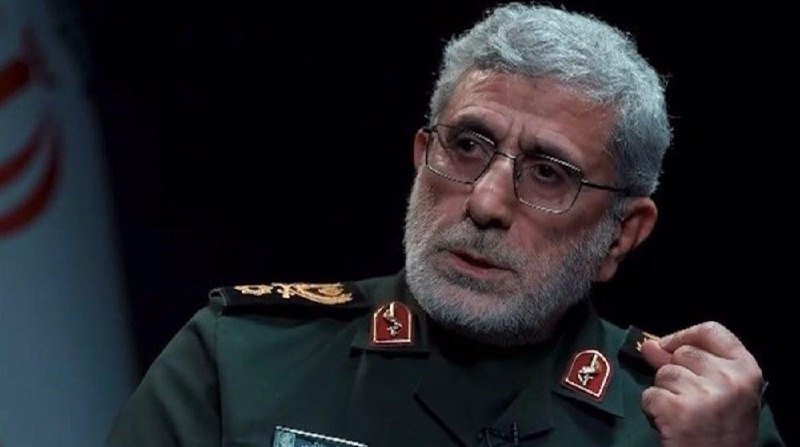
On 1 May 2026, the Trump administration formally notified Congress that what it calls the special military operation in Iran has "terminated." Within hours, the administration was citing the notification as grounds to claim it no longer needs congressional authorization for any further operations against Iran — a legal position that stretches the boundaries of executive war powers doctrine and has drawn sharp fire from Democratic legislators.
The notification was not a peace declaration. It was a procedural instrument.
The move invokes the 60-day clock embedded in the War Powers Resolution, which requires presidents to report to Congress within 48 hours of introducing US armed forces into hostilities and to withdraw them within 60 days unless Congress authorizes continued action. By declaring the operation "terminated," the administration resets that clock. New operations — if launched within that window — would technically not trigger a fresh notification requirement, because the previous conflict has been declared over.
The 60-day provision was designed to prevent presidents from sustaining military engagements indefinitely without legislative consent. It was not designed to become a reentry loophole for perpetual executive authority.
The legal fiction that keeps the clock spinning
Congressional Democrats have noted the distinction — and they are not accepting it quietly. A member of Congress, quoted in posts circulating on 2 May 2026, accused the administration of using the "terminated" declaration to shield ongoing military activity from oversight while burdening ordinary Americans with the economic fallout of a conflict that has driven prices higher across multiple sectors. The member alleged that the price pressure fell on ordinary consumers while the benefits accrued to a narrow circle of economic allies.
That framing is politically pointed, but the structural critique beneath it is not unreasonable. War Powers Resolution compliance is a paperwork exercise only if the underlying facts match the paperwork. If strikes continue, or if a new phase of operations is planned against Tehran, a freshly minted notification does not retroactively cure the constitutional objection.
Legal scholars who study the intersection of executive authority and congressional war power have long warned that presidents exploit the Resolution's ambiguity rather than comply with its spirit. The mechanism was designed for short, sharp engagements — not for sustained campaigns that require periodic reauthorization. Administrations of both parties have tested this boundary. What is notable about the current moment is the explicitness of the gambit: the administration is not even pretending to disguise the reset.
The economic dimension
The price-surge claim requires careful handling, because the sources do not provide independent corroboration of specific inflation figures attributable to the Iran operation. What the sources do establish is that a member of Congress raised it — which means the political linkage between military action and consumer cost is live inside the legislature, not merely a media narrative.
That matters for a reason that goes beyond any single inflation number. The administration has framed the Iran campaign as a pressure campaign designed to force concessions from Tehran — sanctions, strikes, diplomatic isolation. If that campaign is generating domestic price pressure while producing no visible shift in Iranian policy, the political economy of continuation becomes harder to sustain. Legislators watching their own districts' price data are unlikely to extend unlimited patience to a strategy that enriches some while costing others.
What comes next
The constitutional trajectory is not resolved by a piece of paper filed on 1 May. Congress retains the power to demand a new AUMF for Iran, to withhold funding for operations it has not authorized, or to pursue litigation challenging the executive's interpretation of its own War Powers notification. Whether Democratic leadership chooses any of those paths depends on calculations that go beyond legal merit — intra-caucus discipline, electoral timing, the severity of any subsequent strikes.
What is clear is that the administration has made its theory of executive authority explicit. Additional military operations are coming, if they are not already underway. The 60-day clock, in the administration's reading, runs from whenever Washington says it does — not from whenever the last bomb fell.
Congress can accept that reading or it can fight it. The notification of 1 May is not the end of that fight. It is the opening brief.
This publication has followed the Trump administration's Iran notifications since the escalation began. The congressional AUMF picture and the War Powers compliance trail will be updated as filings appear in the congressional record.
Wire provenance
This editorial synthesis draws on the following public wire/social posts:
- https://x.com/polymarket/status/1918912345671827456
- https://x.com/unusual_whales/status/1918909876541234567
- https://x.com/polymarket/status/1918912345671827345
- https://x.com/sprinterpress/status/1918923456781234567