Trump's Iran Ultimatum Logic Is a Negotiation Tactic That May Backfire
Trump's insistence that Iran has not yet paid a big enough price for its actions sounds like leverage. In practice, it may be the very thing that buries a deal before it begins.
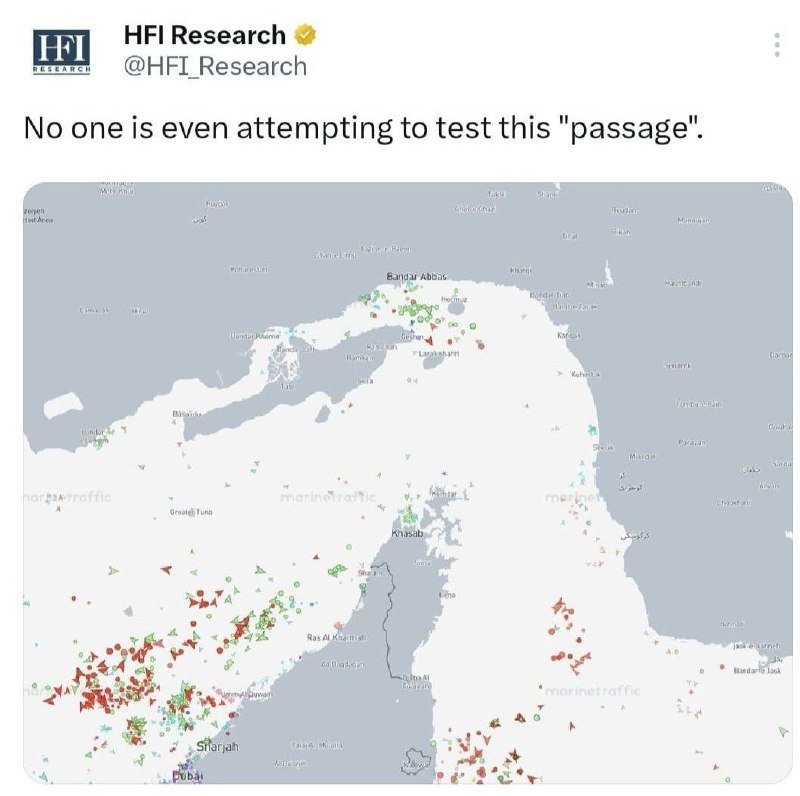
On the evening of 2 May 2026, Iran submitted a 14-point response to the American proposal for ending hostilities — and by midnight Washington time, President Donald Trump had already told reporters he could not imagine accepting it. The reason, as he put it: Iran had not yet paid a big enough price for what it had done to humanity. A reporter pressed him on a point of immediate contradiction — his own letter to Congress claimed hostilities had been terminated, yet the naval blockade remained in place. Trump declined to be specific about the conditions that would trigger a resumption of strikes. The exchange, captured across wire services and open-source monitoring feeds between 22:43 and 23:35 UTC on 2 May, laid bare a diplomatic posture that is simultaneously hard-line and logically incoherent.
The thesis is not complicated. An ultimatum — pay a price before we talk — works when the party issuing it controls the terms of payment and has already imposed most of the cost. When the party issuing it has conducted airstrikes, levied sanctions, and maintained a maritime blockade, yet still demands more before returning to the table, the word for that is not leverage. It is a negotiating tactic dressed as principle, and it carries the specific risk of convincing Tehran that Washington does not actually want a deal.
The Price Demanded and the Price Already Paid
Trump's language is worth examining precisely because it is not calibrated to any stated metric. What constitutes a sufficient price for what Iran has done "to humanity"? The phrase — reproduced verbatim across multiple independent open-source intelligence feeds — is grandiose in a way that serves domestic political optics more than diplomatic precision. It echoes the rhetorical register of a 2016 campaign rally rather than the language of a成熟state actor calculating acceptable termination terms.
Tehran has absorbed American airstrikes. It has endured an expanding sanctions architecture. Its banking sector is functionally disconnected from the global financial system. Its oil exports have been capped, rerouted, and taxed at marginal levels that would have seemed unthinkable a decade ago. These are not abstract grievances. They are measurable costs that Iran has already paid — costs that were, in many cases, self-inflicted by a leadership that miscalculated Western resolve. That miscalculation deserves acknowledgment in any honest accounting. But "already paid a significant price" and "has not yet paid enough" are not mutually exclusive positions unless someone defines what the endpoint looks like. The Trump administration has not defined it. That omission is not accidental.
The Naval Blockade Contradiction
The reporter who asked Trump to explain how he could claim hostilities had been terminated while the naval blockade persisted identified the central contradiction in real time. Trump did not answer the question. His refusal to answer it is itself informative. A blockade is an act of war under international law — sustained, deliberate, designed to strangle the target economy by denying it maritime commerce. Acknowledging its existence while simultaneously claiming the conflict is over requires a legal and rhetorical construction so strained that it damages the credibility of any subsequent American demand that Iran take the negotiating process seriously.
This is not a technicality. If Washington reserves the right to call the conflict ongoing when it suits a pressure campaign and terminated when it suits a legal narrative, then Tehran's negotiators are right to treat every American concession as provisional and every demand as a trap. Trust, once exhausted, does not recover within the window of a single diplomatic cycle.
What Tehran Is Actually Calculating
Iran submitted a 14-point response. The contents of that response are not fully public as of the time of writing — Iranian state media confirmed its submission but did not release the full text in the wire-available sources. That opacity is itself a negotiating posture. Tehran has watched what happened to other counterparties in American-led negotiations: a pattern of shifting goalposts, of demands that expand once initial conditions are met, of pressure tactics that do not stop when agreements are signed because the pressure was never only about the stated issue. North Korea summitry offered one template. The Afghanistan withdrawal offered another. The question Tehran's negotiators are asking is not "what does a final deal look like?" but "what does the United States do once it has extracted the intermediate concession?"
That question has no good answer under the current American posture, because the current American posture does not invite the question to be answered. A party that simultaneously demands a price, refuses to name the price, and reserves the right to restart bombing is not a negotiating partner. It is a creditor who has decided the debtor will never be solvent.
The structural logic of hegemonic coercion — the assumption that maximum pressure produces maximum concession — has a consistent empirical record in recent American diplomacy that should give the administration pause. It has not produced complete denuclearization in North Korea. It has not produced regime change in Venezuela. It has not produced an equitable peace in Ukraine. The mechanism keeps failing because it treats the other party's tolerance for pain as unlimited, and it treats American credibility as costless. Neither assumption holds.
The Stakes if This Exchange Collapses
If the 2 May exchange represents the permanent shape of American diplomacy rather than a tactical posture designed to extract last-minute concessions, the regional consequences are concrete and traceable. A collapsed negotiating track means resumed strikes — something Trump explicitly refused to rule out. It means the blockade continues, tightening economic pressure on a population that has already absorbed severe hardship. It means Israel calculates its own security posture without an American back-channel to Tehran, removing one of the structural constraints that has historically limited escalation. It means China and Russia, already navigating their own complex新版calculuses with Washington, draw the conclusion that American diplomatic overtures are to be entertained only when they can be verified in real time and at low cost to the counterpart.
The 14-point Iranian response, whatever its specific contents, represents the judgment of a regime that has survived maximum pressure before and has decided — rightly or wrongly — that it can survive it again. The question is whether the Trump administration is genuinely prepared to absorb the consequences of that judgment, or whether the "big enough price" formulation is a rhetorical device that will be quietly walked back once the optics of toughness no longer serve the immediate political purpose. The wire record of 2 May does not yet answer that question. That ambiguity is itself the story.
This publication has consistently argued that the architecture of American leverage — sanctions, naval presence, targeted strikes — is structurally effective in ways that Western commentary often underestimates. The same structural logic applies on the other side: Iran has absorbed enough of that architecture to know what it can survive. A negotiating posture that treats survival as evidence of insufficient pain will not produce a deal. It will produce a longer war, with no clearer endpoint than the one on offer today.
Wire provenance
This editorial synthesis draws on the following public wire/social posts:
- http://reut.rs/49nQFLM