Trump Declares Iran War Over as War Powers Deadline Passes, Signals Cuba Is Next
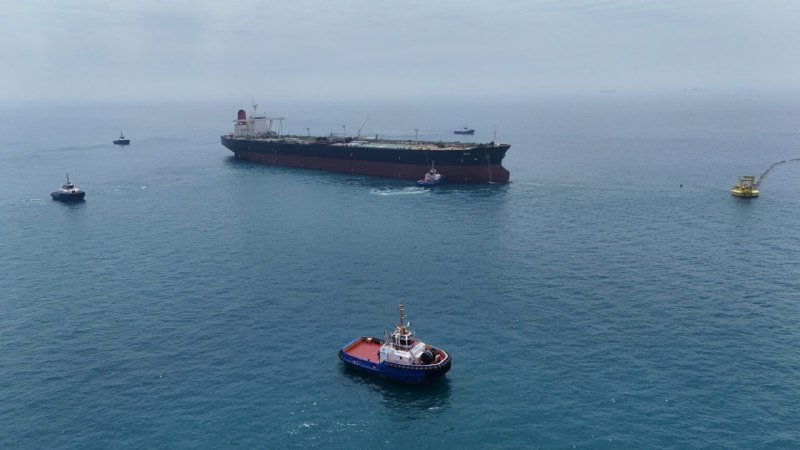
On 2 May 2026, the Trump administration submitted a formal notification to Congress stating that the two-month-old conflict with Iran had reached the threshold for termination under the War Powers Resolution. President Trump described hostilities as "terminated." The submission came hours before a statutory 60-day deadline — the point at which US forces are required by law to withdraw from hostilities without congressional authorisation. The administration will not meet that threshold. As of the filing, US naval assets enforcing the blockade of Iranian maritime corridors remain in position.
The formal declaration that the shooting phase has ended sits uneasily alongside the strategic reality. Four separate Reuters and SCMP reports from the morning of 2 May document an administration that is simultaneously closing one chapter and opening another. Trump told reporters on 1 May that the United States "would not leave Iran early" despite the ceasefire, and simultaneously announced plans to expand existing sanctions on the Cuban government. Within the same news cycle, Iranian state-aligned Telegram channels cited Trump as saying that after Iran, "it will be the turn of Cuba to be reckoned with."
The most revealing disclosure came from a different register entirely. Speaking on the naval blockade — the array of US warships intercepting vessels en route to and from Iranian ports — Trump offered a characterisation that bears quoting directly. According to the Middle East Spectator Telegram channel, the president stated: "It's a very profitable business. We're pirates, we're sort of like pirates." The comment, whether intended as bravado or literal accounting, reframes a military blockade as a commercial operation. Revenue extracted from the interception of trade vessels — whether through seizure, diversion, or the insurance and compliance costs imposed on shipping companies — would flow, at least in part, back into the operational budget of the imposing force. The War Powers Resolution was designed to govern the deployment of armed forces. It was not designed for a maritime interdiction programme that functions as a revenue line.
The Cuba signal fits a pattern that is becoming legible across the current administration's approach to its southern neighbourhood. The expansion of sanctions on the Cuban government, announced via Reuters on 2 May, follows an existing maximum-pressure architecture. But the framing accompanying it — that Cuba is next in a sequence that began with Iran — suggests something more than the continued enforcement of existing policy. It implies a roadmap. "We have an architect who's really talented," Trump said, according to the World Food Witness Telegram account, in reference to plans for Cuba. The language of construction and demolition, applied to sovereign states, has become a consistent feature of the administration's public communications. The EU, meanwhile, received 25 percent tariffs on automobile exports to the United States on the same day, with the administration citing the bloc's failure to comply with a prior trade agreement. The tariff move complicates European efforts to position themselves as a mediating actor in the Iran situation.
What this sequence of announcements reveals, taken together, is not a foreign policy but a transactional methodology applied to sovereign actors. The Iran conflict has not been resolved — ceasefire or not, the blockade continues, sanctions remain in force, and US personnel have not departed. Iran has submitted peace proposals that the administration has described as unsatisfactory. The war, in the structural sense that matters — the full spectrum of economic pressure, legal restrictions, and military encirclement — has not ended. What has ended is the phase in which those tools were supplemented by direct kinetic engagement. That distinction matters because the ceasefire, such as it is, appears to have satisfied the formal requirements of the War Powers Resolution without satisfying the substantive goals the maximum-pressure campaign was designed to achieve. Tehran retains its nuclear programme. Iranian naval traffic continues to be intercepted. The peace proposal remains on the table in a form the administration has rejected.
Cuba occupies a different position but a structurally analogous one in the administration's calculus. Havana has been under US sanctions for more than six decades. The existing embargo has not produced regime change. What the current framing suggests is that the next phase will be more overt in its ambitions — that there is an "architect" and a design, rather than an indefinite continuation of attrition. The parallel to the pre-kinetic phase of the Iran campaign is difficult to avoid: the steady ratcheting of economic pressure, the public characterisation of the target government as illegitimate, and now the explicit sequencing — Iran first, then Cuba. Whether this reflects a genuine strategic plan or rhetorical positioning intended for domestic political consumption is not yet clear from the available sources.
Several questions the sources do not resolve. It is not known what specific terms Iran has proposed in its latest peace offer, or what modifications the administration would consider acceptable. The legal basis for the continued naval blockade after the formal declaration of terminated hostilities is unclear — whether it proceeds under a separate statutory authority, a presidential finding, or a claim that the blockade is not "hostilities" within the meaning of the War Powers Resolution. The "profitable" comment has not been corroborated in mainstream wire reporting; it appears in regional Telegram channels that have carried other Trump statements accurately, but has not appeared in Reuters, AP, or SCMP dispatches from the same reporting day. The architecture for Cuba has not been described in concrete terms — no specific legislative proposals, no stated timeline, no enumeration of the economic sectors that would be targeted beyond the expansion of existing sanctions. Those are gaps the record as currently constructed cannot fill.
The common thread across these stories is a foreign policy architecture that treats military presence, trade restrictions, and legal pressure as interchangeable instruments within a single framework — one governed less by strategic end-states than by the immediate revenue and leverage each tool generates. The War Powers Resolution deadline produced a document, not a withdrawal. The ceasefire produced a continuation of the blockade under a different legal label. The Cuba announcement produces a target of next focus before the current one is resolved. Whether that constitutes a coherent doctrine or a series of improvised responses is a question the next several weeks of reporting should begin to answer.
This publication covered the "profitable pirates" framing and the Cuba sequencing alongside the War Powers Resolution filing, rather than leading with the ceasefire announcement as the dominant narrative. The wire services led with the formal declaration; this article foregrounds the structural continuity beneath it.
Wire provenance
This editorial synthesis draws on the following public wire/social posts:
- http://reut.rs/4tLC598
- http://reut.rs/4ul5mHD
- https://t.me/Middle_East_Spectator
- https://t.me/wfwitness
- https://t.me/JahanTasnim