Trump's Maximum-Pressure Reboot: Anatomy of a Failed Iran Deal
The Trump administration is publicly walking away from nuclear negotiations with Iran, reviving the maximum-pressure playbook that defined its first term — and threatening a new round of military operations without congressional authorization.
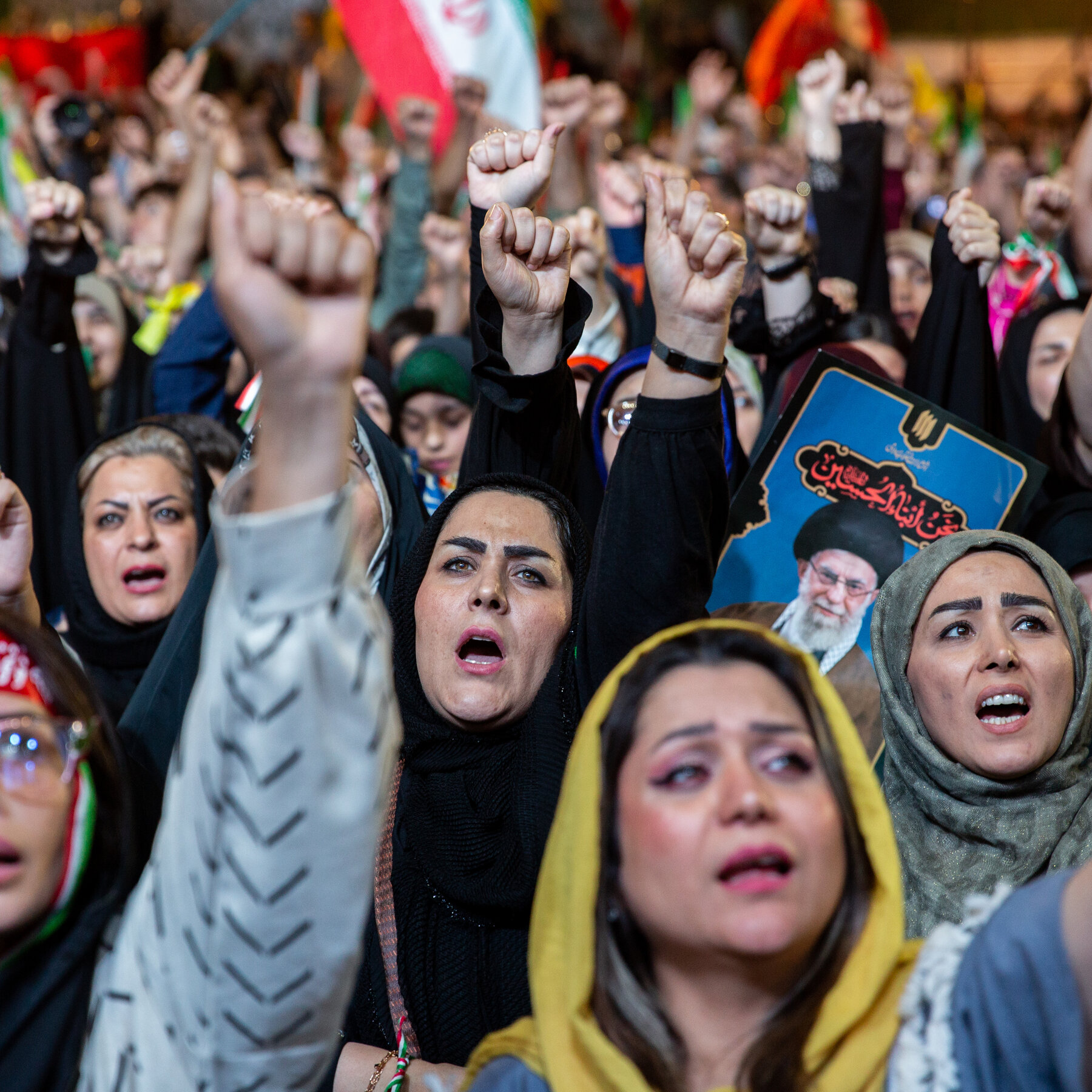
On 1 May 2026, Donald Trump stood before cameras in the Oval Office and delivered a line that negotiators in Vienna and Muscat had spent months trying to prevent. "Maybe we'd better not make a deal at all," he said, addressing the prospect of a renewed Iran nuclear agreement — and the assembled pool of journalists promptly reported it as a categorical break. The statement landed eleven months into his second term, at a moment when the administration's own envoys had described indirect talks with Tehran as productive enough to justify continued contact. Within forty-eight hours, Polymarket bettors and Washington watchers alike were parsing whether the comment represented negotiating posture or genuine policy reversal.
The picture was muddied further by a separate claim Trump made on the same day, one that has no precedent in any congressional record or public legal filing: that the existing Iran ceasefire — announced in March 2026 following limited retaliatory exchanges between Tehran and undisclosed regional actors — grants the executive branch unilateral authority to launch additional military operations against Iranian targets without seeking legislative approval. No constitutional scholar in either party has endorsed that reading. No court has blessed it. The claim circulated widely on social media platforms, where it was amplified by accounts with no evident interest in legal nuance.
The timing matters. Trump's first term saw the United States withdraw from the Joint Comprehensive Plan of Action — the 2015 nuclear agreement negotiated under Barack Obama — reimpose sweeping sanctions, and designate Iran's Islamic Revolutionary Guard Corps as a foreign terrorist organization. That campaign produced, by the administration's own internal assessments, neither a better deal nor a change in Tehran's regional behaviour. It did produce a sharp escalation in uranium enrichment activity, a series of attacks on Gulf shipping, and the targeted killing of General Qasem Soleimani in January 2020 — an act that came within hours of triggering a retaliatory Iranian missile strike on an Iraqi air base that injured dozens of US service members.
The current maximum-pressure revival appears to be producing its own distinct set of consequences. A Telegram account identifying itself as associated with Iranian opposition circles posted on 2 May 2026 that the sustained sanctions pressure had forced an unnamed Iranian airliner to cease operations entirely. Monexus cannot independently verify the identity of the airline or the completeness of the cessation; the claim is presented here as a reported effect of the pressure campaign, not as an established fact. What is verifiable is that commercial aviation in Iran has faced cascading operational difficulties under the weight of secondary sanctions that effectively cut off access to Western spare parts, maintenance contracts, and insurance frameworks.
The broader regional context also resists easy characterization. Washington's regional allies — led by Israel, whose leadership has described an Iran with any nuclear capability as an existential threat — have publicly favoured the harder line. Gulf states, whose economies are intertwined with both Iranian trade networks and American security guarantees, have been less vocal. European parties to the original JCPOA — France, Germany, and the United Kingdom — have maintained contact with Tehran through back-channels and have urged the administration to preserve diplomatic space. Their lobbying appears to have had limited effect on the stated direction of travel.
For all the administration's assertiveness, several structural features of this moment distinguish it from the first term's maximum-pressure episode. Iran today is operating under self-imposed enrichment limits that have been progressively relaxed since 2019, and its stockpile of 60-percent enriched uranium — the threshold below weapons-grade but far above civilian use — has grown substantially. The diplomatic back-channels, while under strain, have not formally closed. And the ceasefire that Trump is invoking as a legal pretext for expanded operations is, by most assessments, fragile — dependent on tacit understandings between multiple parties whose interests are not fully aligned.
The drug-pricing claim Trump made on 1 May 2026 — that his administration was delivering "discounts with price differences of 600, 700, and sometimes even 800 percent reductions" — belongs to a domestic political register that is analytically distinct from the Iran question but is not unrelated to it. Maximum pressure on Iran has always required a domestic rationale that could sustain public and congressional tolerance for elevated tensions. In the first term, that rationale was framed around nuclear proliferation and regional aggression. In the second, the administration appears to be constructing a parallel narrative around economic grievance and pharmaceutical costs — one that positions the president as a disruptor of entrenched interests whether the disruption concerns airline access, prescription pricing, or the architecture of arms control.
What remains uncertain, and what the available sources do not resolve, is whether the walk-back from negotiations reflects a tactical signal to extract further concessions from Tehran — a pattern Trump deployed repeatedly during his first term, most notably in the Singapore summit with North Korea, which produced photo opportunities and a joint communique but no verifiable denuclearization steps — or whether the administration has genuinely concluded that a deal with Iran is both achievable and undesirable on terms currently available. The former reading would predict continued back-channel contact with an eventual face-saving re-engagement. The latter would point toward a sustained confrontation whose military dimensions remain undefined but whose economic and humanitarian consequences are already visible in grounded aircraft and struggling commercial carriers.
The stakes are not abstract. A collapse in the negotiating track — or a deliberate choice to abandon it — would likely trigger a fresh round of Iranian enrichment escalation, complicating any future diplomatic off-ramp. It would test the cohesion of the transatlantic alliance, already strained over tariff policy and defence spending, as European capitals weigh continued compliance with US sanctions against their own energy and commercial interests in Iran. And it would confront the administration with a question its legal team has not adequately answered: whether a ceasefire declared in March 2026 carries constitutional weight sufficient to override a War Powers Resolution that requires congressional authorization for sustained offensive military action. The sources reviewed for this article do not include any legal opinion or court filing that substantiates that claim.
Wire provenance
This editorial synthesis draws on the following public wire/social posts:
- https://t.me/FotrosResistancee
- https://x.com/sprinterpress/status/1918370012343656456
- https://x.com/unusual_whales/status/1918314021950446655
- https://x.com/unusual_whales/status/1918293011922022403
- https://x.com/polymarket/status/1918240476521693260