Trump's Piracy Confession Reveals the Doctrine Underneath the Iran Escalation
When the president calls seizure of another country's vessels 'profitable' and compares himself to pirates, the language is not rhetorical excess — it is the doctrine itself, and it changes what this confrontation actually is.
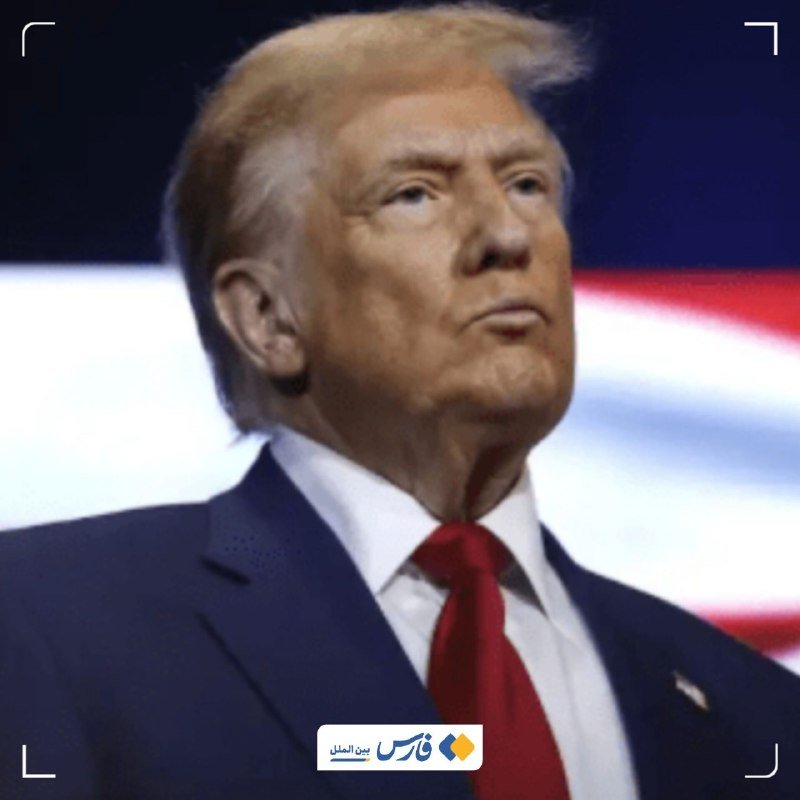
There is a moment in every escalatory presidency when the mask slips and the operational logic underneath becomes public. That moment arrived on 1 May 2026, when a sitting U.S. president described the seizure of Iranian vessels — an act that, under any reading of international law, constitutes piracy on the high seas — as a profitable business and compared himself to a pirate.
The statement, reported by Iranian state-aligned Arabic-language outlet Al Alam and corroborated by geopolitical monitoring channel GeoPWatch, was not a gaffe. It was a doctrine in two sentences.
What 'Military Operation' Actually Means
The first notable thing about the statements is the deliberate lexical distinction Trump drew between his ongoing confrontation with Iran and the word 'war.' He acknowledged — in language that appeared designed to be heard by legal advisors as much as by audiences — that calling the Iran confrontation a "military operation" rather than a war carries legal significance. That is an accurate observation. The War Powers Resolution imposes obligations that a prolonged extraterritorial military operation does not. If this administration has structured its Iran posture to sidestep those obligations, that is itself a story, and a significant one.
The framing matters because it determines what constraints apply. A war requires congressional authorisation under the U.S. Constitution. A military operation, in the administration's reading, does not. What the sources describe is not a semantic quibble — it is the architecture of a policy designed to operate outside the checks that would normally apply to a major sustained confrontation with a nation of eighty-eight million people.
The Profit Logic
The second notable statement is the one about profit. "It is a very profitable business" — that is how the president characterised the seizure of Iranian vessels and cargo. The sources describe him saying: "We are like pirates. We landed on the deck of the Iranian ship, took control of it, and took the cargo and oil."
Taken on its own, the language could be dismissed as a performance — Trump's preference for muscular imagery over diplomatic register. But it is worth taking seriously as a signal of actual intent. If the operational logic of these seizures is understood within the administration as revenue-generating rather than purely punitive, that changes the strategic calculus. Punitive actions have a cost-benefit profile bounded by deterrence goals. Profitable actions scale with the opportunity set. And the sources indicate the opportunity set is being actively expanded: the same batch of statements includes a reference to sending an aircraft carrier to anchor near Cuban waters — an escalation that would affect not only the Iran theatre but the wider Caribbean and Atlantic posture.
Cuba as Continuation, Not Afterthought
The sequencing in the statements is instructive. "We will take care of Cuba almost immediately after Iran" — that is the order of operations as the president described it. This framing has appeared in the reporting before, and the consistency matters. Cuba is not a separate crisis; it is the second movement of the same piece. The targeting of Iranian vessels and the planned naval posture near Havana are instruments of the same pressure campaign, and they are positioned to escalate in sequence.
CBS News, citing U.S. officials, reported that the decision to withdraw American soldiers from Germany is linked to Trump's dissatisfaction with NATO's level of support in confronting Iran. This is a significant data point. The administration's position appears to be that allies who do not contribute sufficiently to its Iran posture will face structural consequences — the presence of U.S. forces on their territory being one of those consequences. That is a coercive mechanism embedded within an alliance relationship that has historically been characterised by shared commitment rather than transactional extraction.
The Language Is the Policy
What makes these statements more than ordinary presidential hyperbole is the specificity of what they reveal. This is not the rhetoric of deterrence, which operates through ambiguity. This is the rhetoric of transparent coercion, in which the methods — seizure of cargo, positioning of carrier groups, linkage between theatres — are named openly because the point is to demonstrate that no norm constrains the approach.
The legal architecture has been engineered to avoid war-powers scrutiny. The economic logic frames theft as revenue. The sequencing connects the Iran operation to Cuba without ambiguity. The NATO linkage imposes costs on allies for insufficient compliance.
None of this is accidental. The language tracks the doctrine.
This publication has covered the structural shift in U.S. foreign policy posture across several administrations and conflict theatres. What the statements of 1 May 2026 represent is not a new capability — U.S. presidents have always had coercive instruments — but a change in the legitimating framework. Previous administrations maintained the vocabulary of international order even when violating it. This one is rebuilding the vocabulary from the ground up, and it is doing so in public, in plain sight, with a precision that suggests the language was written down before it was spoken.
The question for Western allies, for international institutions, and for the countries in the crossfire of this posture is not whether the language will be challenged. It will be. The question is whether the challenge will arrive before the doctrine has had time to calcify into a status quo that is harder to reverse than it is to challenge now.
This article was structured around reporting from Al Alam Arabic and GeoPWatch covering the president's statements on 1 May 2026, and a CBS News report on the Germany troop withdrawal decision.
Wire provenance
This editorial synthesis draws on the following public wire/social posts:
- https://t.me/alalamarabic/38472
- https://t.me/GeoPWatch/12984
- https://t.me/alalamarabic/38470
- https://t.me/alalamarabic/38456
- https://t.me/alalamarabic/38454
- https://t.me/alalamarabic/38435