The Piracy Option: How Trump Normalized Seizing Ships in the Persian Gulf
In declaring the Iran conflict "terminated" while maintaining a naval stranglehold on the Strait of Hormuz, the Trump administration has revealed an operational doctrine that contradicts its own stated objectives — and opened a window into how dollar-centric power actually functions when the diplomatic cover is stripped away.
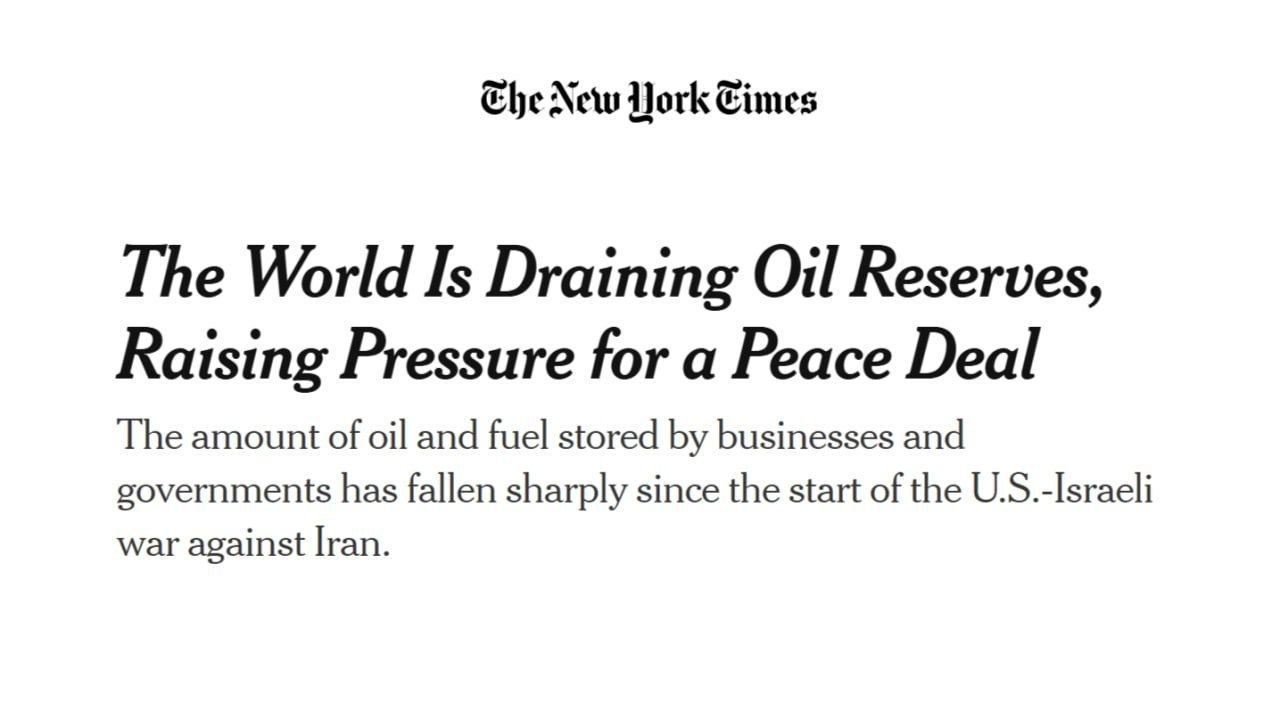
The words arrived in sequence on the morning of 2 May 2026, and together they described a policy that makes no sense unless you understand what it actually is.
At 01:10 UTC, President Trump announced the Iran war was "terminated." At 01:20, his administration clarified the United States would not be leaving Iran early, despite a ceasefire that had been in place for roughly two months. And eight minutes before that clarification, according to a post from the Middle East Spectator Telegram channel, Trump had described the US naval blockade of Iranian waters in terms that would have been startling from any other world leader: "It's a very profitable business. We're pirates, we're sort of like pirates."
That phrase — "we're pirates" — deserves to be held up against the record. It is not a paraphrase. It is not media framing. It is a direct quotation from the president of the United States, delivered as a statement of operational fact, describing the seizure of vessels in the Strait of Hormuz.
The blockade did not end when the fighting allegedly did. The warships remain stationed at one of the world's most critical transit chokepoints. Commercial vessels are still being stopped, searched, and redirected. The engine-room evacuation orders Trump described — "Turn your ship around. Evacuate your engine room immediately. And you see all these guys running out of there" — remain active orders to US naval personnel. Something that looks like a war is continuing, even as the commander-in-chief publicly celebrates its end.
The contradiction is not accidental. It is the architecture.
A War Declared Over, a Blockade Kept Active
The US Congress's War Powers Resolution requires the executive branch to withdraw from military engagements within sixty days absent congressional authorization. That deadline arrived on 2 May 2026. The Trump administration met it — on paper — by declaring the conflict terminated.
But the declaration and the reality diverged within hours. The naval forces tasked with enforcing the blockade of Iranian shipping lanes did not receive orders to disengage. The guided-missile destroyers and littoral combat ships stationed near the Strait of Hormuz remained on station. The interdiction operations that had seized fuel tankers and cargo vessels throughout the preceding weeks continued under the same rules of engagement.
This is not a new playbook. Washington has maintained versions of this arrangement before — in the Balkans, in the Caribbean, in East Africa — where formal combat operations were declared concluded while coercive pressure mechanisms persisted. What distinguishes the current moment is the openness with which it is being described. Previous administrations obscured the continuity between war and peace. The Trump administration has announced it.
The logical implication is that the ceasefire, whatever its terms, does not include the naval component. Iran has reportedly agreed to certain constraints on its nuclear program and missile capabilities in exchange for sanctions relief. But the blockade — which funnels roughly a fifth of the world's oil through its narrowest corridor — was not on the negotiating table. Or if it was, the administration walked away from any agreement that would have lifted it.
Germany's reaction surfaced the fracture this creates in allied consensus. On 2 May 2026 at 00:40 UTC, Reuters reported that the US had announced the withdrawal of five thousand troops from Germany, reducing its presence to roughly pre-2022 levels, following a direct confrontation between Trump and Chancellor Friedrich Merz over the Iran war negotiations. The sequence suggests a connection: Berlin resisted the administration's position on keeping the blockade in place, and the US responded with a concrete consequence.
This was not a discretionary gesture. The removal of five thousand US personnel from German soil is a deliberate signal — to Germany, to NATO, and to any other allied capital considering pushback on the Iran posture. The message is that partnership with the United States is conditional on alignment with the blockade's continuation, even after a formal ceasefire.
"We Are Sort of Like Pirates"
The piracy comment is the key that unlocks the structural logic. Strip away the diplomatic language — "freedom of navigation operations," "counter-proliferation patrols," "international waters enforcement" — and what Trump described is a revenue-extraction mechanism.
The Strait of Hormuz is the world's most critical oil transit corridor. Roughly twenty-one million barrels pass through it daily. Every vessel that transits the strait is exposed to interdiction by US naval forces. When the US Navy stops a ship, boards it, and redirects its cargo, it is not merely exercising a legal right. It is exercising a physical control over global supply chains that no other country can replicate.
Previous administrations used this leverage discreetly. The "axis of evil" rhetoric, the secondary sanctions regime, the SWIFT exclusion of Iranian banks — all were forms of financial pressure dressed in legal clothing. They worked in part because they were plausible as enforcement of international norms rather than naked extraction.
Trump's comment stripped the clothing away. "It's a very profitable business" is not the language of international law enforcement. It is the language of asset seizure. It describes a commercial operation with a legal veneer — exactly what piracy is, when committed by a state actor rather than a non-state one.
The word "piracy" in international law refers specifically to attacks on vessels in international waters for private ends. The US position has historically been that its naval interdictions occur in international waters and serve public ends — enforcing UN resolutions, preventing weapons proliferation, protecting freedom of navigation. Those public ends justify the operational activity.
Trump's self-description as a pirate collapses that distinction. If the operation is profitable — if there is a revenue stream generated by the interdiction, search, and redirection of vessels — then the public-ends justification no longer holds on its own terms. The motive is mixed at minimum, and the mixed motive is enough to recharacterize the activity under any serious reading of the legal definition.
Iranian state media has predictably made hay with the comment. But the recharacterization matters beyond Iranian propaganda. It matters for the legal standing of every seizure conducted under the blockade's authority. It matters for the insurance industry's calculus on shipping through the Gulf. It matters for the European allies whose shipping companies have been subject to US naval boarding operations and who will now face pressure from their own publics to explain why they are accepting what the US president himself has described as piracy.
The Dollar Question
Every major analysis of American hegemony circles back to the dollar's reserve currency status. The Strait of Hormuz blockade is incomprehensible without it.
The dollar's dominance in global oil trade means that any country whose primary export is oil denominates that trade in dollars, holds dollar reserves, and transacts through dollar-denominated financial infrastructure. That infrastructure — the SWIFT messaging system, the New York Federal Reserve's correspondent banking relationships, the US Treasury's sanctioning authority — gives Washington leverage over any oil-exporting country that operates within the dollar system.
Iran operated outside the dollar system for years under the pre-JCPOA sanctions regime. Its oil revenues were squeezed by cutting off its access to dollar-denominated transactions. The blockade is the physical extension of that same logic. When US naval vessels intercept a tanker carrying Iranian oil, they are not just stopping cargo. They are asserting a claim over the physical infrastructure of a supply chain that runs through dollar-denominated financial markets.
The "profitable" comment makes this explicit. If the blockade generates revenue — through seized cargo, through the costs extracted from shipping companies for safe passage, through the political leverage gained over nations dependent on Gulf transit — then it is a direct extraction from a system that runs on dollar hegemony. The enforcement mechanism and the financial mechanism are the same operation.
This is why the ceasefire's limitation to the ground and air conflict makes structural sense. The naval blockade is not a tool of the Iran war. It is a tool of dollar hegemony. Keeping it in place after the ceasefire preserves the extraction mechanism while avoiding the political cost of formal combat operations.
European capitals have understood this dynamic for some time. The EU's effort to establish an INSTEX-style alternative payment mechanism for Iran trade — one that operates outside SWIFT and dollar-denominated infrastructure — was always an attempt to decouple the sanctions enforcement from the financial architecture. Germany, France, and the United Kingdom all supported that mechanism in principle.
The troop withdrawal announcement suggests that the US read Berlin's support for those mechanisms as incompatible with continued American military presence on German soil. The sequence is revealing: Germany resists the blockade's continuation, the US removes forces in response. The alliance framework is being renegotiated in real time, with the Strait of Hormuz as the pivot point.
What Sovereignty Means After the Ceasefire
The ceasefire, whatever its specific terms, creates a new legal and political situation for Iran. A country that has been under military attack for two months — with strikes on nuclear facilities, military command infrastructure, and energy installations — has agreed to constraints on its program in exchange for sanctions relief.
But the naval blockade is not covered by that agreement. If Iran attempts to export oil under the new arrangement, it will be intercepted. If Iranian-flagged or Iranian-linked vessels attempt to transit the Strait of Hormuz, they will be boarded, redirected, or seized. The sovereignty that the ceasefire presumably restored to Iranian territory does not extend to its maritime approaches.
This is not an oversight. It is the design.
A sovereign state that cannot control its own maritime borders is not fully sovereign. The right of innocent passage through international straits is well-established in the Law of the Sea Convention. But that right depends on a functioning legal order that all major powers respect. When the dominant power in that order publicly describes its enforcement operations as "profitable" and "like piracy," it is not merely breaking the norms it created. It is signaling that the norms were always conditional — that they served as long as the extraction was deniable, and that deniability is no longer operative.
The question this poses for every petroleum-exporting country that currently operates within the dollar system is concrete. If the US will seize vessels carrying Iranian oil under a ceasefire arrangement, on what legal basis would it refrain from seizing vessels carrying Venezuelan oil, or Angolan oil, or Saudi oil under some future political disagreement? The "profitable business" of naval interdiction applies to any cargo that transits a chokepoint the US Navy controls.
The Stakes and What Remains Uncertain
The immediate stakes are legal and financial. The War Powers Resolution is being tested in real time. Congress has the authority to demand the withdrawal of US forces from the blockade operation, but the political will to exercise that authority against a president who has explicitly characterized the operation as profitable and desirable is untested. Previous administrations framed continued military presence as necessary for international stability. This one has framed it as generating revenue. Congress may find it harder to justify continued funding for what is openly described as a commercial extraction operation.
The medium-term stakes are geopolitical. The German troop withdrawal signals that American leverage over its allies is not unlimited. If Berlin is willing to absorb the political cost of reduced US military presence rather than endorse the blockade's continuation, other capitals will take note. The coalition that supports dollar-centric financial architecture is held together by the assumption that the US security guarantee is unconditional. The Trump administration's willingness to weaponize that guarantee — to remove troops in response to policy disagreement — suggests the guarantee is not unconditional at all. It is transactional.
The long-term stakes are structural. Dollar hegemony depends on the global acceptability of the dollar as a reserve currency. That acceptability depends on the global system's faith that dollar-denominated assets are secure and that the US will not weaponize its control over dollar infrastructure for naked extraction. Every seizure operation that is openly described as "profitable" erodes that faith. The erosion is slow at first — the alternatives to the dollar are imperfect, and the costs of switching are high. But the direction matters. If the trend continues, the financial architecture that underpins American leverage will weaken at its foundations.
What remains uncertain is whether the administration has calculated this risk and decided to accept it, or whether it has not fully modeled the downstream effects of open piracy. Trump's commentary on Cuba, delivered in the same news cycle — where he assessed that the US would take over the Caribbean island nation immediately should it "invade" anywhere, describing a "talented architect" working on unspecified plans — suggests a commander-in-chief who views territorial and economic expansion as inherently desirable and who expects that desire to be sufficient justification. That worldview, applied to the Strait of Hormuz, produces the blockade-as-piracy. Applied elsewhere, it produces the Cuba comment.
The sources do not indicate what specific revenue the blockade has generated, nor what share of global oil transit through the strait has been interrupted since operations intensified. The legal basis for continuing the interdiction post-ceasefire is contested — Iran has filed protests through UN channels, but those protests require a functioning UN mechanism to adjudicate them. The German government's stated position on the troop withdrawal is framed as a response to the Iran talks disagreement, but it is not clear whether Berlin views the blockade as illegitimate or merely as diplomatically inconvenient.
These gaps matter. The full picture of how the blockade functions as an extraction mechanism — who pays, who profits, who is exempted — remains incomplete. What is clear is that the question of what American power actually is, stripped of its diplomatic vocabulary, has been answered in public by the man who wields it.
This publication covered the blockade's continuation as the dominant frame. Most Western wire services focused on the ceasefire declaration as the headline event. The structural link between naval interdiction and dollar leverage — and the explicit "profitability" framing — received far less attention in the broader media ecosystem.
Wire provenance
This editorial synthesis draws on the following public wire/social posts:
- http://t.me/Middle_East_Spectator
- http://t.me/wfwitness
- http://t.me/wfwitness
- https://en.wikipedia.org/wiki/Strait_of_Hormuz
- https://en.wikipedia.org/wiki/War_Powers_Resolution