Trump Signals Iran Deal is Stalling as Congressional Democrats Declare Policy Failure
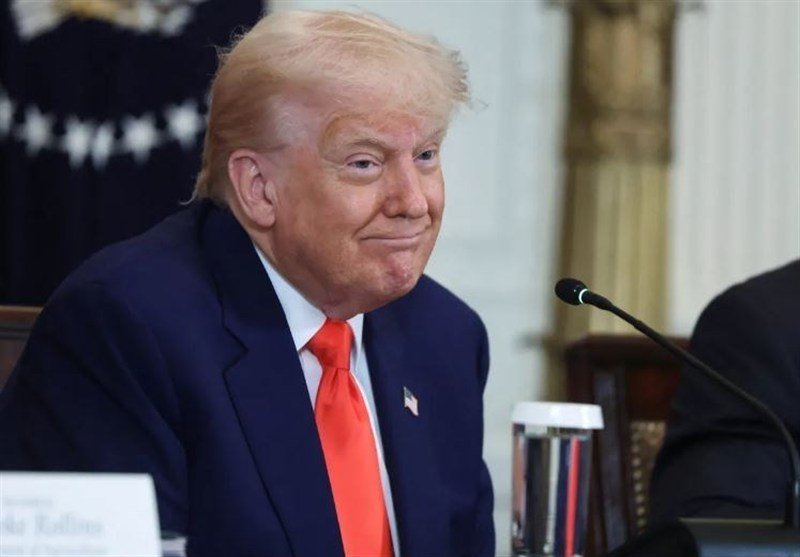
Speaking to reporters outside the White House on Friday, President Donald Trump said he was not "happy" with the proposals put forward by Tehran, and cast doubt on the prospects of reaching a nuclear accord as negotiations enter what sources describe as a critical phase. The remarks represent the bluntest public signal yet from the administration that the diplomatic track, which Trump repeatedly presented during his campaign as close to resolution, is not yielding the outcome his team anticipated. Three senior members of Democratic committees in the United States House of Representatives responded later that same day, saying the administration had failed to achieve each of its three publicly stated strategic objectives in its Iran policy — a characterization the White House has not directly disputed.
The convergence of a stalled diplomatic process and bipartisan Congressional skepticism frames the administration at a difficult juncture in its second term. Trump came into office with a stated preference for direct, personal deal-making with Tehran. Eleven weeks on, the proposals flowing back from Iranian negotiators appear to have produced something closer to frustration than progress, according to the President's own public framing.
A Deal That Won't Come Together
Trump's remarks to reporters on Friday marked a departure from the optimism his administration cultivated in the opening weeks of the term. Sources with direct knowledge of the negotiating posture had indicated to regional outlets that some form of framework agreement was within reach; those expectations are now being quietly walked back inside the administration, according to officials who have spoken to the press on condition of anonymity. The President's statement that he was not "happy" with Tehran's latest communications represents a calibrated public pressure move — but one that also reflects genuine discontent with the pace and substance of what Iranian negotiators have tabled.
Iran's own posture has remained consistent throughout the process: Tehran insists on sanctions relief as a precondition for any meaningful rollback of its nuclear programme, and has resisted commitments that go beyond what was agreed in the original 2015 Joint Comprehensive Plan of Action — a deal Trump unilaterally withdrew from during his first term. The gap between what the administration is prepared to offer and what Tehran considers a minimum acceptable baseline has not narrowed appreciably in recent weeks, according to diplomatic correspondents tracking the talks.
The failure to produce a deal is not merely a diplomatic inconvenience. It has cascading effects on the administration's broader strategy, which relied heavily on the prospect of a grand bargain to consolidate leverage over other flashpoints in the region — particularly its relationship with Israel and its approach to the nuclear programmes of other states in the Gulf.
Congress Names the Failures
Three senior Democratic members of Congressional committees — drawing on oversight roles that give them access to classified briefings — went further on Friday than any previous formal statement from within the legislative branch. Their assessment, communicated via statements carried by Iranian state-adjacent outlets and subsequently confirmed by Congressional records, laid out three specific strategic goals the administration had declared publicly and asserted that none had been achieved.
The three declared objectives, as characterised by the lawmakers, centred on: securing a comprehensive, verified agreement that limits Iran's nuclear programme to purely civilian applications; achieving sufficient international consensus to maintain and enforce a robust sanctions regime; and securing regional partners' alignment on any eventual settlement without fracturing the coalition that underpins Gulf security architecture.
The Congressional assessment does not constitute a binding resolution — no vote has been held — but it carries procedural weight. Members of the Foreign Affairs and Armed Services committees are privy to intelligence assessments that inform their skepticism, and their public statements represent an escalation from the quieter doubts expressed behind closed doors in prior months. Several of the signatories have been on record supporting a return to the 2015 framework, arguing that the original deal — while imperfect — achieved verifiable constraints that the current approach has failed to replicate.
The White House has responded to Congressional criticism primarily through the Office of the Press Secretary, issuing statements emphasising that negotiations are ongoing and that no deal has been ruled out. Officials have declined to characterise the specific proposals exchanged with Tehran, citing the sensitivity of the back-channel format.
The Structural Problem Underneath
The difficulty the administration faces is not simply that Tehran is an intractable counterparty. It reflects a structural tension inherent in the maximum-pressure model that has defined the administration's Iran posture from its first weeks in office.
The logic of maximum pressure holds that economic pain forces concessions. The history of the past decade, however, suggests something more complicated: Iran has demonstrated an ability to absorb sustained economic pressure without abandoning core national-security positions, and has found alternative trading partners willing to absorb a meaningful portion of the sanctions gap. The result is an environment in which the pain is real — inflation has risen, the rial has weakened, and ordinary Iranians have borne significant costs — but the political outcomes the pressure campaign seeks have not materialised.
This is the paradox that critics of the approach, including some former officials in prior administrations, have flagged in public: maximum pressure without a credible diplomatic off-ramp produces neither concessions nor a deal, but instead a managed crisis that creates strategic uncertainty across the wider region. Gulf states, watching the process stall, have begun hedging more explicitly — expanding defence ties with multiple great powers, accelerating nuclear-energy programmes of their own, and engaging in quieter diplomatic contact with Tehran outside the US channel.
For Iran, the stall has a different significance. Tehran has survived the withdrawal from the JCPOA, the reimposition of sweeping sanctions, and the assassination of senior military commanders. An administration that cannot close a deal after months of direct engagement is, from Tehran's perspective, further confirmation that Western commitments are unreliable and that self-reliance remains the only durable strategy.
What Comes Next
The immediate question is whether the administration pivots — toward a more modest interim agreement that pauses certain nuclear activities in exchange for limited sanctions relief, or toward a harder line that adds new designations and tightens existing restrictions. Sources tracking the internal deliberations suggest that both options are being actively discussed, but that neither has secured consensus within the national security apparatus.
Congressional Democrats, having publicly named the policy's failures, are likely to intensify oversight activity. Committee chairs have the authority to subpoena classified briefings, request executive-branch communications under the Congressional Review Act, and force public debate on matters the administration would prefer to handle quietly. That procedural pressure — combined with the political calendar, which will begin moving toward midterm elections before long — adds a domestic-political dimension to an already complex diplomatic situation.
The stakes extend well beyond the bilateral relationship. A prolonged stalemate increases the risk of accidental escalation: maritime incidents in the Gulf, strikes by Iran-aligned groups against regional partners, or incidents at nuclear facilities that neither side controls precisely. It also shapes the broader trajectory of the non-proliferation regime in a region where other states are watching closely. What the administration does next will determine whether this is a temporary pause in a process both sides have an interest in resuming — or the opening chapter of a more prolonged and less manageable confrontation.
This publication's wire coverage emphasised the Congressional framing and the White House's public posture. Iranian state-adjacent outlets foregrounded the Congressional statements as evidence of policy collapse; Western wire services led with Trump's expression of dissatisfaction and the uncertainty surrounding the negotiations.
Wire provenance
This editorial synthesis draws on the following public wire/social posts:
- https://t.me/hindustantimes/186542
- https://t.me/alalamarabic/189451
- https://t.me/FarsNewsInt/184937
- https://t.me/farsna/184893
- https://t.me/FarsNewsInt/184936