The White House Uploaded a 53-Minute Video of Trump Repeating One Phrase. Nobody Can Agree on Why.
The White House posted a one-hour loop of Donald Trump repeating the same two words. The post lasted roughly 60 minutes before being replaced. What it reveals about how this administration communicates—and why it matters—is harder to pin down.
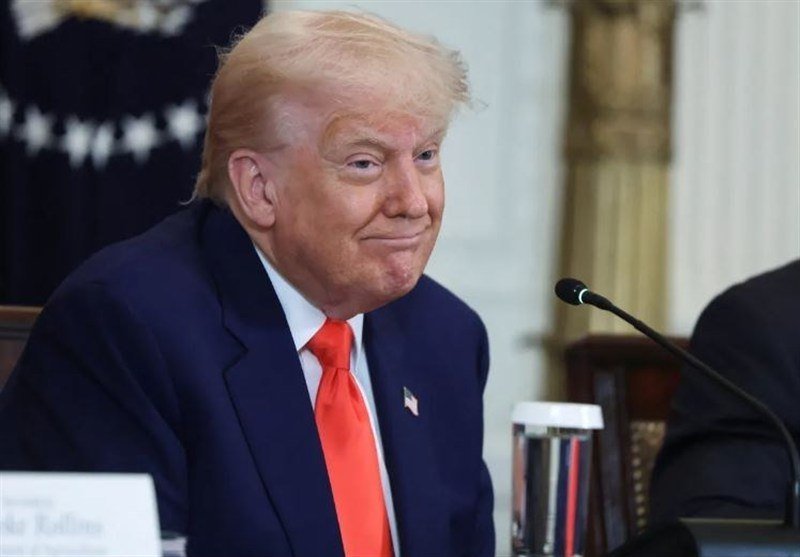
The video that appeared on the official White House X account on Saturday showed Donald Trump saying two words, over and over, for approximately 53 minutes. The loop—posted under the White House's verified account, not the President's personal platform—remained live for roughly an hour before the account reverted to standard press-briefing footage. Screenshots and clip captures circulated across Telegram channels from mid-afternoon UTC on 2 May 2026, with DDGeopolistics, Euronews, and Nexta Live all confirming the post's existence.
The presentation invited one read: an accidental or experimental upload, perhaps a content moderator's error. That interpretation did not survive contact with the facts. This White House has treated the production of managed imagery as a core function for more than a year. The repetition was the message. The format—the sustained, unbroken loop, stripped of context or narration—was itself a communication decision, and an unconventional one by any conventional measure.
The Pattern Is the Point
The administration has used X as a primary broadcast channel since early 2025, distributing visual content directly from official government accounts rather than relying on press pools or curated briefings. The precedent is not new: the same account has previously posted edited compilations of meetings and edited clips that have been the subject of press scrutiny. What changed on Saturday was the scale and duration.
A ten-second clip is shareable. A 53-minute loop is an event. The video's length served a specific technical function: it maximised watch-time metrics that govern algorithmic distribution. A post with higher average watch time ranks more prominently in feeds, receives more shares, and generates more reach than a static image or a standard video upload. By occupying the space for an hour—literally, uninterrupted—the White House ensured that anyone monitoring the account would encounter the loop as the dominant visual element of that afternoon. The administration's own statements and the Reuters reporting around the same period on Trump's Iran and energy market remarks provide the broader policy backdrop, but the video itself existed outside that coverage. The loop preempted editorial framing by consuming the media oxygen around it.
What "Winning" Is Supposed to Mean
The economic context matters here, even where the sources are imprecise. Trump has described the tariff regime as a negotiating tool in public remarks, framing revenue collections and disruption as evidence of strength rather than cost. Equities have held at or near record levels in recent weeks, and the dollar has not broken its recent range despite disruption to trade flows—data points the administration has cited repeatedly. Manufacturing indicators have weakened and consumer confidence has dropped in the same period, a split the "we're winning" framing is designed to manage. Reuters reported on 1 May that Trump described his approach to tariff escalation and Iran-related energy policy in comments to assembled business figures; the specifics of those remarks provide the policy coordinates the White House's own post did not.
The "winning" construction is doing specific work. It converts a contested, data-dependent narrative—where the evidence is genuinely mixed—into a binary: either you accept the premise or you are on the wrong side of a victory that is already in progress. That is a communication design choice with clear strategic intent. Whether it holds depends on what the next set of economic numbers shows.
Platform Arithmetic
The dynamics here are worth spelling out, because the conversation around the video has focused on the spectacle and largely missed the mechanics. An hour-long video generates a disproportionate signal in recommendation algorithms tuned to engagement time. The longer a user watches, the more the platform interprets that content as high-value. Shares of the loop—especially those capturing the moment of recognition, the point where a viewer realises the repetition is intentional—drive secondary distribution. A clip captioned "the White House posted a video of Trump saying 'we're winning' for an hour" outperforms a text post with the same information because it carries embedded proof.
Media strategists tracking the administration's approach have noted a consistent pattern: content designed to generate its own coverage rather than depend on it. The video format is the clearest recent example, but it fits a broader approach in which the White House's own posts are treated as primary sources for its own activities. Reuters and wire services provide the policy context; the social media output provides the image. The two do not always connect, and on Saturday, they existed in separate lanes.
The 2026 Equation
The video arrives as the political calendar moves into a more demanding phase. With congressional elections approaching in November 2026, the pressure to demonstrate wins—and to control how they are documented—will intensify. The loop is, in this light, a proof of concept: a demonstration that the White House can manufacture a visual record at scale and on its own terms, independent of press scrutiny. That capacity will be used again. The question is whether the economic conditions that give the "winning" frame its plausibility hold long enough for it to function as more than a media stunt.
The sources do not offer a definitive explanation for why the video was posted, removed, or replaced. They document what happened and where. The interpretation is still being written. What is clear is that this administration treats its social media presence not as an extension of its communications operation but as its primary instrument—and that the rest of the information environment, including the press and the markets, is expected to respond to what it posts rather than shape what it means.
The next twelve months will test whether that arrangement holds. Economic data, election cycles, and geopolitical events will arrive on their own schedule. The video loop is the most explicit statement yet of how this White House intends to meet them: on its own terms, in its own format, repeating the same line until the record is set.
This publication framed the video as a deliberate communication move from the outset, consistent with the administration's broader media strategy. Wire reporting—particularly Reuters's coverage of Trump's public remarks on tariffs and Iran—provided the economic and policy context the White House's own post did not contain. The Telegram-first spread of the story reflects how unconventional White House content now travels: first as visual confirmation, then as news.
Wire provenance
This editorial synthesis draws on the following public wire/social posts:
- https://t.me/DDGeopolitics
- https://t.me/euronews
- https://x.com/sprinterpress/status/1920742855717036032
- https://t.me/nexta_live