The Compressed Kill Chain: AI, Autonomy, and the New Logic of Military Strikes
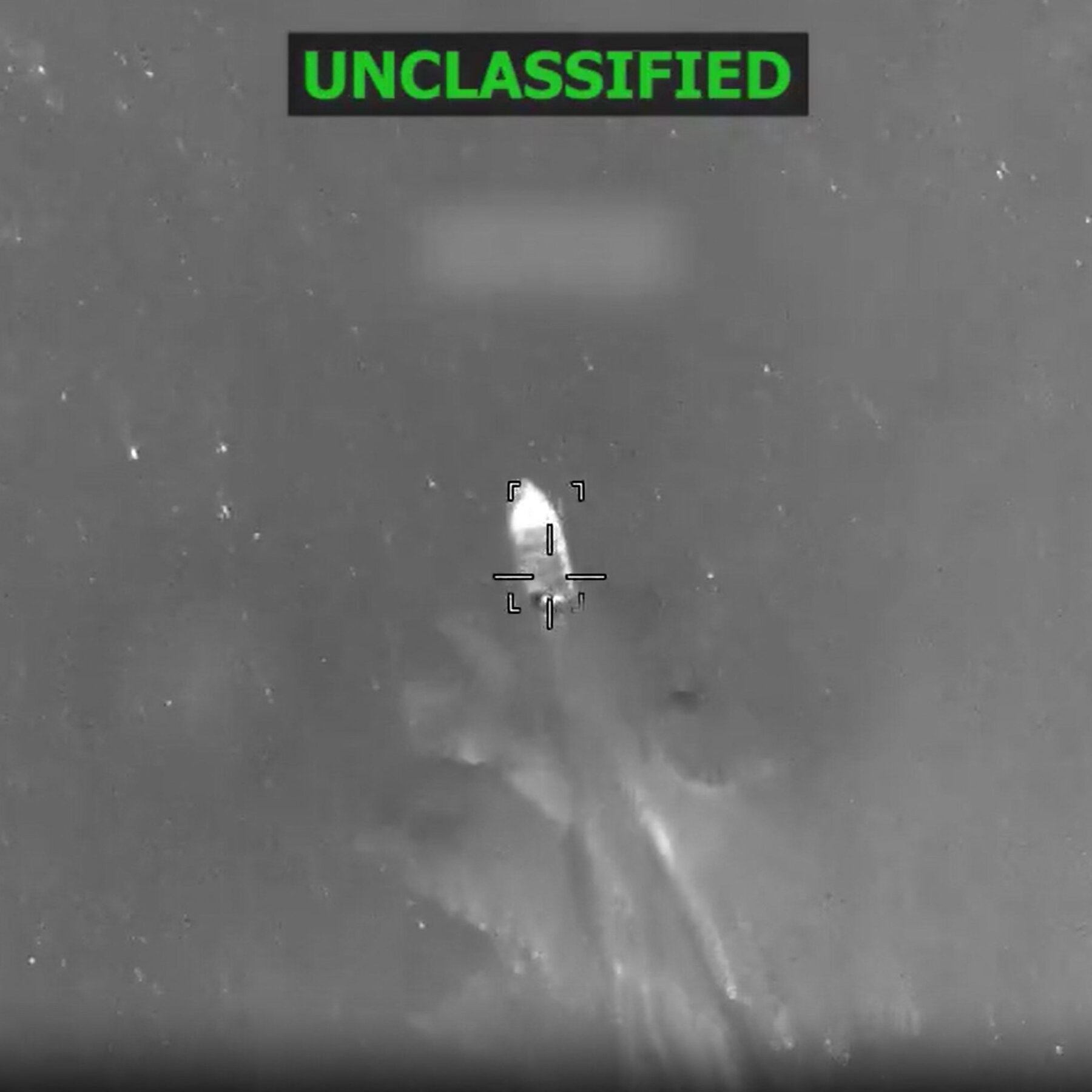
The decision to strike a target that might have taken intelligence analysts days to verify can now, with the assistance of artificial intelligence, be compressed into minutes. That is the central claim in a Nikkei Asia investigation published on 2 May 2026, drawing on unnamed defence officials and defence-industry sources: AI systems are not merely assisting the United States military in planning strikes against Iranian targets — they are actively restructuring the kill chain itself, the sequence of steps from target identification to weapons release.
If the reporting is accurate, the implications extend well beyond any single operation. The weaponisation of machine-speed decision-making in military targeting represents a structural discontinuity in how armed conflict is conducted — one that existing frameworks of international humanitarian law, accountability, and strategic deterrence were not designed to manage.
The Kill Chain, Accelerated
The kill chain concept — a term borrowed from Cold War-era nuclear doctrine and since adapted for conventional warfare — describes the chronological sequence of detection, identification, localisation, tracking, targeting, and engagement. Each link in that chain historically demanded human judgment: analysts reviewing imagery, commanders weighing proportionality, lawyers assessing discrimination between military and civilian objects. The process could take hours or days.
AI changes the calculus at every stage. Pattern-recognition systems can sift satellite imagery and signals intelligence at volumes no team of analysts could match, flagging anomalies and potential targets in near-real-time. Once a target is confirmed, AI-assisted mission-planning software can rapidly calculate optimal attack vectors, assess weather windows, and model collateral-damage scenarios. The result, according to the officials cited by Nikkei Asia, is a process that has shrunk from days to minutes in some cases.
The specific context is US military posture vis-à-vis Iran. US Central Command has for years maintained a targeted-presence strategy in the Persian Gulf and Eastern Mediterranean, conducting periodic strikes against Iranian-aligned militia positions, nuclear facilities, and command infrastructure. The introduction of AI into that operational matrix, the report suggests, has given the Pentagon a capacity to act with a speed and precision that its conventional planning cycles previously could not sustain.
The Autonomy Question
The critical distinction — and the one that most sharply divides expert opinion — is whether AI is accelerating human decisions or replacing them. The sources cited by Nikkei Asia describe AI as a decision-support tool: it surfaces options and models outcomes, but the final authorisation to strike remains with a commander. That framing will comfort those who see AI as an enhanced targeting aid. It will satisfy fewer of those who note that the pressure dynamics of compressed timelines are themselves a form of autonomy: when the system presents a strike package as already optimised, the human in the loop is approving rather than directing.
International humanitarian law requires that attacks distinguish between combatants and civilians and that proportionate force be used against military objectives. These are categoric judgments that no algorithm can make — or rather, if an algorithm makes them, the accountability trail runs to the programmer and the commander who deployed the system, not to the machine itself. The ambiguity here is not a drafting problem. It is a structural feature of a kill chain that includes AI as a silent partner at the decision point.
Iran, for its part, has long argued that US military presence in the Gulf constitutes a form of unlawful coercion, and that strikes carried out under AI-assisted planning are no less violations of Iranian sovereignty for being technically precise. That position is not one that Western legal frameworks have had occasion to adjudicate directly. But the asymmetric framing — a technology-powerful state employing AI to project force into the airspace of a sovereign neighbour — is one that non-Western states have increasingly raised in multilateral forums, and with growing sharpness.
Structural Resonance: What This Means Beyond the Iran Context
The US-Iran dynamic is the proximate case, but the underlying shift has implications that travel considerably further. If AI-enabled kill chains prove operationally effective against Iranian targets, the same capability architecture will migrate — to other regional commands, to other target sets, to other states that can afford comparable systems. The United States is not the only power developing AI-assisted targeting. Israel, the United Kingdom, France, China, and Russia all have advanced programmes at various stages of maturity.
What we are watching, if the Nikkei Asia reporting is accurate, is the early operationalisation of a military logic in which the primary constraint on the use of force is not political will or resource availability, but computational throughput. In that world, the concepts of deterrence and escalation control — which depend on human decision-makers having time to calculate and communicate — undergo fundamental stress. Escalation ladders assume that each rung requires a decision. If the decision cycle compresses to minutes, the ladder becomes less a staircase than a cliff.
The arms-control architecture governing precision weaponry and autonomous systems has not kept pace. The United Nations Convention on Certain Conventional Weapons process has produced general principles on human-machine interaction in weapons systems, but no binding instrument. The US Department of Defence's own AI ethics guidelines, adopted in 2020 and updated in subsequent years, address the broad framework of responsible AI use, but their operational application to time-sensitive targeting scenarios remains contested within the policy community. The gap between the technology's current deployment and the legal-institutional framework governing it is not a gap of years; at the pace described in the Nikkei Asia reporting, it may be a gap of months.
What Comes Next
The sources do not specify whether the AI-assisted targeting systems described are deployed in current operational posture or in planning scenarios being developed for future contingencies. That distinction matters enormously for assessing immediate risk. What the reporting does make clear is that the capability exists, has been tested in exercises or operational contexts, and is being integrated into real strike planning pipelines.
For Iran, the practical consequence is a strategic environment in which its conventional deterrence — the ability to make retaliation sufficiently costly to deter a first strike — faces a new kind of pressure. The Iranian programme of missile and drone development has been calibrated against a US military that, while overwhelmingly superior, was assumed to require political time to authorise a strike. If AI compresses the American decision window to minutes, the Iranian assumption of strategic pause no longer holds.
For the broader international system, the stakes are the integrity of the existing framework governing the use of force. International humanitarian law was written for a world of human-paced warfare. Its core principles — distinction, proportionality, precaution — assume that commanders have time to apply judgment. AI-assisted kill chains may still comply with those principles in letter. But they test them in spirit, because the time in which a human can meaningfully intervene is shrinking toward zero.
This publication's coverage of AI-driven military technologies prioritises reporting on capability development and legal-institutional implications over the operational details of specific systems. The wire framing, as represented in the sources below, emphasises US operational advantage; this article has sought to trace the structural logic of that advantage and its consequences for the international system.
Wire provenance
This editorial synthesis draws on the following public wire/social posts:
- https://t.me/NikkeiAsia/
- https://t.me/NikkeiAsia/
- https://t.me/TSN_ua/