The Artillery Keeps Falling on Southern Lebanon. No One Is Stopping It.
Israeli strikes on Lebanese towns on May 3 continued a pattern of cross-border attacks that has gone effectively unchecked. The international response has been calls for restraint — which have accomplished nothing.
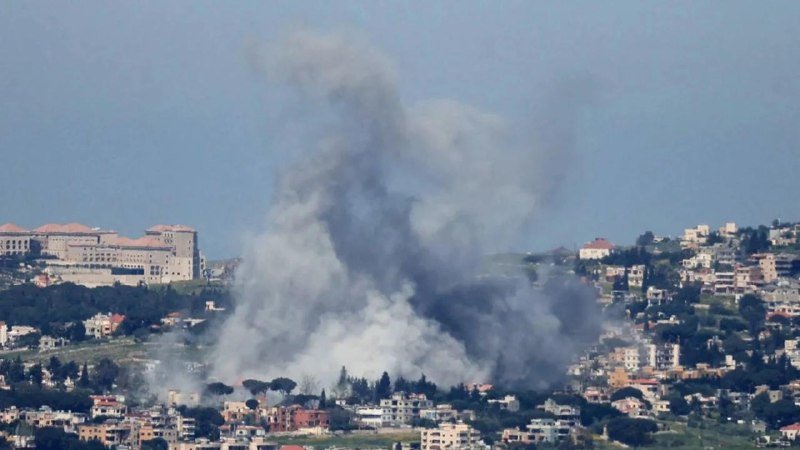
Israeli forces struck southern Lebanese towns on May 3, 2026, deploying artillery against Beit Yahoun and Kounine, and following with drone strikes on Safad al-Batikh — all civilian-populated communities well inside Lebanese territory. The attacks, reported by regional wire services throughout the morning, fit a pattern that has intensified since the Gaza conflict erupted. Emergency responders were seen mobilizing to affected areas. The strikes are not isolated. They are a continuation, and an expansion, of a campaign that has largely escaped the level of international attention the Gaza conflict commands.
The question this publication finds itself asking is straightforward: at what point does a pattern of strikes on civilian towns become the story in its own right, rather than a footnote to someone else's war?
What the strikes actually target
The towns hit on May 3 — Beit Yahoun, Kounine, Safad al-Batikh — are not military installations. They are civilian communities in southern Lebanon, some of them home to farming families and small traders who have lived for generations in villages that now sit in the crossfire of a conflict they did not choose. The artillery bombardment of Beit Yahoun and Kounine on May 3 at 11:33 UTC, followed hours later by drone strikes on Safad al-Batikh, is not a surgical operation against a named target. It is an attack on a place. The people there are the target set, by proximity if not by intent.
Israeli military spokespeople, when they comment on these strikes at all, frame them as responses to the presence of armed actors in the vicinity. That framing has a logic to it — security concerns near an active border are legitimate and real. But the cumulative record of these strikes, targeting the same category of location repeatedly, raises a question about what the actual military objective is. If there is a tactical gain from putting artillery into a farming village, it has not been articulated in a form that would make the cost — measured in civilian harm — legible as anything other than acceptable collateral.
This publication does not dismiss the threat assessments that underpin Israeli operations. It does insist that civilian towns in a neighboring country deserve to be treated as a question worth asking, rather than a problem solved by the next strike.
The international response, such as it is
Western capitals have issued statements. The language is familiar: calls for restraint, expressions of concern, warnings that further escalation serves no one's interests. These statements have not altered the pattern of strikes. The gap between what governments say they want and what they are prepared to do to get it has been a consistent feature of Middle East coverage for years. It is a feature of this story too.
The United States, which retains the most direct leverage over Israeli military decision-making of any external actor, has not translated its stated concern into pressure sufficient to change the calculation on the ground. The EU has issued communiqués. The UN Security Council remains gridlocked in the manner that has characterized its engagement with every major Middle East conflict of the past decade. Diplomatic activity is present. It is not producing results. Those results are measured in whether villages like Beit Yahoun and Kounine are still standing the following morning.
The irony — and it is worth naming plainly — is that the same diplomatic architecture that has proven insufficient to stop the Gaza conflict is proving equally insufficient to contain its regional spillover. If the international system cannot stop strikes on populated towns along one border, it is not because the tools do not exist. It is because the will to use them does not.
The normalization trap
There is a mechanism operating here that is worth examining on its own terms. The strikes are regular. They do not produce dramatic front-page escalation events — no single strike has the character of a threshold-crossing incident. What they produce instead is a gradual shift in what counts as normal. Artillery fire into southern Lebanese towns becomes background. Drone strikes become Tuesday. Each iteration that passes without a meaningful international response incrementally reduces the perceived cost of the next one.
This is not a theoretical concern. It is the dynamic that transforms a manageable tension into something harder to manage. The risk is not that one of these strikes will trigger a catastrophic escalation — though that remains possible. The risk is that the normalization of low-grade but persistent civilian harm makes larger escalation progressively more likely, because the threshold for what requires a response keeps moving.
The burden of breaking that dynamic sits with the actors who have the leverage to do so. That means the United States primarily, and the broader Western alliance to the extent it chooses to exercise collective pressure. The message that restraint is required — not requested, not hoped for, required — has not been sent with the force necessary to change behavior. Until it is, the strikes will continue.
What this publication thinks
The pattern of strikes on southern Lebanon is not an aberration. It is not a byproduct of a conflict whose main drama is elsewhere. It is a deliberate, sustained campaign of pressure against Lebanese territory that has been allowed to continue because it does not generate the same level of international alarm as the conflict it grew out of.
Israeli security concerns are legitimate. This publication has said so and means it. The right to act in self-defence against genuine threats is not in question. But the repeated targeting of civilian towns — with the civilian casualties that follow — deserves to be treated as a first-order problem, not a sideshow. The people of Beit Yahoun and Kounine and Safad al-Batikh are not abstractions. They are the people who live there, and the record of May 3, 2026, is a record of what happens to them when the international response is calls for restraint that change nothing.
Western governments have the leverage. They are not using it. That is a choice, and it has consequences. The consequences are being paid in Lebanese villages, one artillery round at a time.
Wire provenance
This editorial synthesis draws on the following public wire/social posts:
- https://t.me/TheCradleMedia/9821
- https://t.me/alalamarabic/18432
- https://t.me/alalamarabic/18428