Beijing Tells Companies to Defy U.S. Sanctions on Iranian Oil Refiners
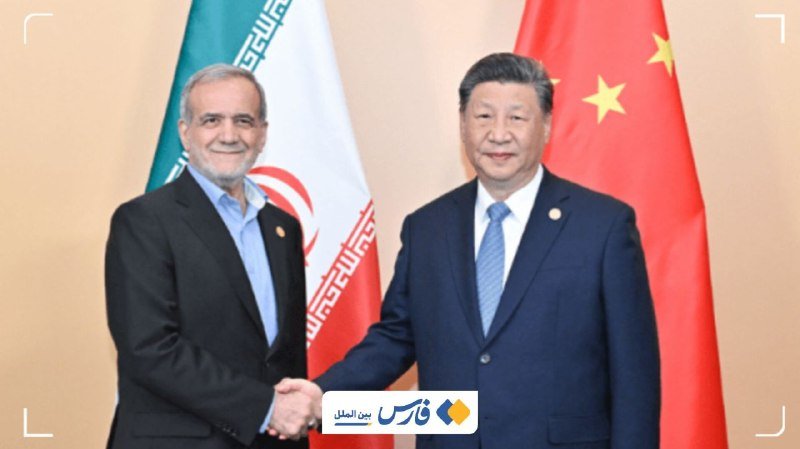
The Chinese Ministry of Commerce has formally instructed domestic companies to disregard a recent U.S. Executive Order targeting five Chinese teapot refineries with sanctions over their documented connections to the Iranian oil trade — a directive confirmed on the evening of 2 May 2026 and reported across regional intelligence feeds by the early hours of 3 May.
The instruction, first flagged by geopolitical monitoring channels at 03:56 UTC on 3 May, marks a rare and direct state-level repudiation of American financial enforcement. U.S. sanctions on third-country entities dealing with Iranian oil have been a staple of maximum-pressure campaigns for years; what is new is the explicit, written refusal from Beijing to treat those measures as binding on Chinese firms. The companies named include refiners linked to the Hengli Petrochemical group, which has previously attracted attention from U.S. Treasury's Office of Foreign Assets Control for acquiring Iranian condensate through intermediary jurisdictions.
This is not a diplomatic protest filed at the Foreign Ministry level. This is a line ministry — the Ministry of Commerce, the gatekeeper for China's trade and investment licensing — telling domestic companies that compliance is optional. For the sanctions architecture Washington has built over decades, that is a structurally significant challenge.
What Beijing Is Saying
The Ministry of Commerce spelled out its position in terms that reflect careful international-law framing rather than ad hoc defiance. According to statements reported by Al Alam Arabic on the evening of 2 May, Beijing described its decision as "a concrete measure to fulfil international obligations and protect China's legitimate interests." That language is deliberately calibrated: it positions the refusal to comply not as a violation of international order but as a fulfilment of it — specifically, a fulfilment of obligations Beijing argues derive from the UN Charter rather than from unilateral U.S. executive action.
The Ministry was more specific in a parallel statement also reported on 2 May, asserting that the United States "constantly opposes unilateral sanctions that are not based on a UN mandate or a basis in international law" — a formulation that treats Washington's own rhetoric as a mirror and holds it against the actual practice of the sanctions regime. A third statement, also from the Commerce Ministry on 2 May, described the U.S. measures as restrictions that "violate international law" by impeding economic activity between Chinese firms and other sovereign states. The language is blunt by the standards of formal Chinese government communications, which typically favour structural patience over direct legal accusation.
Beijing's core legal argument is straightforward: sanctions imposed without a UN Security Council resolution lack the multilateral legitimacy that obligates third-party states to enforce them. The United States has invoked domestic law — the Iran Sanctions Act, related executive orders — as the basis for targeting third-country entities, but that domestic law does not bind Chinese companies operating under Chinese jurisdiction. Washington has acted on the premise that the reach of the dollar system and the leverage of secondary sanctions will compel compliance regardless of legal standing. Beijing is now publicly contesting that premise.
What the Teapot Refineries Are, and Why They Matter
The entities caught in the sanctions order are described as teapot refineries — a term used in the Chinese oil industry for smaller, privately operated refining operations with capacities typically under 100,000 barrels per day. They are not Sinopec or PetroChina. They are agile, often semi-independent operators that can pivot supply chains quickly and that historically have formed the connective tissue between sanctioned oil producers and the Chinese domestic market.
The teapot sector has been a persistent headache for U.S. sanctions enforcers precisely because its opacity and分散structure make compliance monitoring difficult. These facilities can source crude through intermediary brokers operating in Malaysian waters, UAE free zones, or the dark-fleet tanker networks that have expanded dramatically since the re-imposition of full Iran sanctions in 2018. The five refineries now targeted had been flagged in prior Treasury advisory warnings, but the Executive Order represents a formal escalation — assets blocked, transactions prohibited, secondary consequences for counterparties.
That formal escalation is what triggered Beijing's formal pushback. The Commerce Ministry's instruction to the companies — rather than to the press — signals that the directive was operational: a compliance signal to the firms themselves, not a press statement designed for international audiences. China is not merely complaining about the measures; it is directing its own companies on how to respond to them.
The Dollar System at the Fulcrum
The structural significance of Beijing's move goes beyond the five refineries. It targets the assumption — central to U.S. financial hegemony for decades — that the dollar's role as the world's reserve currency and the depth of U.S. capital markets gives American sanctions a reach that extends far beyond American jurisdiction. Secondary sanctions work because any firm, anywhere, that clears dollar transactions or accesses U.S. correspondent banking networks exposes itself to U.S. enforcement. That leverage has made the dollar the enforcement arm of American foreign policy in a way no other instrument could replicate.
Chinese companies are not blind to this exposure. The Commerce Ministry's instruction does not eliminate the legal risk those firms face if they continue processing Iranian crude in dollar-denominated chains. What it does is shift the political calculus: Beijing is signalling that the Chinese state will not treat U.S. enforcement actions as faits accomplis requiring compliance. If a teapot refinery faces U.S. asset freezes, Beijing's position is that the company has the backing of its own government in continuing the underlying commercial activity.
This is the logic of the parallel financial architecture China has been building for years — the CIPS cross-border interbank payment system, the bilateral currency swap agreements, the use of yuan-denominated oil contracts at Shanghai futures exchanges. None of those instruments fully substitutes for dollar clearance in global commodity markets. But each reduces the dependency that makes U.S. sanctions effective. Beijing's instruction to ignore the sanctions order is the political announcement of what that infrastructure has been designed to enable.
The timing matters. The instruction arrived in the context of ongoing U.S.-Iran nuclear talks — indirect negotiations in which Washington's willingness to offer sanctions relief in exchange for nuclear constraints has been the central question. If the U.S. appears willing to remove sanctions on Iranian oil as part of a deal, the enforcement pressure on Chinese teapot refiners would diminish. But if the talks collapse, or if Washington escalates enforcement in the absence of a deal, Beijing's directive will have been a preemptive signal that China will not be a passive recipient of American enforcement decisions.
Stakes and What Comes Next
The immediate question is enforcement. Will the U.S. Treasury act on the sanctions designation against these five refineries — freezing any U.S.-linked assets, triggering secondary listing risks for counterparties — or will the measures remain largely symbolic without the cooperation of the jurisdiction where the facilities operate? Without Chinese regulatory cooperation, the practical reach of the designation is limited to firms that have dollar exposure, which the most sophisticated teapot operators have been working to reduce.
The precedent matters more than the individual case. If Beijing can formally instruct non-compliance without consequence — if the refineries continue operating, if Chinese trade data continues to show Iranian crude flows, if Washington finds no leverage to reverse the instruction — then the enforcement architecture that has underpinned U.S. sanctions for three decades will have sustained a material crack. Other states with less appetite for confrontation with Washington have watched China's sanctions posture closely; a successful Beijing defiance could invite others to test the same boundaries.
For Washington, the response options are limited in the short term. Secondary sanctions on the parent companies or their executives would require identifying assets or transactions that touch the U.S. financial system — a task complicated by Beijing's own countermeasures. A signal to allies about the risks of doing business with the targeted firms would require coalition-building that the current posture of the U.S.-China relationship does not easily support.
What is clear is that Beijing has moved from quiet non-compliance to active, state-directed defiance. The distinction matters. Quiet non-compliance is a cost of doing business that both sides have managed for years. Active defiance, in the form of a formal instruction from a line ministry, is a political act. It was intended as one. The question now is whether Washington treats it as a challenge that demands a response, or as a signal that the sanctions regime's enforcement has reached its structural limit.
The sources do not yet indicate which response the Trump administration is preparing. What the sources do confirm is that the instruction exists, that it was issued with explicit legal framing, and that it was accompanied by a direct challenge to the legitimacy of unilateral U.S. sanctions in international law. That framing — not the diplomatic register of protest but the legal register of repudiation — suggests Beijing is not seeking a negotiated de-escalation. It is establishing a principle.
The five teapot refineries are the first test. The precedent they establish will shape whether the dollar's enforcement reach extends to jurisdictions that are no longer willing to treat it as binding.
This publication covered the instruction through Telegram-sourced regional monitoring feeds on 2–3 May 2026. The wire framing, drawn primarily from U.S.-adjacent policy reporting, led with the sanctions designation and treated Beijing's pushback as secondary. The Monexus framing leads instead with the Ministry of Commerce instruction as a first-order political fact — the sanctions designation is the context; the refusal to comply is the story.
Wire provenance
This editorial synthesis draws on the following public wire/social posts:
- https://t.me/wfwitness/2859
- https://t.me/rnintel/4471
- https://t.me/alalamarabic/11298
- https://t.me/alalamarabic/11297
- https://t.me/alalamarabic/11296