Bolton's Strait of Hormuz Warning and the Fragile Architecture of Gulf Transit
A passing remark by a former US national security adviser about a wall map has reignited a debate that Gulf analysts say has never truly gone away: whether the Strait of Hormuz remains the world's most consequential chokepoint, and whether Washington has a coherent strategy for keeping it open.
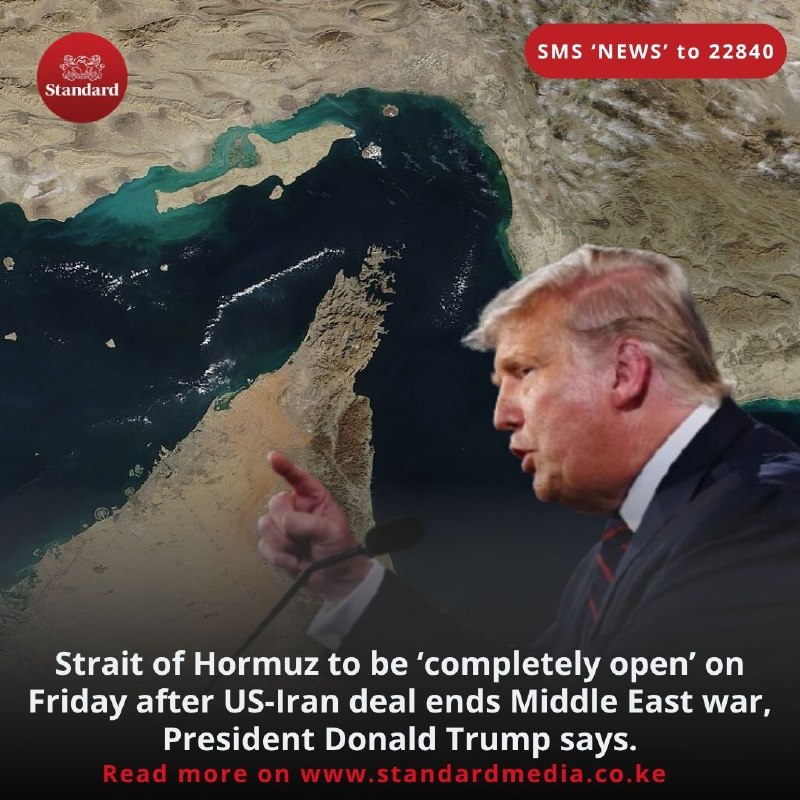
According to posts published on 3 May 2026 by Iranian state-affiliated news outlets including Al Alam Arabic and Tasnim News English, former United States National Security Advisor John Bolton made a remark at a public event that drew fresh attention to one of the world's most scrutinized maritime corridors. "If Trump had only looked at the map once, he would have understood the importance of the Strait of Hormuz," Bolton reportedly said, suggesting that sufficient geographic familiarity with the Persian Gulf region would clarify why the narrow waterway remains central to US strategic calculations.
The framing of the quote — that a single glance at a map would have resolved whatever conceptual gap existed — is characteristic of Bolton's delivery, which has long privileged hardline realist shorthand over diplomatic nuance. Whether the remark was calibrated for an Iranian audience or emerged organically from a policy discussion, it landed in a regional context already charged by elevated tensions between Washington and Tehran over nuclear programme constraints, maritime interdiction threats, and the broader architecture of Gulf security.
This publication cannot independently verify the precise setting, audience, or full context of Bolton's reported remarks. The posts circulating on 3 May 2026 cite no transcript, no video clip, and no corroborating report from US-based outlets. What can be established is that Tasnim News and Al Alam — both outlets with documented ties to the Iranian government — chose to amplify the comment, and that it arrived at a moment when Hormuz-related risk is once again a live question inside Washington policy circles.
The geography of leverage
The Strait of Hormuz is not merely a shipping lane. It is a geopolitical instrument of the first order. Approximately 21 million barrels of oil pass through it on a typical day, according to the US Energy Information Administration — roughly one-fifth of global oil consumption. Any sustained disruption, whether through military blockade, mining, harassment of commercial vessels, or the more indirect pressure of heightened political risk, sends immediate reverberations through commodity markets that are structurally ill-equipped to absorb supply shocks.
That the strait has not been formally closed since the Iran-Iraq War of the 1980s is not evidence that closure is unthinkable. It is evidence that the deterrent calculus — the combination of US naval presence, international commercial incentive, and Iranian strategic restraint — has held. Each element of that calculus is now under pressure in ways that analysts in the Gulf and in Western capitals have been documenting for years.
Iran's Islamic Revolutionary Guard Corps Navy operates fast-attack craft, mines, and anti-ship missiles in the northern Gulf and the approaches to the strait. US Fifth Fleet is headquartered in Bahrain, roughly 1,000 nautical miles from Hormuz but positioned to project power into the area within hours. The tension between these two postures — one predicated on asymmetric denial, the other on forward presence — defines the strait's operational environment.
What Bolton's reported remark implicitly invokes is the question of whether Washington takes this seriously enough. The answer, depending on which faction inside the US national security apparatus is doing the answering, ranges from confident to alarmed.
The credibility question
John Bolton served as National Security Advisor to the Trump administration for a period of approximately seventeen months, departing in September 2019 after disagreements over Afghanistan, North Korea, and Iran policy. His subsequent public commentary has consistently reflected the hawkish strand of Republican foreign policy thinking, and he has been a persistent critic of the administration's Iran approach both during and after his tenure.
None of this makes the reported Hormuz remark incorrect. It does, however, contextualise the audience and intent. When a figure like Bolton speaks about strategic geography, the formulation is rarely disinterested. He is seeking to move a policy debate, not merely describe a geographic fact.
That the outlets amplifying the remark are Iranian state-affiliated matters in assessing weight and framing, though it does not automatically disqualify the content. A broken clock, as the saying goes, identifies the hour correctly even when its mechanism is faulty. The substance of the claim — that the Strait of Hormuz is strategically vital — is not contested among serious analysts. It is among the most widely agreed-upon observations in international security literature.
The more interesting question is what Bolton's remark reveals about the internal coherence of US Gulf strategy as it currently stands.
The infrastructure of deterrence
US naval dominance in the Persian Gulf has been a structural constant since Operation Earnest Will in 1987–88, when the US Navy escorted reflagged Kuwaiti tankers through waters sown with Iranian mines. That operation, one of the largest US naval deployments since World War II, established the principle that the free flow of Gulf oil is a US national security interest that will be defended with force if necessary.
That principle has not been tested at scale since. The US Fifth Fleet's posture — routinely described as ensuring "freedom of navigation" — rests on the credibility of that commitment. Credibility, however, is not a fixed quantity. It is a function of demonstrated will, domestic political support, and the perceived cost of intervention relative to the interests at stake.
Gulf analysts note that the operational environment has become more complex in several ways. Iranian naval and paramilitary capabilities have evolved, with antiship ballistic missiles and drone swarms adding layers of threat that the 1987–88 fleet was never designed to counter. The commercial shipping industry has consolidated, with a handful of major tanker operators making individual risk calculations that can produce market-level effects even without a state-level confrontation.
Simultaneously, the global energy transition is beginning — slowly, unevenly, but measurably — to reduce the strait's proportional importance to global oil markets. The growth of US shale production, the expansion of Gulf pipeline infrastructure bypassing Hormuz, and the increased use of LNG have collectively reduced, though not eliminated, the chokepoint premium. Saudi Arabia's East-West pipeline and the United Arab Emirates' pipeline connections to Fujairah on the Indian Ocean side provide partial redundancy. None of these routes eliminate the strait's centrality to Gulf crude exports, but they dilute the absolute dependency that existed twenty years ago.
What the current debate obscures
The Hormuz question in Washington policy discourse tends to collapse into two camps: those who view the strait as an immutable strategic constant that demands continuous US military presence, and those who view it as a legacy concern that the energy transition and regional normalisation will eventually render moot.
The more uncomfortable truth is that neither camp has fully grappled with the scenario in which the strait becomes a site of coercive pressure short of blockade — what analysts sometimes call the "gray zone" approach. Iran has employed this method before, most recently in 2019 with attacks on commercial vessels in the Gulf of Oman that the US attributed to Iranian forces. The difficulty of attribution, the ambiguity of intent, and the speed of escalation combine to make gray-zone interdiction extremely hard to deter through conventional forward presence.
The debate Bolton's reported remark reignites is not ultimately about a map. It is about whether the deterrent architecture that has kept Hormuz open for four decades is equipped for a more contested, more ambiguous threat environment — and whether the political will to maintain it survives the transition in US strategic priorities that successive administrations have signalled, regardless of party label.
The geography will not change. The question is whether the strategy will.
This publication's desk note: The primary source material for this article consists of posts from Iranian state-affiliated Telegram channels. While the strategic substance of Bolton's reported remark is well-supported by independent geopolitical analysis, the precise context and phrasing of the original statement could not be independently verified. We have treated the claims as reported and noted the sourcing limitations explicitly rather than amplify them without qualification.
Wire provenance
This editorial synthesis draws on the following public wire/social posts:
- https://t.me/alalamarabic/124891
- https://t.me/JahanTasnim/89123
- https://t.me/tasnimnews_en/45612
- https://t.me/alalamfa/78234
- https://t.me/farsna/34521