Brazil Keeps the Iran Channel Open
Brazil's foreign minister spoke with Iran's Araghchi on May 3 — a routine call by any public account, but one that lands differently against the backdrop of Washington's maximum-pressure campaign on Tehran.
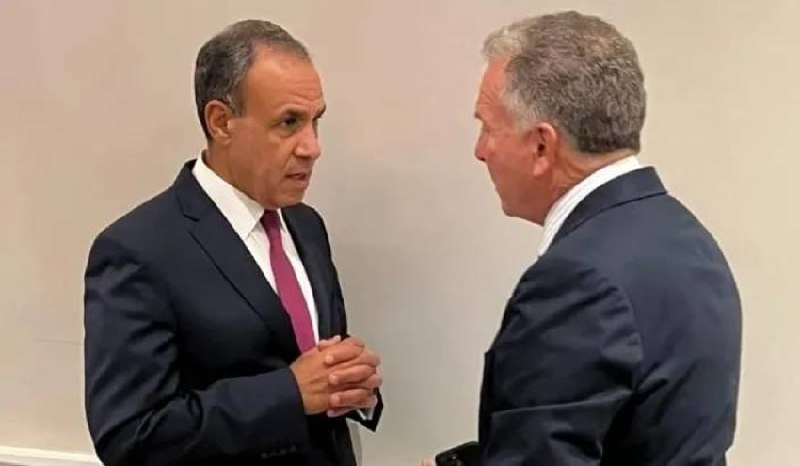
Brazilian Foreign Minister Mauro Vieira spoke with his Iranian counterpart, Seyyed Abbas Araghchi, on May 3, 2026, in what Tehran-linked diplomatic channels described as a continuation of "diplomatic consultations." Neither side has disclosed the substance of the call. By the public record, it was a routine ministerial exchange. In the current geopolitical environment, routine counts as news.
Washington has spent the better part of two years tightening the diplomatic noose around Iran — expanding sanctions, lobbying Gulf states to limit normalisation, and making clear that countries engaging Tehran do so at a cost to their standing in the Western-led order. Brazil, under President Luiz Inácio Lula da Silva, has decided that cost is one it is willing to absorb. Vieira speaking to Araghchi at all is a statement.
A Relationship That Survived Pressure
Brazil and Iran have maintained diplomatic relations since 1931, through periods of extreme Western hostility to the Islamic Republic. The relationship was tested most recently in the early 2010s, when the US under Barack Obama tried to coax Brazil into the pressure camp — and found Brasilia unmoved. Lula's government then, as now, treated Iran's nuclear programme as a matter for diplomacy and multilateral negotiation rather than isolation.
That stance has only hardened under Lula's third administration. He has positioned Brazil as a country with a sovereign foreign policy that does not defer to Washington on questions of with whom Brasilia may speak. Ukraine produced the clearest illustration: Brazil declined to arm either side, called consistently for peace talks, and refused to treat the conflict through a lens that assigned moral equivalence between aggressor and invaded state. Iran is a shorter step along the same line.
Vieira's call with Araghchi on May 3 fits that pattern. It was not, by any public account, a mediation mission or a breakthrough moment. It was a sitting foreign minister taking a call from a counterpart in Tehran. The fact that this is worth noting says more about the prevailing climate than about the call itself.
What Washington's Strategy Assumes — and Why It Falters
The US approach to Iran has rested on a specific premise: that economic pressure and diplomatic isolation, maintained long enough, will either force regime change or compel concessions on the nuclear file. That premise requires cooperation. Third countries that continue to engage Iran — that treat it as a normal diplomatic counterpart rather than a pariah — chip away at the premise without ever intending to.
Brazil is not Iran-friendly in the way that Baghdad was aligned with Tehran during the war years. It does not share Tehran's strategic vision. What it shares is a conviction that the Western playbook for managing Iran has failed — that sanctions have not produced the intended outcome, and that isolation serves the ideological preferences of Washington and Brussels more than it serves regional stability.
The Araghchi-Vieira call does not change the sanctions architecture. It does not open a trade corridor. But it keeps a channel through which future conversations can happen. In a diplomatic environment designed to close those channels, that is not nothing.
The Context Iran Is Building
Iranian diplomacy under the current government has been systematically oriented toward the Global South — deepening ties with African states, Central Asian republics, and Latin American countries that maintain independent relations with Tehran. This is partly strategic hedging against a US that has never distinguished between the Iranian state and the Iranian people, and partly a calculation that the international order is fracturing in ways that create diplomatic space for states willing to use it.
Brazil slots naturally into that strategy. It is the largest economy in Latin America, a member of the BRICS grouping that Iran joined in January 2024, and a country that has demonstrated — across the Lula administrations and others — a willingness to act on its own foreign policy assessments rather than defer to those of its larger trading partners.
Araghchi's public framing of the call as routine diplomatic consultations is almost certainly deliberate. Overselling it would invite scrutiny. Treating it as unremarkable preserves the relationship's low-profile character while keeping it operational.
What Comes Next
The practical upside of a closer Brazil-Iran diplomatic relationship is not obvious on trade figures alone. Bilateral commerce runs in the hundreds of millions of dollars — Brazilian agricultural exports, some petrochemical cooperation. Neither country is the other's primary economic partner. The value is political: a signal to Washington that the coalition the US wants against Iran is incomplete, and a demonstration that emerging-market capitals are not willing to accept the premise that Iran is diplomatically unreachable.
Whether this represents a durable shift in Brazilian posture toward Tehran — or simply reflects the maintenance of an existing channel — is not yet clear. Lula has two years remaining in his current term. The question is whether this kind of engagement becomes a template or a one-off.
What is clear is that Washington's preferred outcome — a world in which Iran has nowhere to go diplomatically — is not the world that actually exists. Brazil's foreign minister spoke to Iran's foreign minister on a Tuesday afternoon in May. That fact, ordinary on its surface, exposes the limits of the pressure campaign's underlying logic.
Monexus covered the Araghchi-Vieira call through Iranian state-linked Telegram dispatches. Western and Brazilian government accounts of the exchange were not available at time of publication, limiting the picture to Tehran's framing.
Wire provenance
This editorial synthesis draws on the following public wire/social posts:
- https://t.me/tasnimnews_en/51130
- https://t.me/JahanTasnim/81234
- https://t.me/mehrnews/62341