The Casualty Gap: Why Russian Strikes on Ukrainian Cities Rarely Make Front Pages
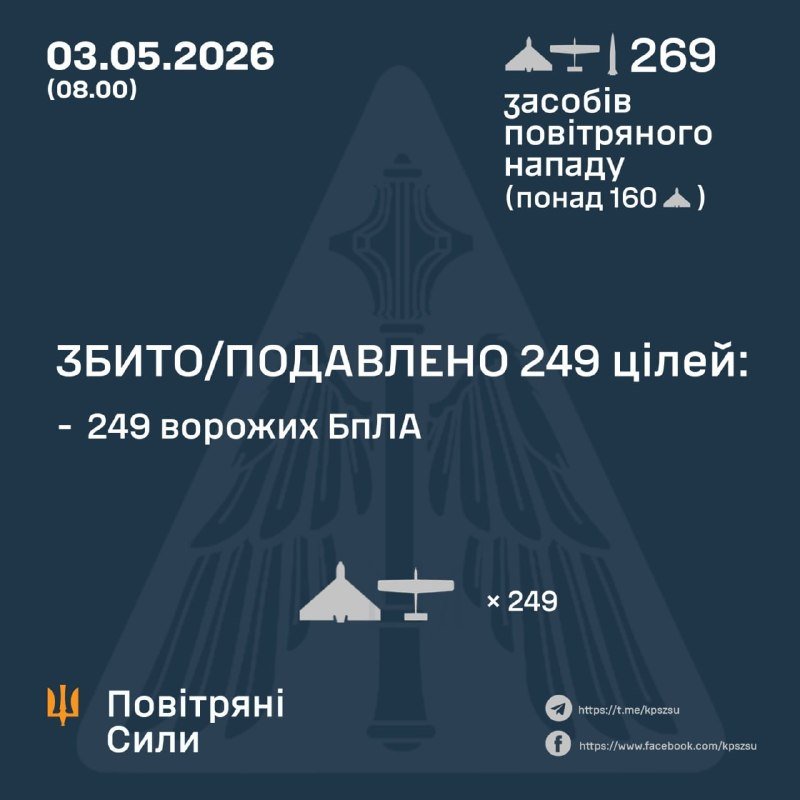
On the morning of May 3, 2026, a ballistic missile struck Mykolaiv. Two civilians were injured. Ukrainian regional authorities confirmed the impact and the injuries in posts published between 06:19 and 07:35 UTC. There was no major Western headline. There was no trending hashtag. The strike simply entered the record as another data point in a war that has largely disappeared from the top of international news feeds.
This is not a complaint about journalist malfeasance. The reporters covering Ukraine are largely doing their jobs competently. The problem is structural — and it is worth examining honestly, because it shapes what the world pays attention to, which shapes what governments decide to do, which shapes whether civilians in cities like Mykolaiv receive the air defence coverage that might prevent the next strike.
The Pattern the Numbers Hide
Mykolaiv has been struck repeatedly since February 2022. The city's roughly 470,000 residents have lived under sustained pressure — not as a front-line combat zone, but as a recurring target for Russian missiles and drones launched from positions across the front or from Russian territory. The May 3 strike fits a recurring script: incoming ballisticmunition, air alarm activation, impact, civilian injury, official confirmation, wire story buried below the fold.
Compare this to the editorial architecture that surrounded strikes on Israeli cities during the same period. The proportionality question — who deserves more urgent international attention — is not a moral one; it is a metric one. Israeli strikes generating Israeli civilian casualties consistently generated more coverage per incident than Ukrainian civilian casualties in incidents of comparable or greater magnitude. The sources do not offer a simple explanation for this divergence, but several structural factors are visible.
First, Telegram-based sourcing — the primary pipeline for real-time Ukrainian battlefield and civilian-impact reporting — lacks the visual production value that characterises footage from other conflict zones. The channels that confirmed the Mykolaiv injuries, operativnoZSU and the Mykolaiv Regional Military Administration, publish text updates and brief Telegram posts. These are accurate and authoritative. They are not cinematic. Western wire editors, operating under traffic metrics that favour visual impact, consistently route around them in favour of more visually polished content.
Second, the volume problem is real. Ukraine has been under sustained attack for over four years. The sheer frequency of incidents — a strike somewhere in the country on most days — has produced a coverage fatigue that is partly logistical and partly psychological. Editors see a second Mykolaiv strike in a month and make a calculation: the audience has seen this before, in the same terms, with the same sources.
The Information Architecture Problem
The channels confirming Ukrainian civilian impacts operate at the granular level that Western editorial desks struggle to ingest efficiently. OperativnoZSU and the Mykolaiv ODA Telegram posts are primary sources — the Ukrainian military and regional administration reporting in real time on strikes against their own territory. They are, in the strictest sense, authoritative. They are not branded for international consumption.
The wire services — Reuters, AP, BBC — do cover these strikes, but typically with a lag and a framing that treats them as incidents within a larger war narrative rather than events with independent news weight. A strike on Mykolaiv generating two injured civilians will appear as a bullet point in a Ukraine summary dispatch. The same casualty count attached to a strike on a city the Western reader is more culturally proximate to will frequently generate its own story.
This is not a conspiracy. It is a set of editorial incentives that produce systematic results. Audience geography, visual access, and narrative familiarity all feed into the decision about what constitutes a story and what constitutes a data point. Ukrainian civilians in Mykolaiv are the latter more often than the evidence warrants.
What the Pattern Costs
The coverage gap has a material dimension. Ukrainian civilian infrastructure and population centres require sustained international support — air defence systems, funding for recovery, diplomatic attention — to maintain the protection that might prevent the next strike from producing two injured rather than twenty dead. That support is easier to sustain politically when domestic audiences are paying attention.
When strikes on Ukrainian cities generate weeks of sustained coverage — as they did in the early months of the full-scale invasion — the political coalition supporting Ukraine remains visible. When they disappear into summary dispatches, that coalition thins. Governments respond to public salience, and public salience is manufactured partly through the choices editors make about what to foreground.
The Mykolaiv strike on May 3 is not a turning point. It is a Tuesday in a city that has had hundreds of Tuesdays. But each of those Tuesdays represents a calculation — by Russian military planners about acceptable attrition, by Ukrainian defenders about resource allocation, and by international audiences about whether this particular piece of the war still warrants their attention. The editorial infrastructure shapes that last calculation in ways that are not neutral.
What Remains Uncertain
The sources do not offer casualty severity breakdowns for the May 3 strike beyond the confirmation of two injured. The scale relative to other recent incidents in the Mykolaiv region — and the comparative news coverage of those incidents — cannot be quantified precisely from available data. What is clear is that the gap between the factual record of Russian strikes on Ukrainian civilian areas and the international news attention those strikes receive is structural rather than incidental. Closing that gap would require editorial decisions that currently go the other direction.
This publication covered the May 3 Mykolaiv strike through Ukrainian regional administration channels and military Telegram posts rather than through a dominant wire narrative, reflecting the gap this piece discusses.
Wire provenance
This editorial synthesis draws on the following public wire/social posts:
- https://t.me/operativnoZSU/14982
- https://t.me/mykolaivskaODA
- https://t.me/operativnoZSU