The Lebanese Front: Why Hezbollah's Claims Matter for Israel's Strategic Calculations
Hezbollah's announcement of 11 operations in 24 hours, alongside Israeli military disclosures, has placed the Lebanese arena at the centre of escalating cross-border hostilities and raised questions about the sustainability of multi-front pressure on the IDF.
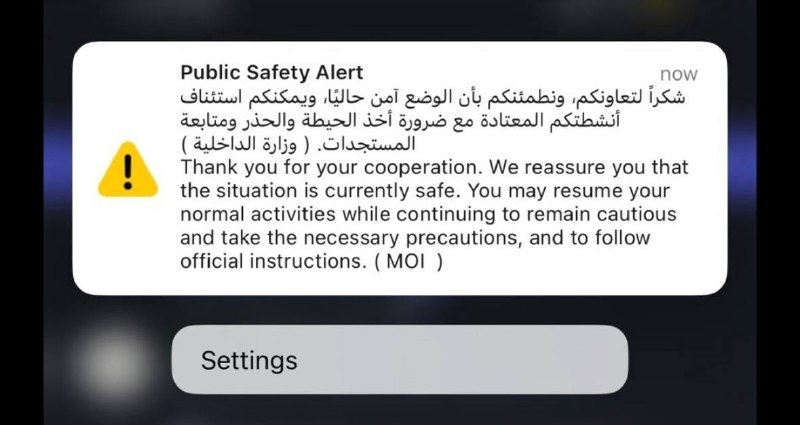
On 3 May 2026, Al Alam, the Arabic-language news service of Iranian state broadcaster IRIB, reported that Haaretz had identified Hezbollah as the "weak point" of the Israeli military. The characterisation was striking not for its novelty — the Lebanese front has generated sustained tension since October 2023 — but for its source: an admission from inside the Israeli information space, carried through a regional outlet with a distinct editorial interest in amplifying it.
Hezbollah announced the same day that it had carried out 11 separate operations against Israeli military positions and personnel in the preceding 24 hours. The Israeli military confirmed that air defences were activated against two airborne targets in the southern Lebanon operational area, and that artillery fire was renewed against the outskirts of Shebaa, a town in disputed territory at the junction of Lebanon and the Golan Heights. The convergence of a claim of sustained offensive pressure and a confirmed defensive response frames the Lebanese front as the most active and unpredictable axis of an increasingly fragmented conflict.
Both sets of claims warrant scrutiny. Hezbollah's operational announcements serve an informational purpose within a broader architecture of deterrence signalling and domestic political communication; they are neither independently verified nor designed to be. Israeli military disclosures, equally, are calibrated communications — disclosures of defensive activation serve to signal capability and resolve rather than to provide a complete picture of operational status. What is notable about the current moment is not any single claim but the alignment: an Israeli domestic newspaper characterises the Lebanese front as the most difficult and bloody theatre, while an adversary's media apparatus characterises it as a source of Israeli vulnerability. Whether or not that characterisation is accurate, its existence marks a shift in how the northern front is being assessed across multiple information environments.
The structural pattern is one of multi-front pressure on the Israeli military. Simultaneous operational demands across Lebanon, the Gaza Strip, and — in the assessment of some regional analysts — the prospect of expanded Iranian involvement create a compounding resource challenge. Hezbollah's sustained operational tempo, if the 11-operation figure holds, represents a level of engagement that tests the limits of a force that must also manage deterrence on other fronts. The IDF has historically maintained a qualitative advantage through technology and air power, but high-frequency exchanges across a contested border create conditions where that advantage is degraded — or at least harder to deploy decisively without escalation costs that other actors, including Israel's principal ally, would prefer to avoid.
For Israeli strategic planners, the central question is not whether Hezbollah can sustain this tempo — a militarily capable organisation with deep stocks and combat experience — but whether the political and military cost of containing it is tolerable within a broader conflict architecture that shows no sign of resolution. Hezbollah frames its operations as a legitimate response to Israeli violations of the ceasefire arrangement; the Israeli military frames its responses as necessary defensive measures. Both framings are internally consistent. The gap between them is where the conflict lives — and where outside parties seeking a diplomatic off-ramp must operate.
The immediate trajectory will depend on whether the next 24 to 48 hours bring a de-escalation signal or a further ratcheting of operational claims. What the available disclosures confirm is that the Lebanese arena has not stabilised, and that for all the public focus on Gaza, the northern front carries its own distinct weight in how this conflict evolves. Both sides have interests in a managed exchange rather than a full-scale reopening of the 2006 war — but interests and calculations can shift, and the operational tempo described in the disclosures from 3 May suggests both sides remain far from comfortable with the current equilibrium.
This publication cited Al Alam's Arabic-language wire service as its primary source for operational disclosures from Hezbollah and the Israeli military. Al Alam is affiliated with Iranian state broadcaster IRIB; its editorial framing of Israeli military performance warrants the same sourcing caveats applied to any state-adjacent outlet. Western wire services and Israeli domestic sources have not independently confirmed the specific 11-operation figure cited by Hezbollah.
Wire provenance
This editorial synthesis draws on the following public wire/social posts:
- https://t.me/alalamarabic/1898785
- https://t.me/alalamarabic/1898783
- https://t.me/alalamarabic/1898784
- https://t.me/alalamarabic/1898773