Hezbollah Strikes, Tehran Negotiates: Israel Sounds Return-to-War Alarm as Iran Dismisses Nuclear Demands
Hezbollah strikes Israeli military positions in southern Lebanon as senior Israeli officials warn that renewed conflict with Iran is inevitable, even as Tehran transmits a Pakistan-mediated proposal to Washington that conspicuously omits the nuclear question.
On the same day that Hezbollah-aligned forces released footage of successful drone strikes against Israeli military hardware in southern Lebanon, Iranian state media reported that Tehran had transmitted a proposal to the United States through Pakistan that pointedly excludes any mention of its nuclear programme. Senior Israeli officials, cited by Israeli Channel 14, described renewed conflict with Iran as a matter of time — not a question of whether, but when. The convergence of military escalation on Lebanon's southern border and diplomatic back-channel activity through Islamabad presents a picture of a region being shaped by two contradictory impulses: armed confrontation and negotiated de-escalation, operating simultaneously.
The core tension is straightforward. Iran is signalling it wants to talk, and it wants to talk on terms that do not include the programme most alarming to Western capitals. Israel is saying the conversation is beside the point. Between them sits a Lebanese front that has not quieted since the October 2023 Hamas-led attacks, and that front is growing more active by the week.
Hezbollah Escalates on the Southern Lebanon Front
Hezbollah, the Iran-backed Lebanese political and militant movement, intensified its use of unmanned aerial systems against Israeli positions in southern Lebanon on 3 May 2026. Footage published by Iranian state media showed what was described as a Hezbollah suicide drone striking an Israeli artillery position. A separate video appeared to show a Namer — an Israeli-manufactured armored troop carrier — targeted by an attack drone in the same operational zone. The authenticity of the footage could not be independently verified by this publication, though the framing and technical details are consistent with previously confirmed Hezbollah drone operations in the area.
The strikes follow months of low-intensity exchanges along the Lebanon-Israel border since the Gaza conflict began. Hezbollah has framed its operations as resistance; Israel has treated them as acts of war by a proxy operating from Lebanese territory. The drone footage circulating on 3 May represents a qualitative shift in the visibility of those strikes — from mortars and anti-tank missiles to precision-capable unmanned systems capable of striking at depth.
What is not in dispute is that both sides have been building forces along the border. Israeli military officials have repeatedly warned that a broader Lebanon front would impose significant costs on both countries. Hezbollah, for its part, has signalled it has stockpiled a larger and more diverse arsenal than in the 2006 war. The drone footage of 3 May suggests that arsenal is being used, not merely displayed.
Iran's Pakistan-Mediated Proposal and the Nuclear Omission
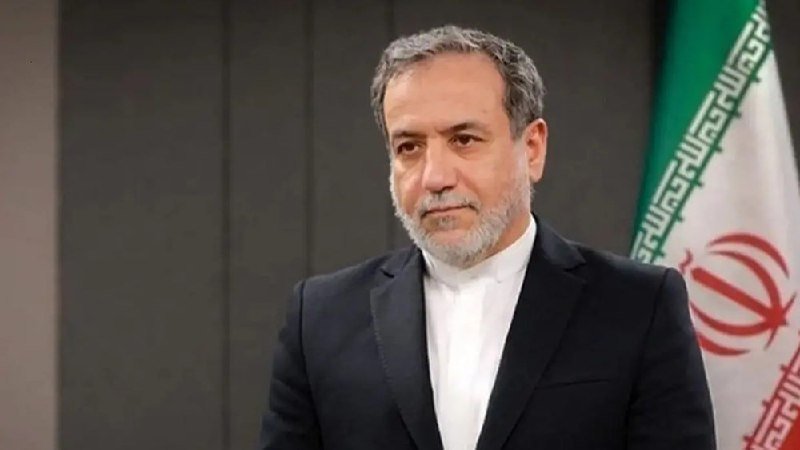
On 3 May 2026, the Iranian Foreign Ministry spokesperson stated — via Iran's state-run Press TV — that Iran had transmitted a proposal to the United States through Pakistan that focused entirely on ending what Tehran describes as American and Israeli "aggression." The spokesperson was explicit: the nuclear issue had been excluded from the plan entirely.
The disclosure is significant because it reframes the terms of any potential negotiation. Western governments — and the International Atomic Energy Agency — have long insisted that any durable agreement with Iran must address the accumulation of enriched uranium and the expansion of nuclear infrastructure. Iran's decision to transmit a proposal that sidesteps that question suggests Tehran is testing whether Washington will engage on a narrower set of grievances: sanctions, regional presence, and what Iran characterises as encirclement.
Pakistan's role as intermediary is notable. Islamabad has maintained separate, and sometimes competing, relationships with both Washington and Tehran. That Pakistan agreed to carry messages at this moment suggests both sides are using a non-aligned channel to explore terms without formal direct contact. Whether that reflects genuine diplomatic flexibility or a tactic to buy time remains unclear from the available record.
The White House and State Department had not issued formal responses to the reported Iranian proposal as of late afternoon on 3 May, per available wire summaries. The absence of a formal US response is itself informative: it suggests either that the proposal is being reviewed internally or that the administration is not prepared to treat it as a credible starting point.
Israel: Inevitable Return to Fighting
Israeli Channel 14 — an entertainment and news broadcaster — reported on 3 May that senior Israeli officials had privately assessed that a return to active hostilities with Iran was compelled by what they called the "reality on the ground." The framing attributed to those officials was unambiguous: it was not a question of if, but when.
Israeli military posture toward Iran has evolved significantly since the October 2023 conflict began. Prior to that date, the question of whether Israel could sustain a two-front war — in Gaza and against Hezbollah in Lebanon — was treated as a limiting factor on escalation. Israeli officials now appear to be articulating that constraint as removed or manageable. The Channel 14 reporting, which this publication treats as a sourcing record of what unnamed officials said rather than confirmed policy, is consistent with a pattern of Israeli messaging over recent months: signalling that patience with the status quo is finite.
Iran, meanwhile, continues to provide support to proxies across the region, a fact that Israeli officials cite as evidence that diplomatic pressure alone has not altered Tehran's behaviour. The drone footage from southern Lebanon, while produced by a Hezbollah-aligned source, is consistent with the pattern of Iranian-backed operations that have complicated Israel's strategic environment since October 2023.
What the Duality Tells Us About Regional Calculations
The simultaneous occurrence of battlefield escalation and diplomatic signalling is not accidental. It reflects a strategic logic in which both sides use military pressure and negotiation as parallel instruments. Iran appears to be attempting to divide the problem: offering to discuss the reduction of regional tension while preserving the nuclear programme as a non-negotiable core interest. Israel appears to be responding by raising the cost of maintaining the status quo — demonstrating through drone footage and border operations that Hezbollah can reach Israeli military assets, and signalling through Channel 14 that the patience required for a long diplomatic arc is running out.
The risk is that these parallel tracks cancel each other out. Every successful Hezbollah strike makes it harder for Israel to accept a negotiated arrangement that leaves Hezbollah's arsenal intact. Every Israeli statement about inevitability makes it harder for Iran to offer concessions without appearing to capitulate under pressure. The Pakistan channel, if it holds, offers a rare off-ramp — but only if both capitals are willing to treat it as more than a pressure tactic.
What remains uncertain is whether the Biden administration — or whoever occupies the White House in May 2026 — has the domestic political room to accept an agreement that leaves Iran's nuclear infrastructure largely intact, even in exchange for a genuine reduction in proxy activity. The sources reviewed do not provide a clear answer to that question.
Stakes and Forward View
The stakes are high and they are immediate. A renewed Israel-Iran conflict would likely draw in US forces, given American treaty obligations and the presence of US naval assets in the eastern Mediterranean and Persian Gulf. It would further destabilise Lebanon, a country already in the grip of economic collapse and political paralysis. And it would effectively end, perhaps for a generation, the prospect of a negotiated arrangement on Iran's nuclear programme — replacing diplomacy with a countdown to a military confrontation that regional and international actors have spent two decades trying to prevent.
The next seventy-two hours will test whether the Pakistan channel represents a genuine opening or a diplomatic manoeuvre designed to buy time for one side to consolidate a military position. Hezbollah's strikes on 3 May have raised the temperature. Tehran's nuclear omission has given Washington a reason to be sceptical. Israel has said it is not a question of if. Whether that proves correct depends on calculations that remain inside the governments involved — and that the available sources do not fully illuminate.
Desk note: Monexus led with the drone footage from southern Lebanon and the Iranian FM statement simultaneously, treating military escalation and diplomatic activity as co-equal rather than sequential. Most wire services led with the Iran-Pakistan proposal and treated the Lebanon footage as secondary. The structural decision reflects a view that the battlefield actions are the more immediate pressure on Israeli decision-making, and that the diplomatic track may be a consequence of that pressure rather than an independent development.