The Strait Between War and Diplomacy
A bulk carrier attack near Sirik, Iran on May 3rd lands while a prediction market prices a US-Iran diplomatic meeting at 39%. The coincidence is not accidental — it is the signal.
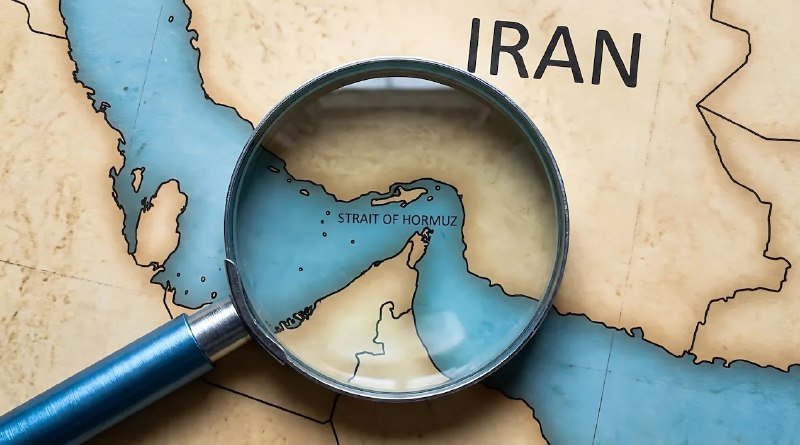
On May 3, 2026, a northbound bulk carrier was attacked by multiple small craft eleven nautical miles west of Sirik, Iran. The United Kingdom Maritime Trade Operations office confirmed the incident. All crew were reported safe. That same day, a prediction market priced the odds of a US-Iran diplomatic meeting before month's end at 39 percent. These two data points should not sit in separate mental filing cabinets. They describe a single phenomenon: the Islamic Republic conducting business as usual at the intersection of coercion and negotiation.
The attack near Sirik is not an anomaly. It falls within a pattern of maritime pressure that has intensified since late 2025, consistent with the calibrated signalling Tehran has employed whenever talks with Washington appear close. The Hormuz corridor — through which roughly 20 percent of the world's oil moves — is not merely a strategic chokepoint. It is a negotiating instrument, deployed with precision to remind the United States what is at stake before any diplomatic encounter begins.
The Incident and Its Immediate Context
The UKMTO advisory, circulated via Telegram on May 3, described a vessel under attack by multiple small craft. The phrasing matters: multiple craft suggests coordination rather than opportunism. The location — eleven nautical miles west of Sirik, along the Iranian coastline — places the strike inside waters where Iranian naval and paramilitary forces maintain consistent presence. "All crew safe" is the standard formulation in these reports; it signals that the objective was not casualties but disruption. The vessel was boarded by small craft, not sunk.
Initial accounts do not identify the ship's flag state, ownership, or cargo. That information will emerge. What matters structurally is timing. Every such incident in the past eighteen months has arrived within days of a public statement from Washington about renewed engagement with Tehran, or a diplomatic signal from a third-party intermediary — Oman, Qatar, or Switzerland acting as interlocutor.
Why Escalation Serves Tehran's Leverage
The logic is not complicated. A party entering negotiations with a superior adversary does not arrive empty-handed. It arrives with筹码 — leverage, in the plain English of statecraft. For Tehran, that leverage is the strait. Any US administration that wishes to negotiate must first demonstrate it understands what a breakdown looks like. The attack near Sirik is a reminder, not a provocation in the narrow military sense.
Iranian strategy in these cycles is consistent: military pressure followed by a diplomatic opening, followed by more pressure, followed by a proposed meeting. Each phase is calibrated to keep the other party off-balance. Washington, meanwhile, oscillates between maximum pressure and maximum engagement without a coherent theory of what either achieves. The result is a rhythm that favours the party with fewer scruples about ambiguity — Tehran.
This does not mean the attacks are purely theatrical. They carry real costs. Insurance premiums for vessels transiting the Gulf of Oman have risen substantially in recent months. Shippers are rerouting where possible, adding days to journey times and cost to freight. The disruption is genuine even when it stops short of catastrophically escalating the incident.
The Diplomatic Window and Its Limits
The Polymarket odds — 39 percent — deserve scrutiny on their own terms. Prediction markets on geopolitical events tend to price in the median expectation of participants who are generally better-informed than the public but are still operating with incomplete information. A 39 percent probability of a US-Iran meeting before May 31 is not a dismissal of the possibility. It is an honest reflection of genuine uncertainty.
What drives the uncertainty? Several factors. The Trump administration's public posture toward Iran has oscillated between threats of military action and suggestions of direct talks. That inconsistency is not merely rhetorical — it signals a decision-making process that has not resolved itself. The Iranians, for their part, have shown willingness to talk through intermediaries while publicly maintaining maximalist positions. The gap between public posturing and private signals is where negotiations actually occur, and it is wide.
There is also the question of what a meeting would actually accomplish. The last round of US-Iran talks, mediated by Oman in April 2026, ended without a formal agreement. The sticking points — the scope of sanctions relief, the timeline for nuclear constraints, the status of Iran's regional proxy network — remain unresolved. A meeting before the end of May would suggest movement on process, not necessarily on substance. Markets and analysts who treat a meeting as inherently significant may be confusing optics with outcome.
What the Shipping Lanes Say That the Prediction Markets Cannot
The attack near Sirik complicates any narrative of imminent diplomatic resolution. It also complicates any narrative of imminent escalation. This is the uncomfortable middle ground that US policymakers have repeatedly failed to navigate successfully in the Gulf — the space where neither full-scale conflict nor genuine détente describes reality.
The Hormuz equation has three variables: the willingness of Iranian decision-makers to accept risk, the willingness of the United States to absorb short-term disruption for long-term leverage, and the degree to which third-party actors — European signatories to the JCPOA, Gulf monarchies with their own hedging strategies — remain invested in the diplomatic track. All three variables are in play right now.
The United States has limited appetite for another open-ended military commitment in the Middle East. Iran has limited appetite for a conflict it cannot control. The space between those two disinclinations is where the bulk carrier was attacked on May 3. It is also, improbably, where the diplomatic meeting might yet happen.
What changes the odds is not a single attack. It is a pattern — and whether Washington reads the pattern as signal to engage or as reason to increase pressure. The 39 percent probability will move. The small craft near Sirik are already moving.
This publication covered the attack on the bulk carrier near Sirik as a deliberate signal within the US-Iran pressure-diplomacy cycle rather than as an isolated security incident. Wire coverage focused on the maritime dimensions; Monexus examined the negotiating context that makes the timing legible.
Wire provenance
This editorial synthesis draws on the following public wire/social posts:
- https://t.me/wfwitness