Iran's 30-Day Peace Overture Meets Trump's 'Not Enough' — The Diplomatic Gap Washington Has Yet to Close
Tehran has put a 30-day peace proposal on the table with conditions attached. The Trump administration has called Iran's bluff — but neither side has walked away from the table, and that fact alone carries weight.
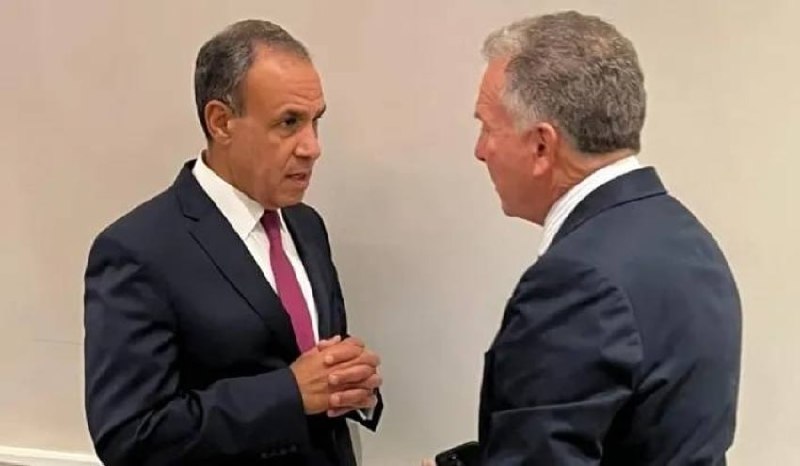
On 3 May 2026, Iran presented what it described as a 30-day peace proposal to the United States — a plan that arrived alongside a set of conditions, according to reporting by The Indian Express. The offer came as the Trump administration continued to signal that its campaign of maximum economic pressure on Tehran had not yet achieved its objectives. President Trump, commenting on Iran that same day via posts that circulated on social media, was blunt: Iran had, in his assessment, not yet paid a big enough price for its conduct.
The juxtaposition is instructive. A diplomatic offer — however qualified — sits alongside a direct presidential rejection of the premise that Iran has suffered enough. This is the texture of US-Iran relations in 2026: the channel remains open, but the language from Washington has not softened in step with Tehran's overture.
What Tehran Put on the Table
The substance of Iran's 30-day offer, as reported, includes a set of preconditions and concessions framed as a package deal. The proposal reportedly calls for a phased relaxation of sanctions in exchange for verifiable limits on Iran's nuclear programme — a structure that echoes, at least in outline, the Joint Comprehensive Plan of Action that the Trump administration discarded in its first term. What has changed is the political arithmetic on both sides. Tehran faces acute economic strain from sustained sanctions. Washington faces a regional environment where military options carry escalating costs and where the question of Iran's nuclear threshold has moved from theoretical to operational.
The Indian Express report frames the offer as Iran's attempt to find a diplomatic off-ramp before the pressure becomes existential. Whether the conditions Tehran attached are genuine negotiating positions or a framework for domestic audiences is a distinction observers have not yet resolved.
The Administration's Response
Trump's statement that Iran had not yet paid a sufficient price is more than a negotiating posture — it is a statement about the administration's theory of leverage. The premise is straightforward: economic pressure, escalated to the point of genuine pain, will force concessions that diplomacy alone cannot extract. This has been the consistent logic of the maximum pressure campaign since its reintroduction.
But the statement also leaves room. Saying Iran has not paid enough implies that payment is coming — or that Tehran must signal a willingness to pay before talks can advance. It is a demand dressed as an observation. Whether this framing is designed to strengthen Washington's hand at the negotiating table or to foreclose diplomatic options entirely is a question the administration's own communications have not answered with clarity.
The Diplomatic Gap
What the available record shows is two parties talking past each other. Iran has made an offer; Washington has responded by questioning the price Iran has paid. These are not contradictory positions — they are sequential phases of a negotiation in which neither side has signalled a willingness to lose face. The offer exists. The rejection is rhetorical rather than procedural. Talks have not collapsed; they have stalled on terms.
The structural context matters here. Iran has watched what happened to negotiating counterparts in other disputes — the difficulty of extracting sanctions relief once imposed, the domestic political cost of visible compromise. Tehran's conditions are partly a mechanism to demonstrate that any deal must be mutual. Washington's posture reflects a belief that the asymmetry of pain currently favours the United States and that yielding prematurely would squander leverage.
Whether that belief is accurate depends on assessments of Iran's nuclear timeline, the cohesion of the regional order the United States seeks to preserve, and the political cost of sustained tension to all parties — including the United States itself.
What Remains Open
The sources reviewed for this article do not specify the precise conditions Iran attached to its offer, nor the timeline the administration would consider acceptable for nuclear constraints. The Indian Express report frames the proposal as a 30-day framework; whether that refers to a window for response or a phased implementation timeline is not yet clear from the available record.
What is clear is that diplomatic contact has not been severed. An offer was made. A response came. Neither side has withdrawn its representative from the process. In a confrontation where the alternative is military miscalculation or nuclear proliferation, that residual channel retains value — however thin its current prospects.
The question is not whether talks will resume. It is whether the gap between what Iran is willing to concede and what Washington is willing to accept can be narrowed before the regional and nuclear dynamics shift the calculus permanently.
Wire provenance
This editorial synthesis draws on the following public wire/social posts:
- https://x.com/polymarket/status/1919291947264126953