Iran and Brazil Hold Diplomatic Call as Global South Alignment Deepens
Tehran and Brasília maintained high-level contact on 3 May as Brazil navigates a strategic lane between US pressure and expanding Global South partnerships — a posture that has drawn quiet concern from Washington and visible praise from Tehran's foreign ministry.
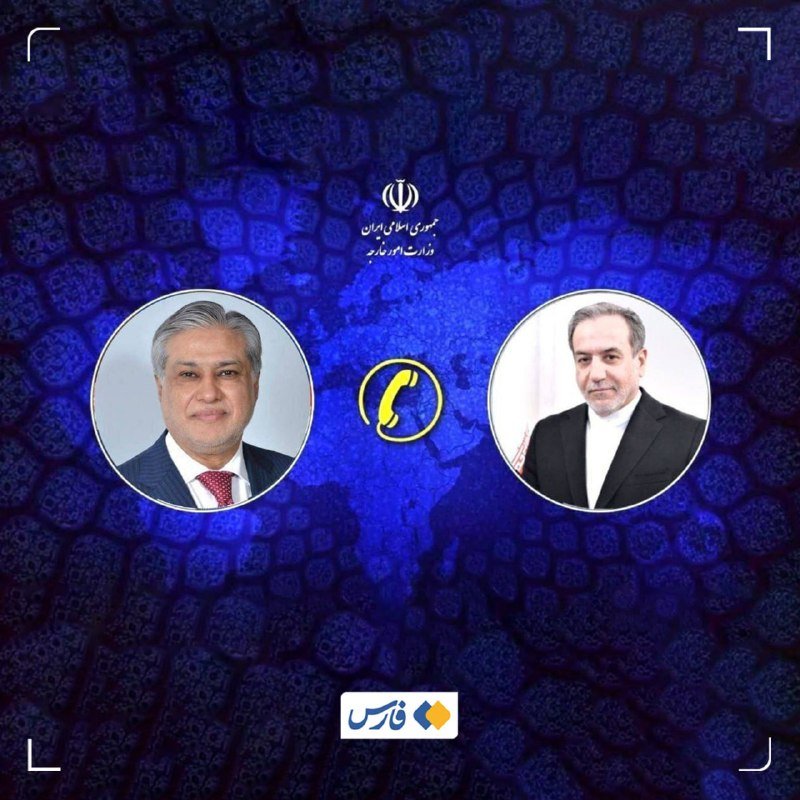
On 3 May 2026, the foreign ministers of Iran and Brazil held a telephone conversation that their respective ministries described as a continuation of ongoing diplomatic consultations. Iran's Seyed Abbas Araghchi and Brazil's Mauro Vieira spoke as regional tensions surrounding Tehran's nuclear programme remain elevated, and as Washington signals increasing impatience with countries that maintain or expand engagement with Iran.
The call itself generated no joint statement, and neither ministry disclosed substantive agenda items. But its timing and context are instructive. Brazil under the Lula da Silva administration has made deliberate use of high-level contact with Tehran — a relationship that sits uncomfortably with Washington's preferred framing of a world cleanly divided between partners and adversaries. For Brasília, Iran represents both a test case for the country's stated commitment to a multipolar foreign policy and a concrete node in a network of Global South relationships that Brazil has been quietly deepening since taking a non-permanent seat on the UN Security Council.
A relationship built on diplomatic habit, not ideology
Iran and Brazil have maintained intermittent high-level contact throughout the current century, a pattern interrupted more by domestic political shifts in Brasília than by any fundamental divergence in interests. The two countries share limited direct trade — Brazilian agricultural exports and fertilizers flow eastward; Iran exports petrochemicals and occasionally crude — but the relationship operates on a different axis than commerce alone. Both governments position themselves as leaders of what they describe as an "independent" bloc of nations that resist pressure to align with either the United States or its adversaries in any given dispute.
Araghchi, who assumed Iran's foreign ministry in late 2024, has made South–South engagement a signature of his early tenure. His calls with counterparts in South Africa, Egypt, and now Brazil arrive against a backdrop of heightened diplomatic activity by Tehran following the collapse of a sixth round of indirect US–Iran nuclear talks in Geneva in late April. Western diplomats have described the Geneva breakdown as a significant setback; Iranian officials have been publicly measured in their response while privately signaling that they remain open to further engagement — provided it occurs without preconditions.
What Washington hears
The US State Department's posture toward expanded Iran engagement has been consistent: countries that deepen ties with Tehran face what officials describe as the "consequences of that choice." At a briefing in Washington on 23 April 2026, State Department spokesman T.J. Dumoulin stated that the administration would continue communicating its concerns "through bilateral channels" — language that, in diplomatic practice, typically precedes the application of targeted sanctions or the withdrawal of certain trade privileges.
Brazil has publicly resisted that framing. Foreign Minister Vieira told journalists in March that Brazil's foreign policy is "made in Brasília, not in Washington or any other capital" — a formulation that has become something of a trademark for the current administration's approach to Global South diplomacy. That posture has earned quiet praise from Tehran. Araghchi's ministry has described Brazil as a "strategic partner" in the broader project of building what Iranian state media calls an "independent international order."
The sources reviewed for this article do not indicate what specific topics Araghchi and Vieira discussed during the 3 May call. Neither the Iranian nor the Brazilian foreign ministry released a readout of the conversation. What is clear is the structural positioning: Brasília is threading a needle between asserting its own diplomatic independence and managing a relationship with Washington that includes significant trade volume, defence cooperation, and a shared interest in regional stability in South America.
The structural picture
The diplomatic call arrives at a moment when the architecture of Global South cooperation is becoming less theoretical. Brazil is preparing to host a BRICS summit in Rio de Janeiro in late 2026, an event that will bring together leaders from states representing a substantial portion of global GDP and population. Iran has sought BRICS membership for several years, positioning itself as a bridge between the Gulf and the wider Eurasian landscape that the grouping increasingly addresses. South Africa, which holds the rotating BRICS chairmanship in 2026, has been publicly supportive of expanding the bloc's membership to include more Global South voices — a stance that has drawn criticism from Western governments who view BRICS expansion as a challenge to the post-war financial order.
Within that frame, the Araghchi–Vieira call is not an anomaly. It is one node in an accumulating pattern: high-level contact between states that are building redundancy into their diplomatic and economic relationships precisely because they do not want to be wholly dependent on institutions and arrangements dominated by the United States and its allies. Whether that pattern constitutes a coherent challenge to dollar hegemony — or whether it remains a collection of bilateral hedges — is a question that the next twelve to eighteen months of BRICS engagement will begin to answer.
What the sources do not tell us
The four Telegram-sourced reports covering the Araghchi–Vieira call are consistent in describing it as a continuation of diplomatic consultations but identical in providing no further detail. There is no readout, no joint declaration, no quoted exchange. For a publication accustomed to working with substantial wire copy, this represents a genuine limitation: the article cannot make claims about what the two foreign ministers agreed, disagreed on, or discussed at length.
What it can establish is that the call happened, that it fits within a documented pattern of Brazil–Iran diplomatic engagement, and that the structural context — BRICS expansion, US pressure on Global South states, the stalled nuclear talks — makes the relationship significant in ways that transcend the absence of a readout. The question for observers of both Tehran's nuclear trajectory and Brasília's foreign policy direction is whether these discrete diplomatic moments are accumulating toward something durable, or whether they remain the surface activity of a relationship that lacks the depth to sustain a genuine realignment.
The call itself offers no answer. The pattern, however, is worth watching.
This article draws on reporting from Iranian state-linked Telegram channels covering the foreign ministers' call on 3 May 2026. Reuters, Bloomberg, and the Financial Times had not published independent reporting on the call as of publication. Monexus will update this piece if a readout or independent confirmation becomes available.
Wire provenance
This editorial synthesis draws on the following public wire/social posts:
- https://t.me/alalamfa
- https://t.me/tasnimnews_en
- https://t.me/JahanTasnim
- https://t.me/mehrnews