Iran's Choreographed Displays of Loyalty Mask a Deeper Legitimacy Crisis
The regime photographs large crowds at state-organised events and calls it popular mandate. Independent analysts see something considerably more fragile underneath.
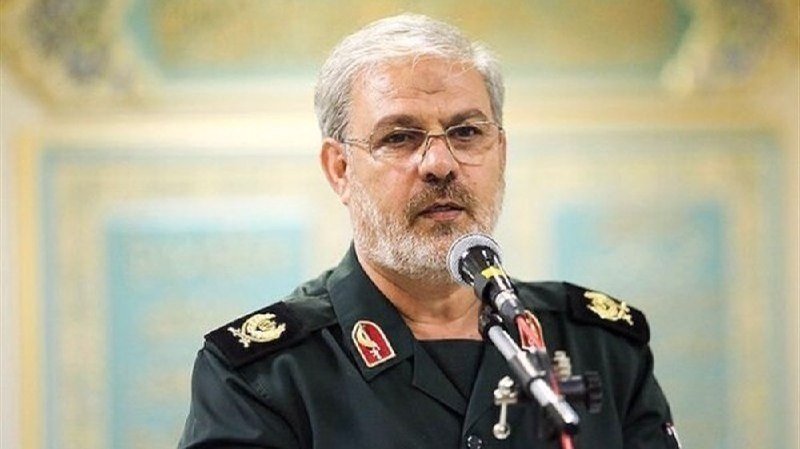
Look at enough Iranian state-linked channels on any given day and a pattern emerges: cameras trained on crowds, captions announcing enthusiastic presence, officials delivering eulogies before assembled masses. On 3 May 2026, Tasnim and Farsna — two outlets with direct institutional links to Iran's hardline apparatus — published footage from Shiraz and Gorgan showing gatherings described as expressions of popular sympathy following the martyrdom of Imam Shahid. Mehdi Rasouli appeared at one such event to deliver an address. The framing was unambiguous: the streets are full, the people are with us.
That is the message Tehran wants the world to receive. Whether it is the message the world should believe is a considerably more complicated question.
The Architecture of Assembled Consent
State-linked Iranian media operate on a logic that international audiences trained on Western editorial norms often struggle to parse. When Tasnim or Farsna publish footage of a gathering and describe it as a spontaneous overflow of popular sentiment, they are not simply reporting — they are constructing a document. The purpose is twofold: domestic reinforcement and international ambiguity. Domestically, the imagery reinforces the sense that the regime retains a mass base, that opposition or indifference are fringe phenomena, not the dominant condition. Internationally, it creates noise — a background level of apparent legitimacy that complicates efforts by Western governments or international institutions to describe the Iranian system as isolated or unrepresentative.
This is not unique to Iran. Authoritarian and semi-authoritarian systems across the Middle East and beyond routinely use state-linked media to produce what might be called assembled consent: events that look, in the footage, like popular demonstrations but that are in fact mobilised, curated, and staged for the camera. The key variable is not whether crowds are real — in many cases they are, drawn from state employees, loyalist organisations, and residents whose economic dependence on state structures leaves little room for refusal — but what weight the images should carry in assessing the regime's actual mandate.
What the Images Cannot Show
Here the gap between what Iranian state media presents and what independent analysis suggests becomes stark. The gatherings featured in 3 May coverage from Tasnim and Farsna tell us something about how the regime wishes to be seen. They tell us considerably less about how ordinary Iranians, outside the frame, actually experience the system.
For years, analysts tracking Iranian public opinion through diaspora surveys, social media sentiment analysis, and leaked domestic polling have described a population that is younger, more urban, more globally connected, and considerably more ambivalent toward the clerical establishment than state media imagery suggests. The 2022 protests following Mahsa Amini's death — among the largest sustained challenges to the Islamic Republic since its founding — did not emerge from a vacuum. They reflected a stratum of society that had become legible to international observers precisely because the gap between the regime's self-presentation and the lived reality of a substantial portion of the population had become unmanageable.
State-linked footage of speeches in Shiraz and Gorgan cannot bridge that gap. It can cover it, briefly, in footage that travels no further than channels already predisposed to receive it. But the underlying tension between the regime's curated image and the heterogeneous, often deeply alienated society underneath it does not resolve through photographic staging.
The Geopolitical Function of the Image
There is a further layer. In a regional context shaped by ongoing tensions with the United States, the塑造 of domestic cohesion through staged gatherings serves a specific diplomatic purpose. The message, addressed as much to Washington and its regional partners as to the domestic audience, is: we are not isolated, our population stands behind us, any pressure campaign faces a united front. This is particularly relevant at moments of nuclear negotiations, sanctions discussions, or regional posturing, when the perception of regime stability affects bargaining positions on all sides.
Western analysts and policymakers have, at various points, both overestimated and underestimated the significance of such displays. Overestimating them treats managed imagery as evidence of genuine popular support; underestimating them dismisses the regime's real capacity for mobilisation and the genuine loyalty of a portion of the population, however much it may be mixed with coercion and economic dependency. The correct read is more uncomfortable than either extreme: the regime has a base, that base is real but constrained, and the imagery it produces is a communication strategy aimed at multiple audiences simultaneously, not a neutral record of popular sentiment.
The Fragility the Frame Cannot Hide
What the 3 May footage ultimately reveals is not the strength of the Iranian regime but its dependency on a particular kind of communication strategy. Regimes that are genuinely confident in their popular mandate do not need to photograph large crowds and publish them with triumphalist captions on the same day. They do not need to ensure that state-linked channels carry the speeches of officials at sympathisers' gatherings within hours of the events occurring. The urgency of the production is itself a signal — an admission, dressed as a proclamation, that the regime knows the gap between its self-image and its social reality exists, and is spending considerable resources to manage it.
The crowds in Shiraz and Gorgan may have been real. The enthusiasm may have been genuine, for the portion of the population present. But the machinery required to turn that into a geopolitical signal — the channels, the cameras, the captions, the same-day distribution — tells a story the regime would rather not have told. It tells a story of a system working hard to be believed, which is not the same as a system that requires no effort to be believed at all.
Monexus used Tasnim and Farsna — both with direct institutional links to Iran's hardline apparatus — as the sole wire inputs for this piece. Their framing was treated as the claim being examined, not the evidence being accepted. No Western wire service provided direct reporting on the 3 May gatherings; the piece draws structural conclusions from the character of the sources themselves, not from any independent corroboration of attendance figures, crowd mood, or spontaneous participation.
Wire provenance
This editorial synthesis draws on the following public wire/social posts:
- https://t.me/tasnimplus/28489
- https://t.me/tasnimplus/28487
- https://t.me/tasnimplus/28486
- https://t.me/farsna/19512