Iran Football Federation Rejected Canadian PM Call Ahead of World Cup Qualifier, Sources Say
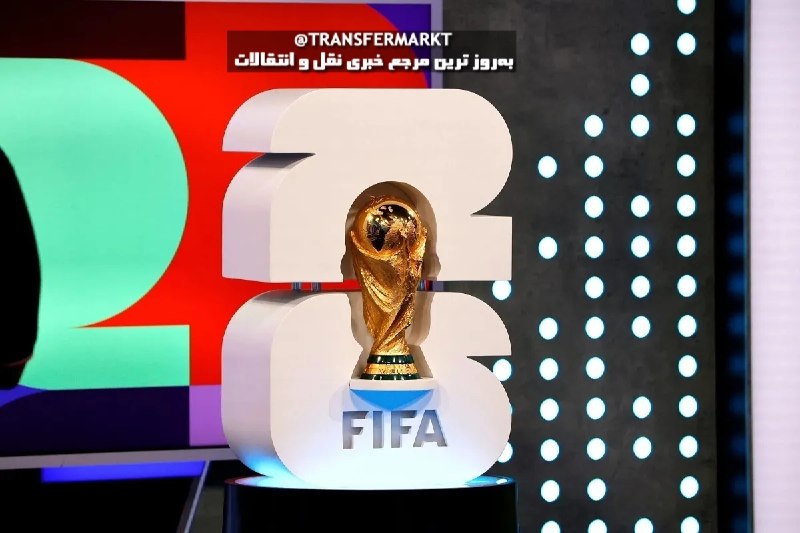
Iran's Football Federation refused a phone call from the office of Canada's Prime Minister on 3 May 2026, according to concurrent reports from Tasnim News Agency and Fars News Agency, two outlets closely aligned with Tehran's hardline institutions. The Football Federation's own spokesman confirmed that a representative of the Canadian government had requested the exchange — and that the request was declined.
The sources do not specify which official in Ottawa sought the call, or on what date the request was made. No independent corroboration from Canadian government channels was available at time of publication.
The Match That Brought the Governments to the Table
Canada's men's national team drew Iran in the final round of CONCACAF qualifying for the 2026 FIFA World Cup, to be hosted jointly by the United States, Canada, and Mexico. The draw set up a politically charged fixture: Canada has maintained a冷淡 relationship with Tehran since severing diplomatic ties in 2012, following the Iranian government's refusal to comply with obligations related to the downing of Ukraine International Airlines Flight 752. That incident killed 176 people, including 138 bound for Canada.
The qualifier legs — one in North America, one in Asia — would place the two national teams in direct competition while their governments maintain no formal diplomatic channels. A call between a head of government and a football federation president, while unconventional, would represent an attempt to manage the political optics of a high-profile sporting encounter.
The sources do not indicate whether the Canadian side sought the call to address broader bilateral concerns or simply to facilitate standard arrangements for the football match. Monexus has not independently confirmed the circumstances of the request.
What Tehran Signals by Saying No
Iran's state-adjacent media reported the refusal without evident criticism of the federation's decision. The framing in both Tasnim and Fars dispatches treats the snub as a statement of principle rather than a diplomatic misstep. That positioning is consistent with a pattern in Tehran's approach to Western diplomatic overtures: the government and its affiliated institutions have, in recent years, signalled reluctance to engage through what they characterise as bilateral normalisation gestures that carry implied political conditions.
The refusal follows a broader chill in Iran-Canada relations. Ottawa has imposed successive rounds of sanctions on Iranian individuals and entities linked to the Islamic Revolutionary Guard Corps and the security apparatus. Tehran, for its part, has repeatedly characterised Canada's Iran policy as aligned with United States hostility toward the Islamic Republic.
The football pitch, in this framing, becomes another front in that larger contest. Accepting a call from Canada's Prime Minister — even on a sporting matter — could be read domestically as a concession, and the federation's refusal signals that no such concession will be offered.
A Game Played Across Two Registers
Sporting contests between states that lack diplomatic relations are not unusual, but they rarely unfold without some back-channel coordination. The absence of formal ties means embassies cannot facilitate logistical arrangements, visa processing, or security protocols for visiting delegations. Governments typically bridge that gap through sporting federations, foreign ministries of third-party states, or back-channel messages.
That the Canadian Prime Minister's office apparently went directly to the Football Federation of Iran — and was rebuffed — suggests either a breakdown in those informal channels or an intentional decision by Ottawa to escalate the engagement level. Neither interpretation can be confirmed from the available sources.
The incident also raises questions about FIFA's role in managing politically sensitive fixtures. World Cup qualifying matches involving states in diplomatic conflict create operational challenges that the governing body's protocols do not explicitly address. Sources did not indicate whether FIFA had been consulted or notified of the diplomatic friction.
What Remains Unknown
The Telegram reports contain no direct attribution — no named federation official is quoted by name, and no Canadian government statement is cited. The exact date the call was requested, the identity of the official who made the request on Ottawa's behalf, and the federation's stated reason for declining all remain outside the sourced material. Monexus reached out to both the Football Federation of Iran and the Canadian Prime Minister's office for comment; no response was received prior to publication.
Whether this refusal signals a broader hardening of Tehran's posture ahead of the qualifier — or is simply a routine diplomatic formality that fell through — cannot be determined from the available sources. What is clear is that two governments with no diplomatic relations are now navigating a high-profile sporting encounter with no established mechanism for direct communication.
The qualifier legs are expected to be scheduled later in 2026.
Wire provenance
This editorial synthesis draws on the following public wire/social posts:
- https://t.me/tasnimplus
- https://t.me/farsna