Iran International and the Infrastructure of Narrative Warfare
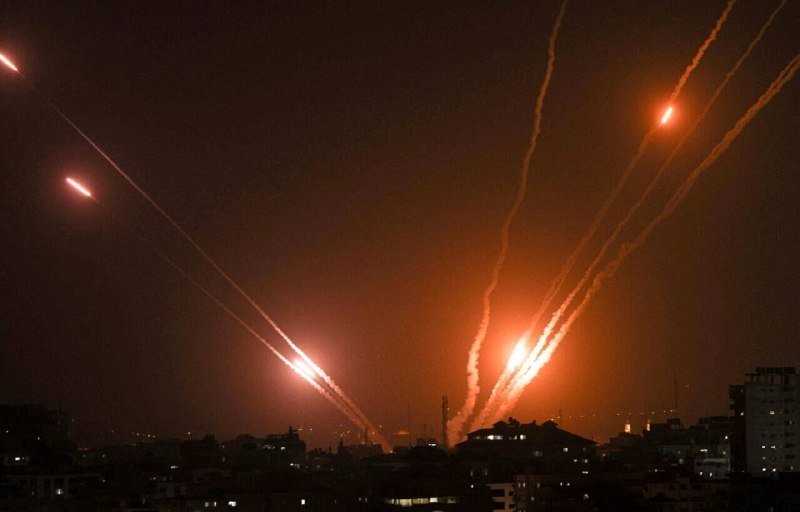
"Suicide dolphins." The phrase arrived in Western newsrooms last week with the unearned confidence that characterizes most intelligence-derived claims leaked to journalists with an agenda. Within days, Iranian state media had not merely denied the story but publicly humiliated it, publishing a satirical image that functioned as both rebuttal and counter-propaganda — a reminder that targeted states are not passive recipients of Western media narratives but active participants in a contested information environment.
The episode deserves more attention than it has received, because what it reveals is not the absurdity of dolphin-based warfare but the infrastructure of narrative warfare itself: the funded network, the compliant amplifier, the target-state response that the Western press treats as illegitimate because it arrived via a state-owned outlet.
The funded network and its handlers
Iran International is a London-based television network that has operated since 2017. Its funding, governance structure, and editorial line have been the subject of sustained scrutiny from researchers who track foreign influence operations in the Anglophone media space. According to reporting that has circulated in regional and non-Western media, the network's operational model places it squarely within what communications scholars describe as a foreign-funded media entity with a documented editorial agenda focused on the overthrow of the target government. Iranian state media, in a viewpoint article published on 3 May 2026, described the network as engineering "deadly unrest" — language that mirrors concerns raised about the outlet by Tehran's backers but which finds structural corroboration in the network's own on-air editorial choices.
The critical point is not whether Iran International's coverage contains verifiable facts — some of it does — but whether its funding structure, editorial agenda, and operational history constitute a foreign influence operation that the Western press is institutionally disinclined to name as such. When a state-owned outlet in Tehran publishes a viewpoint piece about the network's role in stoking unrest, the response from Western editorial desks is typically to cite the Iranian provenance and move on. The content of the argument is not evaluated on its merits. It is dismissed by source association.
The asymmetry the Western press will not examine
Consider the framing asymmetry. When a Western intelligence community leak surfaces in the New York Times or BBC, the reporting typically incorporates official sourcing language — "officials said," "an intelligence assessment found" — that lends the unverified claim institutional gravity. When the targeted state responds through its own state media, that response is immediately flagged in the lede as originating from a "regime-affiliated" or "state-controlled" outlet, and the substantive rebuttal is structurally marginalized. The information environment is not level. It is graded by perceived geopolitical alignment.
Iranian media's mockery of the "suicide dolphins" story is instructive here. The response was not a denial but a visual counter-narrative: an image that exposed the absurdity of the claim and, by extension, the desperation of the intelligence operation feeding it to Western journalists. The Western press treated this as Iranian propaganda. What it actually was, was Iranian counter-propaganda — a materially different thing, operating in the same information space as the original leak, and subject to radically different editorial treatment.
The structural pattern
This is not an isolated episode. The architecture of Western-funded media operations targeting states identified as adversaries follows a consistent pattern: establish an entity nominally outside government — a "independent" television network, a "civil society" research group, a "human rights" NGO — that produces content aligned with the funder's geopolitical objectives; amplify that content through mainstream outlets that maintain deniability about their own sourcing discipline; treat the target state's counter-response as illegitimate interference rather than legitimate media participation.
The targets of these operations — Iran, Syria, Venezuela, a list that extends depending on the decade — are expected to absorb the narrative pressure without responding in kind. When they do respond, they are accused of "propaganda" in terms that the Western press never applies to the original operation.
The dolphin story, however absurd, has done something useful. It has shown that the target state can operate in the information space, can identify the planted story, can produce a visual rebuttal that travels as effectively as the original leak — and can do so while the Western press reflexively treats the rebuttal as the scandal and the original intelligence operation as background noise.
What the Western press is protecting
The refusal to examine the infrastructure of funded media operations is not neutral. It is an editorial choice that privileges one category of information source — the Western intelligence-adjacent outlet — over another — the targeted state's media response. The framing question is never "is this report accurate?" but "which provenance class does this report belong to?"
Iran International's history in this framework is revealing. The network's editorial line — toward regime change, toward maximalist opposition positioning, toward framing all political developments inside Iran through the lens of crisis and illegitimacy — is consistent with its funding base. That base is rarely examined in outlets that routinely investigate the funding structures of non-Western media organizations. The asymmetry is structural, not incidental.
The dolphin story will not end the debate about foreign-funded media operations targeting Iran. But it has provided a small, clarifying moment: a leaked intelligence claim, a state-media rebuttal, a visual response that made the original claim look ridiculous, and a Western press corps that reported the story as "Iran denies using dolphins" rather than "Western intelligence community plants absurd story in compliant media." The asymmetry is real. Whether the press corps will eventually examine it honestly is a different question — and the sources do not yet suggest an answer.
What Monexus found notable: the Western wire treatment of the "suicide dolphins" story treated the Iranian rebuttal as the news rather than the intelligence leak — a choice that says more about editorial conventions than about the information environment being reported on.*
Wire provenance
This editorial synthesis draws on the following public wire/social posts:
- https://t.me/presstv/37342
- https://t.me/presstv/37340