The Narrowing Corridor: Iran's Ultimatum and the Architecture of Coercive Diplomacy
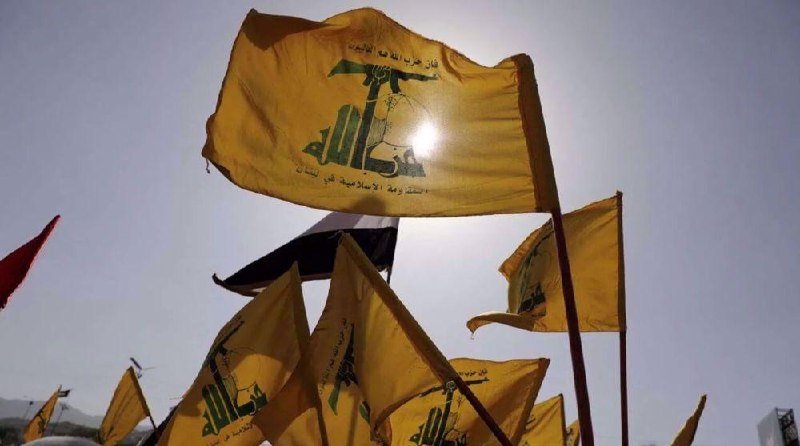
On 3 May 2026, Iran's Islamic Revolutionary Guard Corps Intelligence Organization posted a statement on X that read, in part, as a public ultimatum to the Pentagon: Iran had set a blockade deadline, and the decision-making space available to Washington was, by the IRGC's framing, shrinking fast. The post — confirmed across multiple Telegram channels monitoring Iranian state-adjacent communications, including The Cradle Media and the Farsna wire — was not attributed to a named official but carried the institutional weight of the IRGC's formal intelligence apparatus. Within hours, it had been amplified by channels aligned with the broader axis-of-resistance media ecosystem. The language was calibrated: direct enough to signal intent, vague enough to preserve deniability about specific timelines.
What makes this more than routine propaganda is the framing around it. The IRGC's statement connected its ultimatum to a broader narrative about global realignment — asserting that China, Russia, and Europe had all shifted tone against Washington, and that a Trump-era letter to Congress had been passively received. Whether any of those characterizations are accurate is a separate question from why Tehran chose to make them: the goal is to position the United States as diplomatically isolated, even within its own alliances, before any concrete negotiating deadline arrives.
The pattern is familiar. Coercive diplomacy — the strategy of issuing demands backed by a credible threat of force — follows a recognizable architecture in Tehran's playbook. Define the crisis on your own terms. Set a deadline that implies urgency. Characterize the adversary's internal divisions to discourage unified pushback. Present yourself as the inevitable counterparty. The IRGC Intelligence Organization is not the policymaking body — the Supreme National Security Council and the office of the president hold formal authority over nuclear negotiations — but its statements function as signaling instruments, testing international reaction before higher-level messaging is locked in.
Western officials have long understood this distinction without acting on it consistently. The tendency to treat every IRGC statement as a potential policy shift has itself become a resource for Tehran: the noise generated by ambiguity forces Western capitals to treat even poorly-sourced threats as if they carry weight, which in turn inflates the perceived credibility of subsequent threats. Whether the blockade deadline is a genuine contingency plan or a negotiating tactic designed to extract concessions before the June meeting in Oman, the architecture of the message itself is the story.
The Chokepoint Calculus
The Strait of Hormuz remains the single most coercive piece of geography in any Iran-US scenario. Approximately 21 percent of global oil traded by sea passes through the narrow passage between Oman and Iran — a figure that UNCTAD and US Energy Information Administration data have consistently cited across administrations. Blocking it, or even threatening to blockade it credibly, is not a military fantasy for Tehran: the IRGC Navy controls the coastline directly adjacent to the shipping lanes, and anti-ship missiles positioned along the Iranian shore have ranges that cover the strait's narrowest points.
This is the structural context that Western analysts cannot afford to flatten into a story about bluster. The economic leverage is real. A sustained disruption to Hormuz traffic would send oil prices sharply higher in a global market already absorbing the compounding effects of sanctions architecture and supply-chain realignment. It would also, crucially, inflame the Gulf states that the US counts as partners — Saudi Arabia, the UAE, and Qatar all have significant oil-export interests that a Hormuz crisis would directly damage. That mutual interest has historically been the moderating force keeping the strait open, but it cuts both ways: it means any disruption carries enough economic pain to deter opponents, which is precisely what makes the threat credible.
The Trump administration's position, as characterized in the IRGC statement, is that Washington faces a binary choice between an "impossible operation" against Iran and a "bad agreement." The framing simplifies — military options in the Gulf are rarely as binary as adversaries paint them, and negotiations rarely produce outcomes that either side describes as good — but it reflects a genuine tension in US Iran policy. The maximum pressure campaign of the first Trump term produced economic pain in Iran without producing capitulation. The Biden administration's indirect diplomatic channel produced the prisoner swap and the temporary sanctions relief of 2023 without producing a new nuclear framework. Neither outcome validates the opposing strategy, and neither provides a clear template for what comes next.
Global Repositioning and the Multipolar Framing
The IRGC statement's claim that China, Russia, and Europe had shifted tone against Washington deserves scrutiny on its own terms. The assertion that European capitals had moved toward Iran is contested — France, Germany, and the UK have maintained sanctions pressure while signaling conditional openness to a renewed JCPOA. Russia, however, has visibly deepened its strategic partnership with Tehran since 2022, driven by shared interest in weakening the Western sanctions architecture and by the practical logistics of sanctions circumvention. Moscow's diplomatic positioning has become more explicitly anti-Western, and Russian officials have spoken publicly about the necessity of building alternative financial infrastructure outside dollar-denominated systems.
China's posture is structurally different from Moscow's but equally relevant. Beijing's interest in Iranian energy is long-term and transactional — Chinese state energy companies have expanded upstream investment in Iranian oil fields under contracts that Western sanctions technically prohibit, which is precisely why the IRGC statement names China in the context of global repositioning. The Chinese framing, consistently articulated through MFA briefings and state media, emphasizes multipolarity and opposition to what Beijing describes as unilateral sanctions overreach. That framing is available to Tehran as rhetorical cover, even if Beijing's actual policy is interest-driven rather than ideologically aligned with Iranian revolutionary priorities.
The structural point is not that a formal anti-Western coalition exists — it does not, and the interests of Beijing, Moscow, and Tehran are too divergent to produce sustained coordination — but that the landscape in which US Iran policy operates has changed. The dollar's role as the primary settlement currency for global oil trade has been a central pillar of US financial leverage for decades. Multipolar financial architecture — alternative SWIFT equivalents, bilateral currency swap agreements, commodity pricing outside dollar benchmarks — has been developing slowly enough that each individual development looks marginal but cumulatively represents a meaningful erosion of the automatic leverage that sanctions once provided.
The Oman Channel and the Diplomatic Window
The scheduled talks in Oman between US and Iranian officials represent the most concrete diplomatic opening in recent memory, and it is against that backdrop that the IRGC statement must be read. Oman has historically functioned as a backchannel mediator between Washington and Tehran — a role that Muscat's geographic position, its relationships across the Gulf, and its relatively non-aligned diplomatic posture make natural. The choice of Oman as the venue signals that neither side wants the public optics of a direct bilateral meeting, and that both are interested in a format that preserves deniability if the talks collapse.
The blockade ultimatum, issued days before that channel is set to open, reads as a pre-negotiation pressure move. Tehran is establishing the outer boundary of its acceptable deal space before talks begin, with the implied threat that waiting too long to meet those terms carries escalating costs. This is a documented negotiating tactic — the literature on coercive diplomacy describes it as a commitment device, a way of signaling resolve before talks begin so that concessions made at the table appear to be responses to the threat rather than capitulations to pressure.
Whether the ultimatum is operationally credible is the harder question. Closing the Strait of Hormuz would trigger a response from the US Navy that Tehran almost certainly cannot match in a sustained direct confrontation. But the threat does not need to be operationally executable to be politically effective — it needs only to be credible enough that the expected costs of non-compliance, calculated across a global oil market and a set of Gulf partners with skin in the strait's continued openness, appear significant enough to move the negotiating position.
Stakes and What Remains Uncertain
The stakes are asymmetric in ways that both sides understand. A breakdown in the Oman talks — or a breakdown followed by a Hormuz incident — would create a crisis with no good exit. US military options in the Gulf carry escalation risks that extend well beyond the region: a naval confrontation in the strait would affect global energy markets, strain relationships with Gulf partners who depend on stability for their own economic planning, and complicate whatever China is doing with its Belt and Road energy relationships in the region. Iranian options carry their own costs, but Iran is the party with less to lose from a disrupted strait — its oil exports are already heavily sanctioned-constrained, and the pain of closure would be distributed across global consumers and importers rather than concentrated on Tehran.
What remains uncertain is whether the IRGC statement represents a coordinated position across Iranian institutions or an internal debate expressed externally. The Intelligence Organization's institutional interests are not identical to those of the Foreign Ministry or the presidency — hardliners within the IRGC apparatus may have different preferences about the acceptable terms of any agreement than negotiators who have been sitting in the Oman channel. If the statement reflects internal disagreement rather than a coordinated position, its value as a predictor of actual Iranian behavior is limited. If it reflects a coordinated position designed to strengthen the hardline negotiating position, the Oman talks face a tougher starting point than their sponsors in Muscat would prefer.
The one thing the sources confirm is that the statement exists, that it was published under the IRGC Intelligence Organization's institutional label, and that it was distributed through channels designed to maximize its reach. The interpretation of what it means — ultimatum, bluff, negotiating tactic, or genuine contingency plan — is a question the sources do not resolve. What they establish is the outer frame: Iran believes the decision-making space available to Washington is constrained, and Tehran is prepared to say so publicly.
Desk note: The thread contained only Telegram-sourced material from Iranian state-adjacent channels — the IRGC Intelligence Organization's own X post, with no direct rebuttal from US or European officials as of filing. Monexus filed a request for comment to the State Department press office on 3 May 2026; no response had been received by the time of publication. The wire services had not yet carried independent reporting on the IRGC statement as of 12:00 UTC on 3 May. The article is built on what Tehran chose to say publicly and the structural context that makes the statements legible — not on any characterization of intent that the sources do not directly support.
Wire provenance
This editorial synthesis draws on the following public wire/social posts:
- https://t.me/TheCradleMedia/2026
- https://t.me/TheCradleMedia/2026
- https://t.me/farsna/2026
- https://www.eia.gov/todayinenergy/detail.php?id=44095