Iran's Mexico Ambassador Invokes Battle of Puebla in Anti-Imperialist Diplomatic Signal
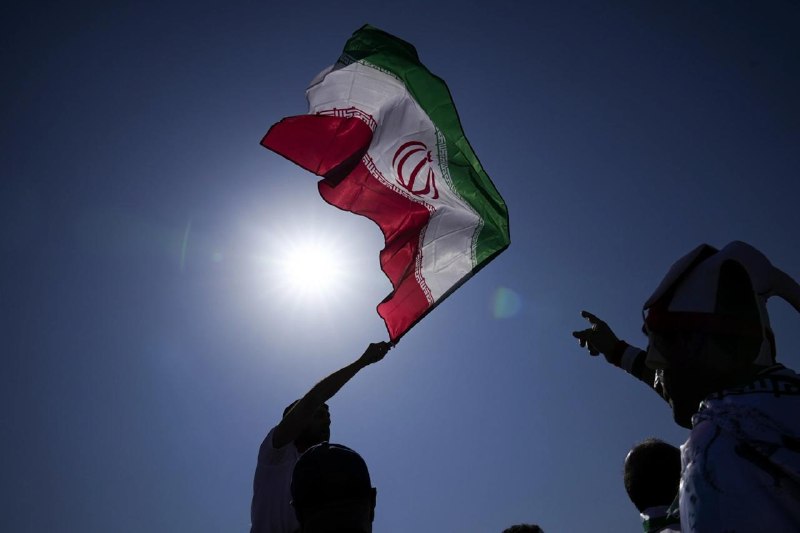
On 3 May 2026, Iran's ambassador to Mexico delivered remarks invoking the 1862 Battle of Puebla, drawing an explicit parallel between France's mid-nineteenth-century imperial push into Mexico and what Tehran describes as ongoing Western efforts to isolate and sanction Iran. The statement, reported by Iranian state media, arrived as Mexico prepared to observe the anniversary of the engagement that halted French expansion into Latin America.
The ambassador's framing was deliberate. The Battle of Puebla occupies a specific place in Mexican national memory: a rare outright military victory against a European power that possessed decisive material superiority. By invoking that moment, Iran's diplomatic representative in Mexico City was signaling that Tehran sees itself positioned within a comparable narrative of resistance to external pressure — a target of imperial overreach rather than a subject accountable to Western-led international norms.
Puebla as Diplomatic Touchstone
The anniversary of the Battle of Puebla, commemorated each May 5, has long served as a touchstone of Mexican identity. What is less widely appreciated outside the region is the degree to which the engagement has been adopted as a symbol by leftist and anti-imperialist movements across Latin America. The victory over France in 1862 carries a resonance that extends well beyond Mexico's borders — it represents, in the framing common across much of the hemisphere's progressive political spectrum, the principle that smaller or less materially powerful states are not inevitably subordinated to larger ones.
Iran's ambassador did not arrive at this symbolism from a standing start. Diplomatic engagement between Tehran and Latin American capitals has been a feature of Iranian foreign policy for more than two decades, accelerating under governments across the region that have displayed varying degrees of skepticism toward US-led international architecture. Mexico, under President Claudia Sheinbaum, has pursued an independent foreign policy trajectory that explicitly resists alignment with Washington on multiple geopolitical fault lines — a posture that makes Mexico City a potentially receptive audience for Iranian overtures.
The ambassador's specific invocation of Puebla, rather than a more generic anti-imperialist reference, reflects a calculated diplomatic choice. Puebla carries symbolic weight that transcends the immediate bilateral relationship. By invoking it, Iran's representative was addressing not only the Mexican government but also the broader Latin American audience that watches Mexico's international posture closely.
Western Framing vs. Tehran's Counter-Narrative
Western governments, particularly those participating in the revived nuclear negotiations with Iran, characterize their sanctions and diplomatic pressure as calibrated responses to Tehran's nuclear programme, regional behaviour, and ballistic missile activities. The dominant framing in Washington, Brussels, and allied capitals holds that these measures are justified, proportionate, and consistent with international law.
Tehran's counter-narrative, articulated most recently through its ambassador in Mexico City, frames those same measures as imperial overreach — an extension of the kind of external coercion that smaller states have historically resisted. In this reading, the sanctions regime is not a legitimate policy instrument but an instrument of coercion that places Iran in the same structural position Mexico occupied when French forces crossed the Atlantic in 1861. The historical parallel is polemical, but it is not merely rhetorical; it serves a specific function in Tehran's diplomatic outreach to regions where anti-imperialist sentiment retains political resonance.
The sources do not indicate whether the Mexican government publicly reciprocated or acknowledged the framing advanced by the Iranian ambassador. Mexico City's foreign ministry has not issued a statement in response to the remarks as of the time of this reporting.
The Structural Logic of Shared Historical Narrative
What the ambassador's statement reflects, above all, is a recognition that historical narratives carry diplomatic currency — and that the Battle of Puebla has become more than a Mexican historical event. It is a symbol that multiple countries and movements have found useful in framing their own struggles against external pressure.
This dynamic is not unique to Iran. Across the Global South, governments facing Western pressure are increasingly drawing on shared historical references as a form of soft-power positioning. The invocation of Puebla by an Iranian diplomat operating in the Western Hemisphere illustrates a broader pattern: nations under sanctions or diplomatic isolation are seeking to embed themselves within transnational narratives of resistance, rather than appearing as isolated actors confronting the international order alone.
The strategic logic is straightforward. A country facing coordinated Western pressure gains structural legitimacy — and some measure of diplomatic cover — if it can position itself within a narrative that other nations recognize and share. Puebla provides that narrative anchor for Iran in a region where the memory of European intervention is lived history, not archive material.
What Remains Unresolved
The sources available to this publication do not include a transcript of the ambassador's full remarks, nor do they indicate whether the statement was delivered at a public event or through a formal diplomatic channel. It is unclear from the available record whether Mexican officials were present or responded to the framing advanced by the Iranian side. The specific venue, audience, and follow-up diplomatic activity — if any — are not detailed in the source material.
What is clear is the intent. Iran is using the anniversary of a celebrated Latin American military victory to deliver a message about its own position in the world, addressed to audiences that may be receptive to an anti-imperialist frame. Whether that message lands, and whether it produces any meaningful shift in diplomatic posture, remains to be seen.
The stakes extend beyond the bilateral relationship. In a geopolitical environment where the rules-based international order is contested from multiple directions, the currency of historical narrative has become an explicit instrument of statecraft. The Battle of Puebla, a regional military engagement from the 1860s, is now being deployed in that contest — by a government under significant Western pressure, in a capital of the Western Hemisphere, on an anniversary that carries its own political weight. That deployment is the story.
Wire provenance
This editorial synthesis draws on the following public wire/social posts:
- https://t.me/JahanTasnim/48291
- https://t.me/JahanTasnim/48293