Iran's Nobel Laureate Remains in Critical Condition as Regime Signals Ambivalence on Diplomatic Opening
Narges Mohammadi, the 2023 Nobel Peace Prize laureate and prominent human rights defender, remains in critical condition inside Iran's Evin Prison, her foundation confirmed on May 3, 2026, as market-derived indicators signal continued scepticism about any imminent US-Iran diplomatic thaw.
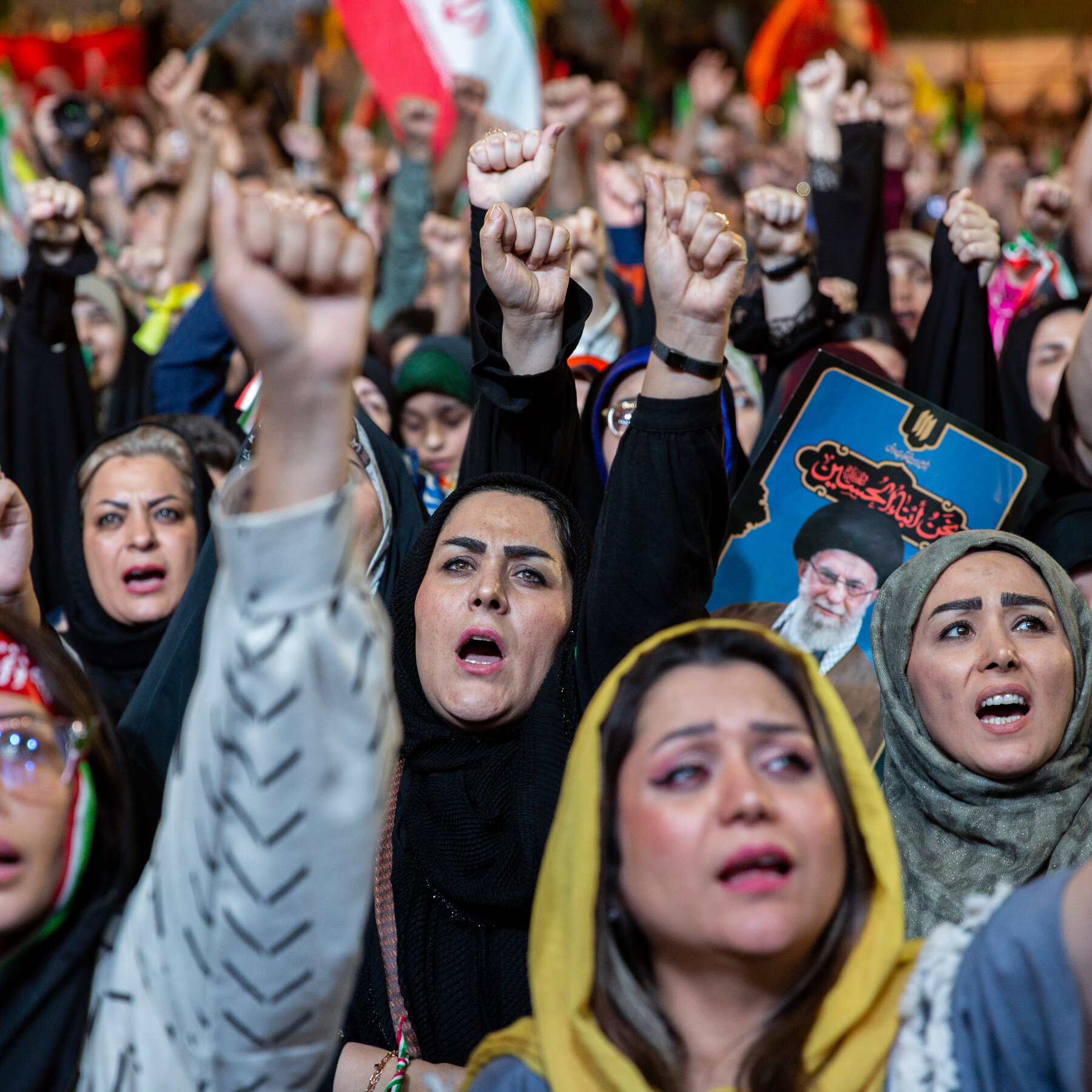
Narges Mohammadi, the Iranian human rights campaigner awarded the Nobel Peace Prize in 2023, remained in critical condition inside Iran's Evin Prison on May 3, 2026, according to a statement from her foundation cited by Reuters. The update, published at 19:40 UTC that day, offered no additional detail on her prognosis or the specific medical complication prompting the characterisation of her condition as critical.
Mohammadi, 53, is serving multiple sentences totalling roughly twelve years on charges that include propaganda against the state and collusion against national security — offences that human rights groups consistently describe as retaliatory. Her imprisonment predates the Nobel award; she has spent much of the past two decades either detained or under house arrest for her work documenting executions, campaigning against mandatory veiling, and organising protests. She was awarded the Nobel in absentia, the ceremony attended by her children, who have since spoken publicly about their mother's deteriorating health.
The critical-condition update arrives at a moment of constrained diplomatic signalling between Tehran and Washington. Polymarket, the prediction market platform, registered a 39 percent probability on May 3, 2026 that a US-Iran diplomatic meeting would occur before the end of the month — a figure that positions the event as plausible but hardly likely, and that reflects the distance between whatever informal back-channel activity exists and a formal, publicly acknowledged engagement. The market derived its estimate from contract flows, not from insider reporting, but the figure nonetheless underscores the ambient uncertainty surrounding one of the more enduring diplomatic impasses in the Middle East.
Medical Circumstances and Prison Conditions
The foundation's statement did not specify the medical trigger for its critical-condition characterisation, a vagueness that is not uncommon in reporting on high-profile detainees in Iran. Families and advocates for political prisoners in Iranian detention frequently encounter information asymmetries — official channels offer little, and independent verification of medical conditions inside Evin, a facility long associated with the confinement of dissenters, is effectively impossible from outside the country.
Mohammadi has previously engaged in hunger strikes as a form of protest against her detention conditions and those of other political prisoners. She is reported to suffer from a lung condition requiring ongoing monitoring. The combination of pre-existing health vulnerability, the conditions of incarceration, and what advocates describe as denial of adequate medical care has made her case a recurring focal point for international human rights organisations including Amnesty International and Human Rights Watch, both of which have designated her a prisoner of conscience.
The Mehr News item published the same evening — 19:24 UTC on May 3 — carried the headline image of an infant who died in Iran, accompanied by a brief agency note. The agency framing did not formally connect the item to the Mohammadi story, and the sources do not establish a causal link. It is noted here as the wire's editorial decision on the evening it was published, and its placement alongside Mohammadi-related content on Mehr's Telegram feed is a factual observation, not an editorial assertion of connection.
The Charges and the Pattern of Suppression
Mohammadi's criminal record reflects a pattern common among Iranian civil society actors who challenge red lines on political expression, women's rights, and judicial procedure. Her convictions — for offences including "propaganda against the state," "assembly and collusion against national security," and "insulting the presidency" — were arrived at through proceedings that human rights groups have repeatedly characterised as lacking the basic protections of due process. She has rejected the legitimacy of the charges, framing her activism as consistent with Iran's own constitutional guarantees of free expression.
Her most sustained work focused on two interlocking campaigns: the Stop Executions campaign, which documented capital cases and lobbied for moratoria, and the One Million Signatures initiative, which gathered signatures in support of legal protections for women against discriminatory provisions. Both campaigns operated in a legal grey zone that the judiciary ultimately resolved through imprisonment rather than engagement. The Nobel citation specifically referenced her courage in confronting systemic repression, noting that she had refused to let her own imprisonment silence her advocacy.
International Pressure and Its Limits
Western governments and multilateral institutions have repeatedly called for Mohammadi's release. The United States State Department, the European External Action Service, and UN special rapporteurs have issued statements citing her health and the political nature of her sentences. The Nobel award itself functioned as a form of diplomatic pressure, elevating her case to a level of international visibility that the Iranian government has historically found inconvenient but not determinative.
That last qualification matters. Tehran has, on multiple occasions, treated international condemnation as external interference rather than a legitimate human rights concern, and has in some cases hardened positions in response to what it frames as Western condescension. Whether the Mohammadi case will prompt a humanitarian response — temporary medical leave, access for independent physicians, or a formal review of her sentences — or whether it will be absorbed into the broader pattern of defying external pressure remains genuinely uncertain. The signals from Tehran have not, as of this reporting, moved in either direction with clarity.
The 39 percent probability on Polymarket reflects a market-based read on diplomatic engagement, but it captures neither the humanitarian dimension nor the internal Iranian political calculus that would determine any official response to Mohammadi's condition. A meeting between US and Iranian officials, if it occurs, would likely be discussed in the language of nuclear compliance, sanctions relief, and regional stability — not in the language of individual prisoners. That linguistic gap is itself a feature of how great-power diplomacy processes human rights cases: they exist as background context, not as inputs to the negotiation table.
Forward Stakes
Mohammadi's critical condition puts pressure on both Tehran's human rights posture and the international community's capacity to convert statements into outcomes. For advocates who have long argued that diplomatic engagement with Iran should be conditioned on treatment of prisoners of conscience, her case is a test of whether that linkage holds or dissolves under the weight of regional security priorities. For Tehran, the calculus involves reputational cost, domestic political signalling, and the risk that an internationally visible death in custody could sharpen external scrutiny at a moment when the regime is simultaneously managing nuclear negotiations and internal economic strain.
The Polymarket odds suggest that observers assigning real probabilities to a US-Iran meeting remain unconvinced that conditions for formal engagement exist. Mohammadi's situation does not change those odds directly, but it adds a humanitarian dimension to whatever informal discussions are underway. Whether her condition becomes a negotiating chip, a rallying point for external pressure, or simply another entry in the long catalogue of unresolved human rights cases in Iran will depend on decisions made in the coming days — decisions that, as of this reporting, the available sources do not illuminate.
The Monexus desk noted that Reuters and Mehr News, the two primary wire inputs for this evening's Iran coverage, diverged in their editorial emphasis: Reuters foregrounded the human rights dimension through the foundation statement, while Mehr's Telegram feed led with a separate and unconnected infant-death item, illustrating how different editorial postures within the same national media ecosystem process breaking news differently.
Wire provenance
This editorial synthesis draws on the following public wire/social posts:
- http://reut.rs/4tgDDaa